
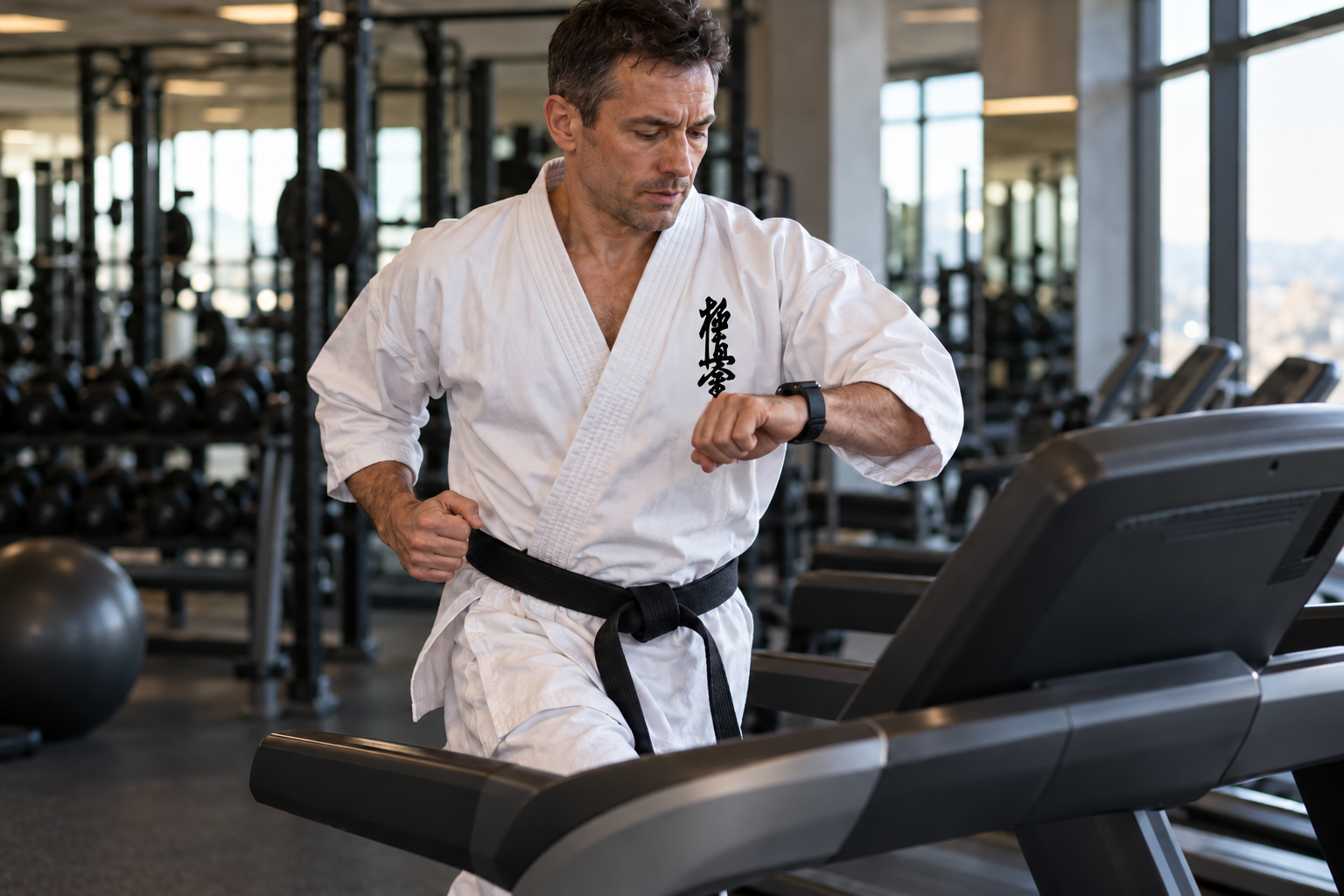
Below I will share how I returned to sport after a long break. I tried this approach myself when I returned to Kyokushin after seven years without training. It helped me gradually get back into training so successfully that two years later I stood under the RUSSIA sign at a world championship with weight categories.
This is my personal experience, not a universal method: everyone starts from a different place and has different health needs.
So, suppose you have been feeling nostalgic and decided to return to Kyokushin after many years away, especially if the last few years have been filled with work and leisure rather than exercise. You have found a nearby club, read about the coach and checked the timetable, which even fits your schedule. You have packed your bag, found your dogi and belt in the wardrobe and decided to attend your first class.
Respect to everyone who turns an idea into action instead of just daydreaming! But, dear former karateka, I strongly recommend not rushing straight into a demanding Kyokushin class, only to end up with a racing pulse, pressure and ringing in your ears, loss of motivation and everything else that can come with it.
Where should you go and how do you start?
First, address unhealthy habits. If you have picked up or strengthened any over the years, try to give them up. If you cannot manage alone, do not hesitate to ask a specialist for help.
Second, pay attention to your health. After a long break, it can be useful to see a doctor and explain that you plan to return to training. The doctor can assess your health, order tests if needed and advise you on an appropriate starting workload. This is especially important if you have a chronic condition or symptoms that concern you.
It may be worth having the check-up and tests your doctor recommends, following their advice and addressing any health problems.
Giving up unhealthy habits and looking after your health is a big step, not only towards returning to the dojo, but also towards a better quality of life and a longer life. Once you have addressed your health concerns, you can gradually begin training.
Start with running
Rather than jumping straight into the intense sessions you remember and miss, I suggest starting with running, even if, like many people, you do not enjoy it.
Consider getting a sports watch: it can show your heart rate, distance and sleep data, which can be useful reference points.
Train two or three times a week.
You can run on a treadmill or outside. Many watches label their workout zones “aerobic”, “anaerobic” and “extreme”. These represent different levels of intensity:
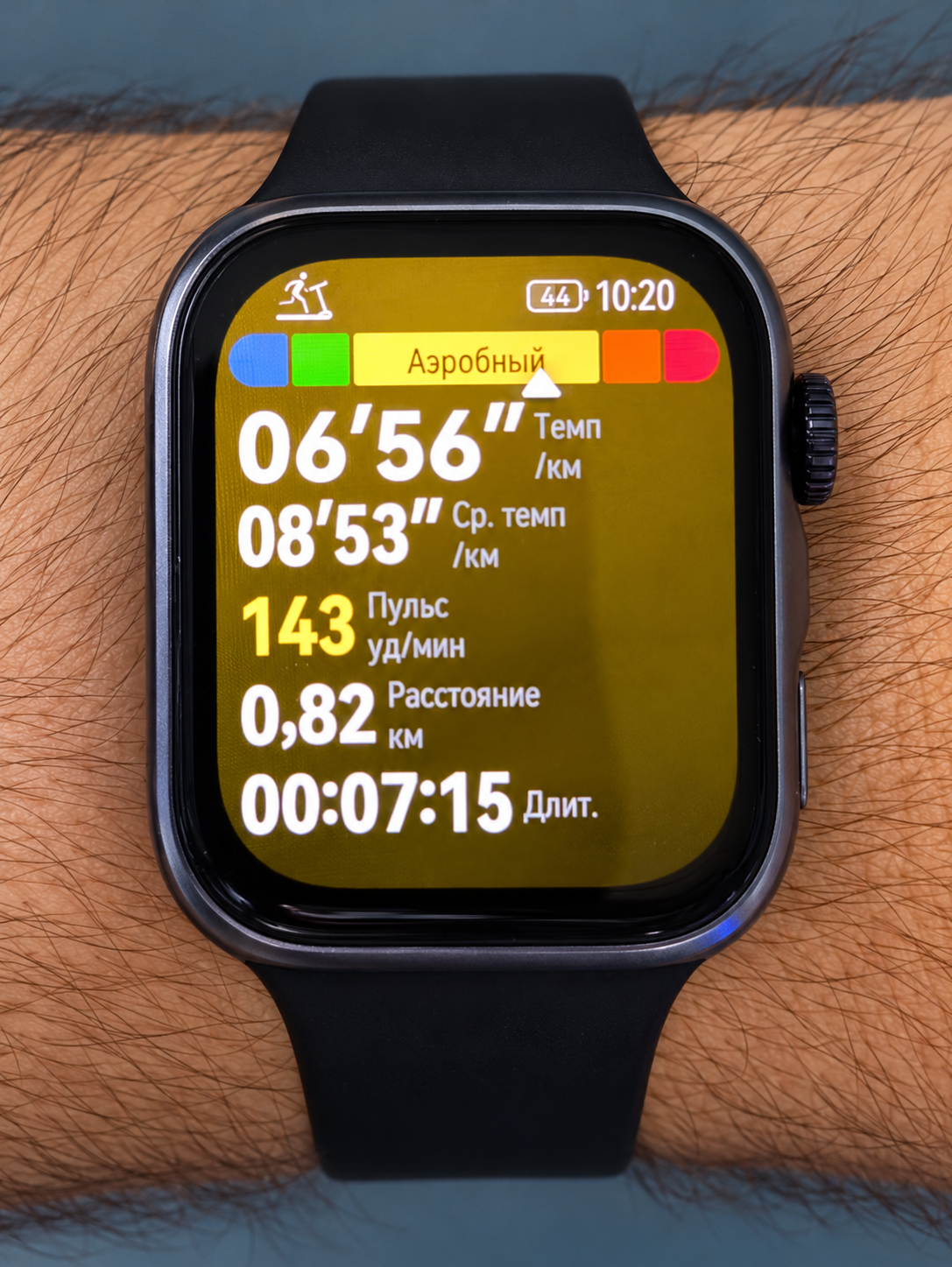
- Aerobic exercise is usually steadier, longer work during which the body obtains much of its energy with the help of oxygen. After a break, an easy pace is appropriate: your breathing gets faster, but you can still talk.
- Anaerobic exercise describes higher-intensity work when muscles need energy faster than it can be supplied using oxygen. Anaerobic pathways for breaking down glucose contribute more at this point.
- “Extreme” is the watch’s name for its highest zone, not a separate medical term. Watches estimate these zones approximately. After a break there is no need to aim for it.
Start slowly: spend the first 5–10 minutes walking or jogging easily and warming up gradually. Here is what that can look like on the watch:
Then increase your pace while paying attention to how you feel. In the next photo the watch shows the anaerobic zone:
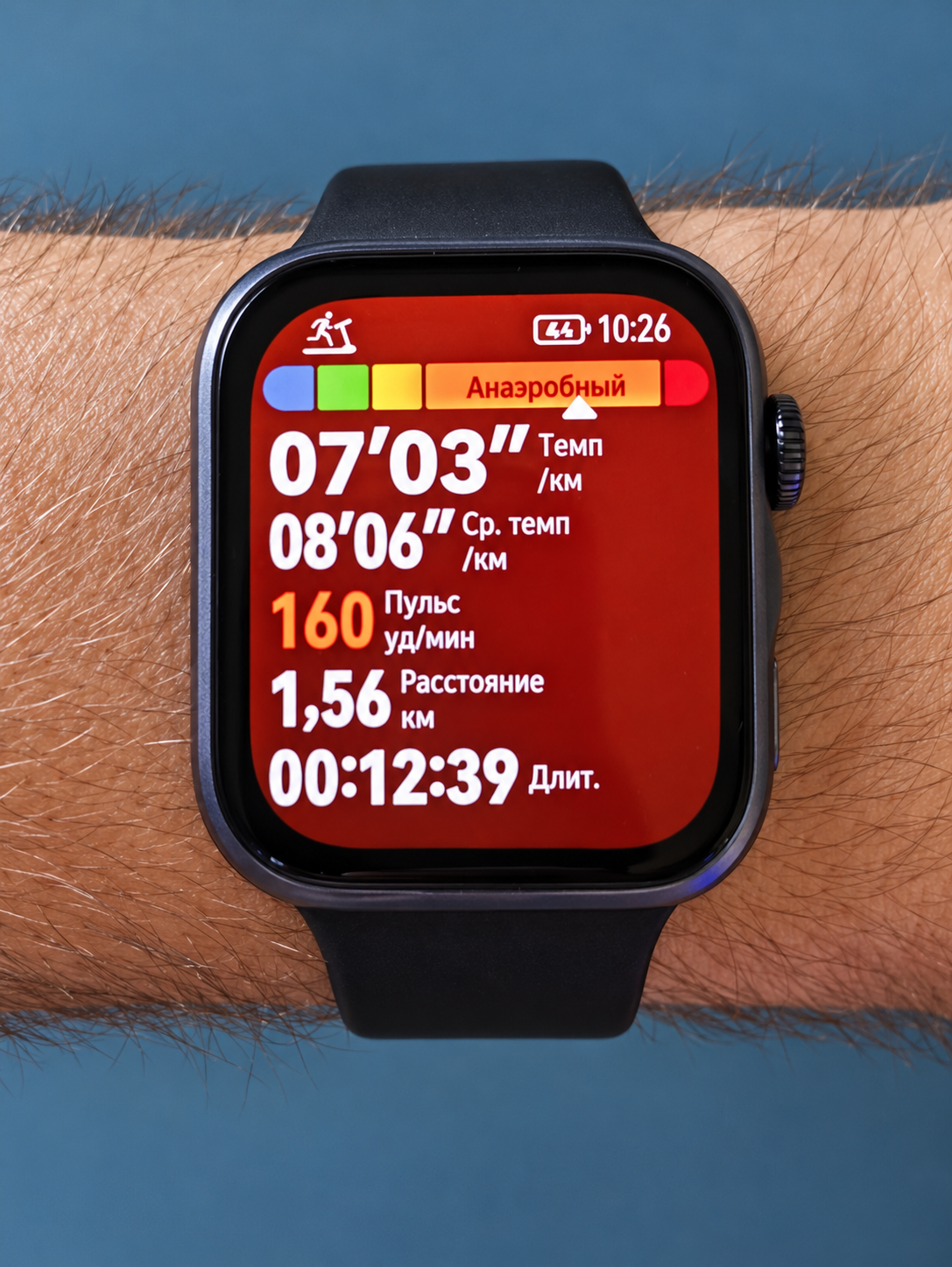
Treat this zone as an upper limit, not a target you need to reach.
Start with a short distance you can manage. For some that might be 2–3 km; for others, a few minutes of walking or alternating walking and running is a better start. Do not try to be a hero, and pay attention to how you feel as well as to the watch. Slow down gradually at the end.
Here is what not to do, either deliberately or by accident:
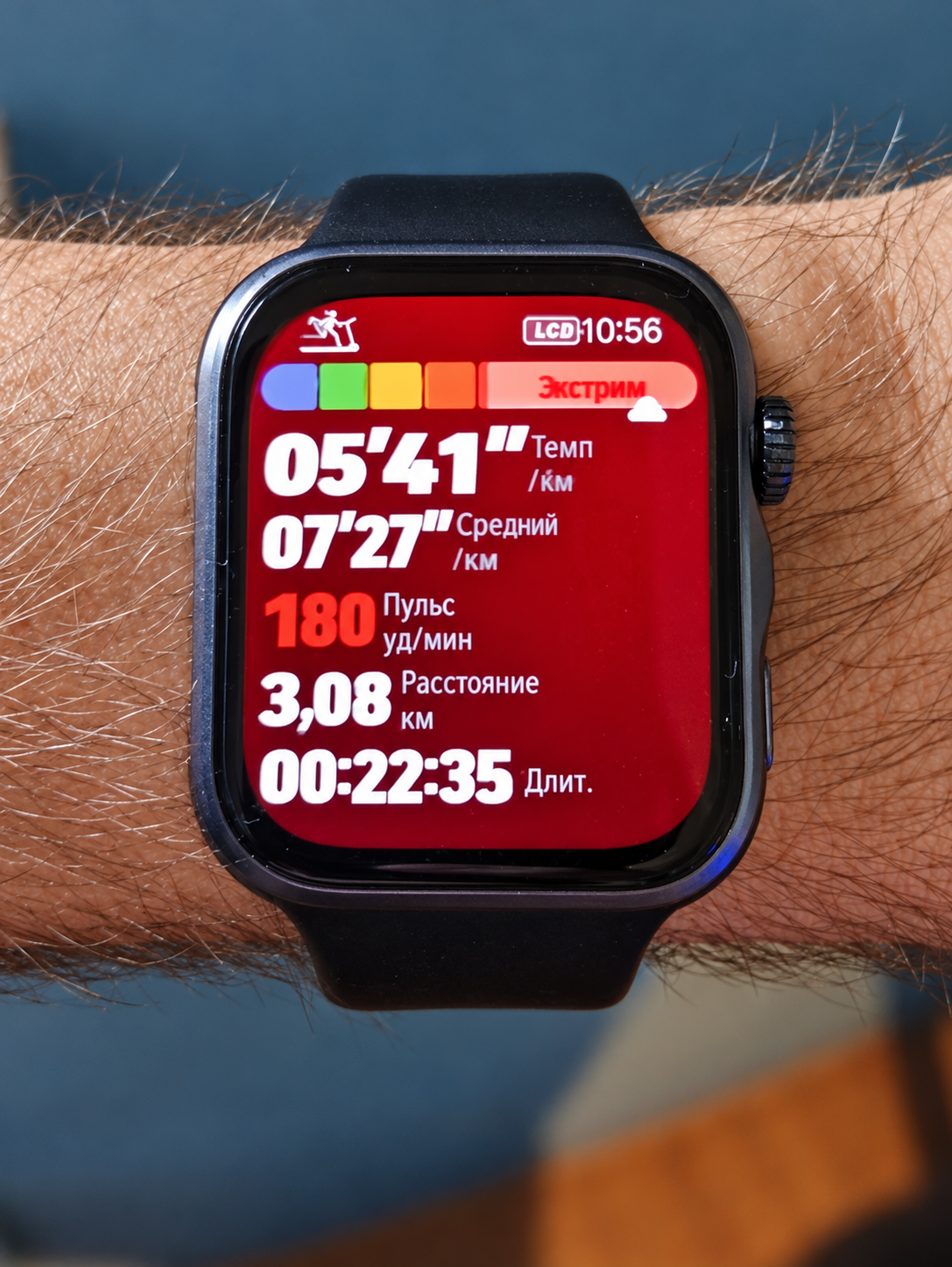
This photo is a bad example shown for illustration. Do not repeat it to test yourself: I did it to demonstrate the point and do not intend to repeat it!
An abrupt or unprepared increase in effort raises the risk of injury and feeling unwell, and can be dangerous for people with heart conditions. If you experience chest pain or pressure, severe shortness of breath, dizziness, feeling faint or unusual palpitations, stop and seek help if necessary.
When should you return to the dojo?
My personal goal before returning to training was to gradually become able to run 10 km comfortably in the anaerobic zone, without overexerting myself, while preparing my heart for more intense training. This was my own goal, not a requirement for returning to karate.
Alongside running, I add basic exercises: push-ups, abdominal exercises, stretching and jumping exercises when my body is ready for them. You do not have to do everything after every run: leave time for recovery and choose a workload you can manage.
Look at the requirements for your next belt and work towards them gradually until you can confidently complete the physical exercises.
Also gradually refresh your techniques and terminology and kata up to and including your current belt level.
It is better to begin without sparring or going all out on every exercise, increasing the workload gradually instead.
I am now returning to Kyokushin again after another seven-year break. I plan to take on the veterans’ category and am following the same principles described here.
I hope this article helps someone return to sport. Good luck!

Comments (0)
Leave a comment
Comments are moderated and published after review