
This article is based on the author’s personal experience.
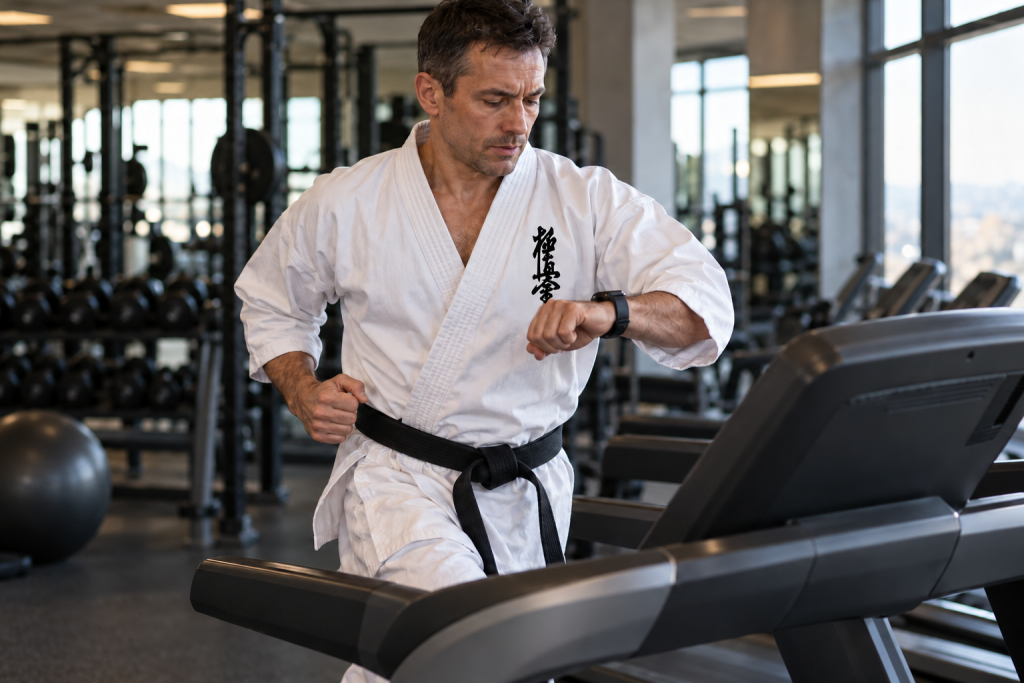
The story began quite simply. After about seven years without regular Kyokushin karate training, or any other training for that matter, I decided to start running. I first spent a couple of weeks warming up with very easy 1–2 km treadmill runs. Then I bought good running shoes, went outside and ran a little faster, at about 8 km/h.
I ended up running about 6 km. But after just one kilometre, both calves felt like rocks. That surprised me: when I trained regularly, my legs could handle much more serious loads, including runs of up to 20 km without much trouble.
After looking into it, I realised why. I was still running the way I had learned to run as a karateka on the bare floor of the dojo, landing on the balls of my feet because I did not want to drive my heels hard into the floor with every step. Back then I trained regularly, so my muscles had gradually adapted. I ran that way everywhere, indoors and outside, in shoes that were far from ideal.
With this style, the feet, ankles, Achilles tendons and lower-leg muscles act as shock absorbers. The calf and soleus muscles take on much of the work.
From a biomechanical point of view, landing on the forefoot can reduce some impact and knee loading, while increasing the work done by the ankles, calves and Achilles tendons. Years of training had made the habit so automatic that I kept using it even when I no longer needed to.
That does not mean forefoot running is inherently wrong. Some runners use it, and the forefoot naturally plays a more prominent role at faster speeds and in sprinting. In my case, the muscle memory remained, but my muscles were no longer prepared for that load. My good running shoes already provided significant cushioning, yet I kept cushioning every step with my calves too.
I now understand that different circumstances and goals call for different running techniques. Moving away from running mostly on the balls of my feet towards a more natural midfoot or gentle whole-foot landing can distribute the load more evenly along the leg. The glutes, quadriceps and hamstrings can contribute more, while the calves still work but do not have to take such a large share.
Perhaps someone will find this useful. I have also included an illustrated guide to balanced outdoor running technique. 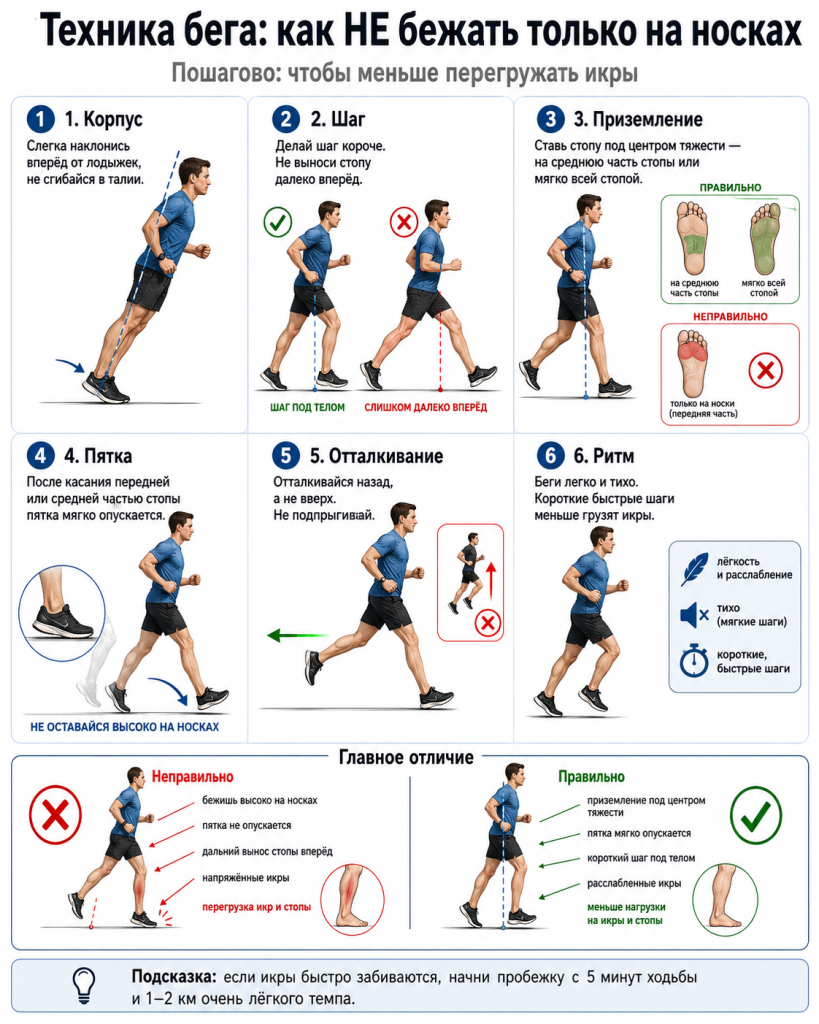
Comments (0)
Leave a comment
Comments are moderated and published after review