
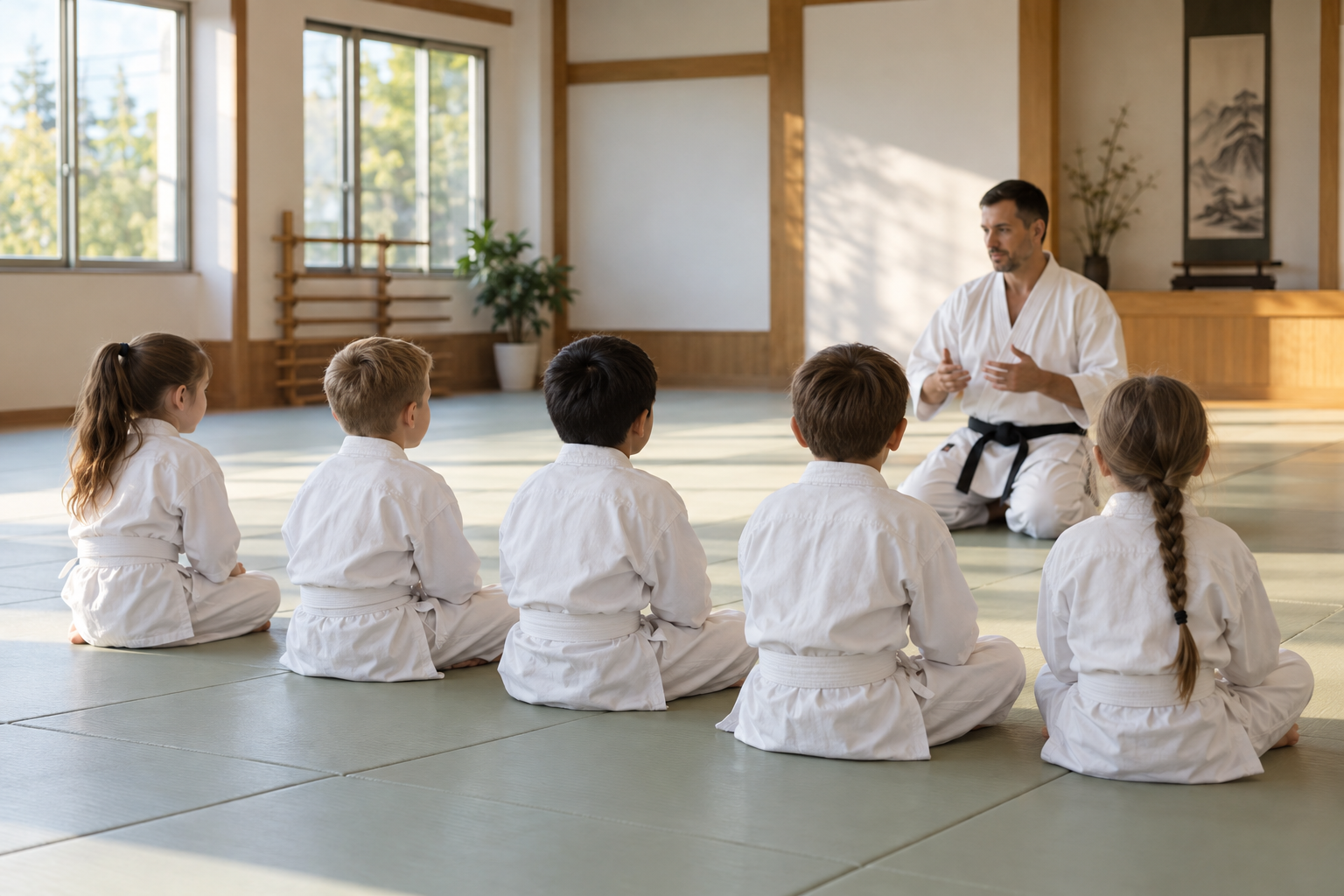
In short: the right age for a first class depends on more than a number. It also depends on the child’s readiness, the group format and the club’s rules. Start with a trial class and a conversation with the coach to see whether the activity feels comfortable and how safety is managed.
At what age can children start?
Schools organise groups differently: some offer classes for preschoolers, while others start later. More important than an early start is whether the child can listen to instructions, work safely in a group, follow simple rules and enjoy the activity. If you have questions about health or limitations, discuss them with a relevant specialist and the coach before the first class.
What happens in the first class?
A good first class is not an exam. Children are introduced to the dojo, the rules on the mat, the warm-up, basic movements and the way the group trains. Contact work and protective equipment are introduced gradually and only as appropriate for the age group and programme.
What to bring
- Comfortable, clean sportswear if your child does not yet have a dogi.
- Water in an unbreakable bottle.
- Slippers or a change of footwear for the way to the mat, if the dojo requires them.
- Tie long hair back so it does not obstruct vision or movement.
- Trim nails and remove jewellery before class.
There is no need to buy a uniform and a full set of protective equipment before the trial class unless the coach asks you to. See also what to bring to your first karate class.
How to assess the group’s safety
- The coach explains rules in language children understand and makes sure they follow them.
- Exercises and training loads suit the group’s age and experience.
- Children work with partners under supervision, following the coach’s instructions.
- Equipment and mats are maintained, and there is a clear procedure for injury or illness.
- Parents know whom to contact about practical and safety questions.

Comments (0)
Leave a comment
Comments are moderated and published after review