
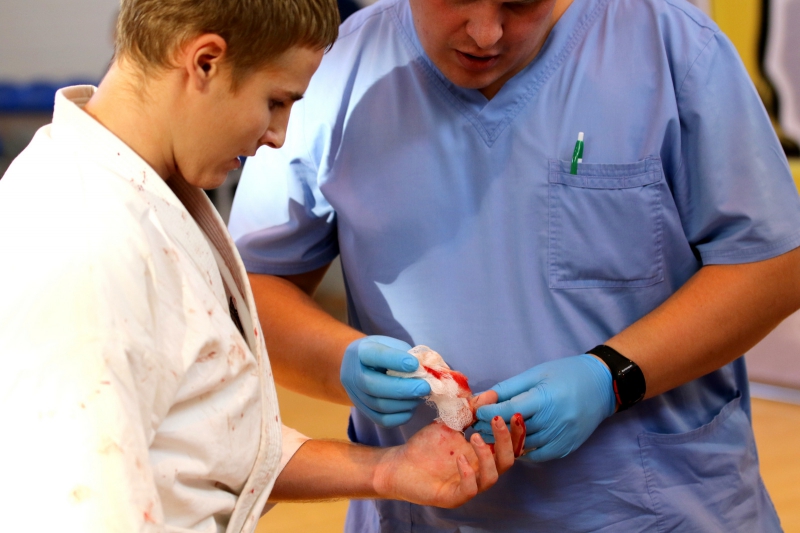
Kyokushin is full contact, so injuries are part of the process. But there is good news: the vast majority are minor (bruises and sprains), and almost all are preventable with proper technique, equipment, and smart progression. Let’s look at the topic through the eyes of a sports physician and a coach — what actually happens, why, what makes Kyokushin different, and what to do about it.
The Most Common Injuries
Research on Kyokushin fighters shows the following picture:
- Large muscle bruises — the most frequent (around half of all cases).
- Sprains — approximately one third.
- Finger injuries — around a quarter (a consequence of hand strikes).
- Chest and thigh bruises — from body shots and low kicks.
- Fractures — around 10%, concussions — around 3%.
The key fact: roughly 89% of injuries are minor. Bruises and sprains are everyday reality, while serious damage is rare.
What Makes Kyokushin Different
The knockdown rules ban hand strikes to the head — so facial, dental, and eye injuries are noticeably fewer than in boxing or MMA. Instead, the emphasis shifts to the body and legs: low kicks and body shots cause thigh and rib bruises, hand strikes lead to hand and finger injuries, and kicks can damage the foot and shin. High kicks to the head are permitted, so the risk of concussion, while low, is real. Tameshiwari and conditioning work add their own risks.
How to Avoid Injuries
- Warm-up and joint mobility work before any contact — a cold body gets injured more easily.
- Equipment: shin guards, groin protection, mouth guard, hand wraps or gloves — these measurably reduce bruises and fractures.
- Technique: most hand injuries come from an improperly clenched fist and poor strike mechanics.
- Controlled contact for beginners and a gradual increase in intensity.
- Don’t spar when exhausted — fatigue breaks down both technique and defense.
Conditioning the Body
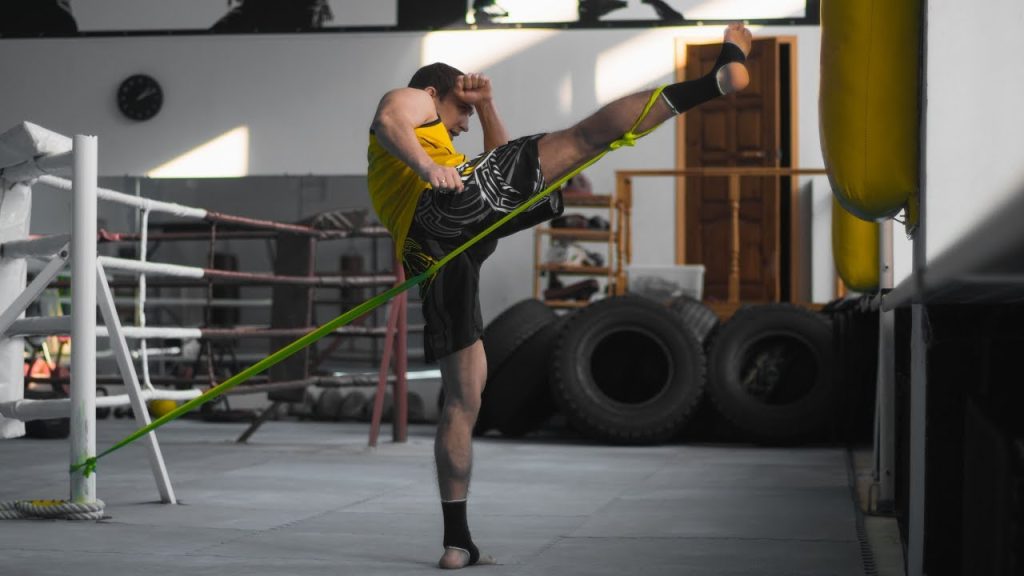
Strong muscles around the joints absorb impact and take the load themselves, so strength training and general conditioning are injury prevention — not just muscle building. Add flexibility, a strong core, and gradual conditioning of striking surfaces. A well-prepared body withstands impact incomparably better.
What to Do When Injured
For a fresh bruise or sprain — rest, ice, light compression, and elevation during the first 24 hours; avoid heavy loading early on. Here are the warning signs that call for a doctor, not just pushing through:
- Suspected fracture: deformity, sharp pain, inability to bear weight or move the limb.
- Signs of concussion: dizziness, nausea, confusion, visual disturbance — stop training, do not return that day, see a doctor.
- Severe swelling or a feeling of joint instability.
The bottom line: injuries are a companion to contact karate, but mostly minor and mostly preventable. Proper equipment, correct technique, gradual progression, and an honest response to warning signs equal a long training career. «Osu» is not about ignoring injury.

Comments (0)
Leave a comment
Comments are moderated and published after review