
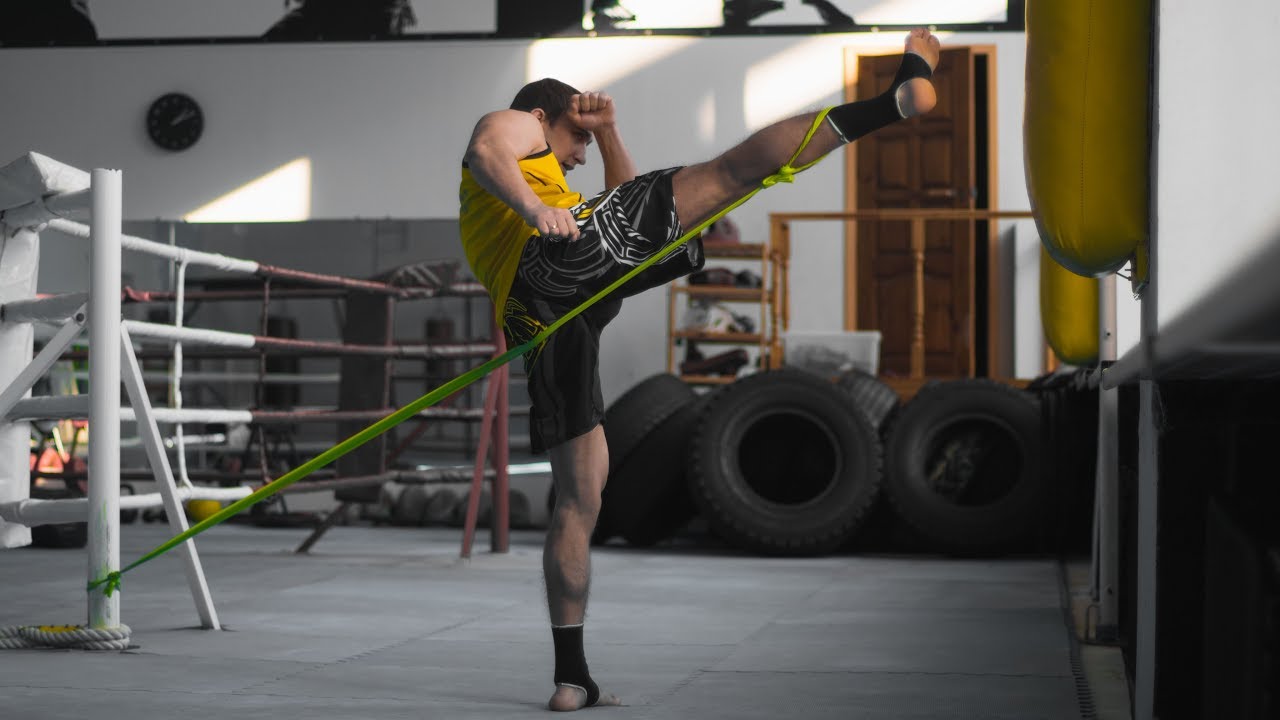
Punch speed is not about «willing yourself to punch faster.» It is primarily a matter of nervous system function and technique, not raw muscular strength. A heavily muscled fighter with slow neural transmission will punch slowly, while a relaxed, technical fighter will punch fast. Let’s break down what actually determines speed, from both a physiological and practical standpoint.
Speed is nerves and fast-twitch fibers
Explosiveness is driven by fast-twitch muscle fibers (especially type IIx) and what is known as the rate of force development — how quickly a muscle produces force in milliseconds. A strike lasts fractions of a second, so what matters is not maximum strength but the ability to recruit fibers instantly. This is trained through explosive work, not slow repetitions: the brain learns to recruit the right fibers sharply.
Relaxation — the secret of speed
The biggest limiter for beginners is tension. A tense muscle moves slowly; a fast punch travels with a relaxed arm and snaps into the fist only at the moment of impact — this is kime. If you are tensed throughout the entire trajectory, you lose both speed and endurance. Learn to be soft during the acceleration phase and tight only at the point of contact.
The kinetic chain — speed starts from the floor
A fast strike is the work of the entire body, not just the arm. The impulse travels from the bottom up: floor — legs — hips — torso — shoulder — fist. Without hip rotation and a push from the leg, the arm will always be slow and weak. That is why punching speed is developed through whole-chain technique, not through bench pressing.
How to train it
- Plyometrics and explosive work: medicine ball throws, clap push-ups — these teach the body to produce force sharply.
- Resistance band punching: trains acceleration along the strike path.
- Shadow boxing at maximum speed: with emphasis on snap and arm retraction.
- Low volume, high quality: speed drops with fatigue, so train it fresh, not at the end of an exhausting session.
Technique beats strength
A clean trajectory, relaxation, and an efficient kinetic chain generate more speed than big arms ever will. First fix the path of your strike and learn not to tense up — only then add the strength base, which you still need to know how to convert into a fast impulse.
The takeaway: speed equals fast-twitch fibers plus relaxation plus kinetic chain plus clean technique, trained explosively and while fresh. Strength only helps when you know how to turn it into an instantaneous impulse.


Comments (0)
Leave a comment
Comments are moderated and published after review