
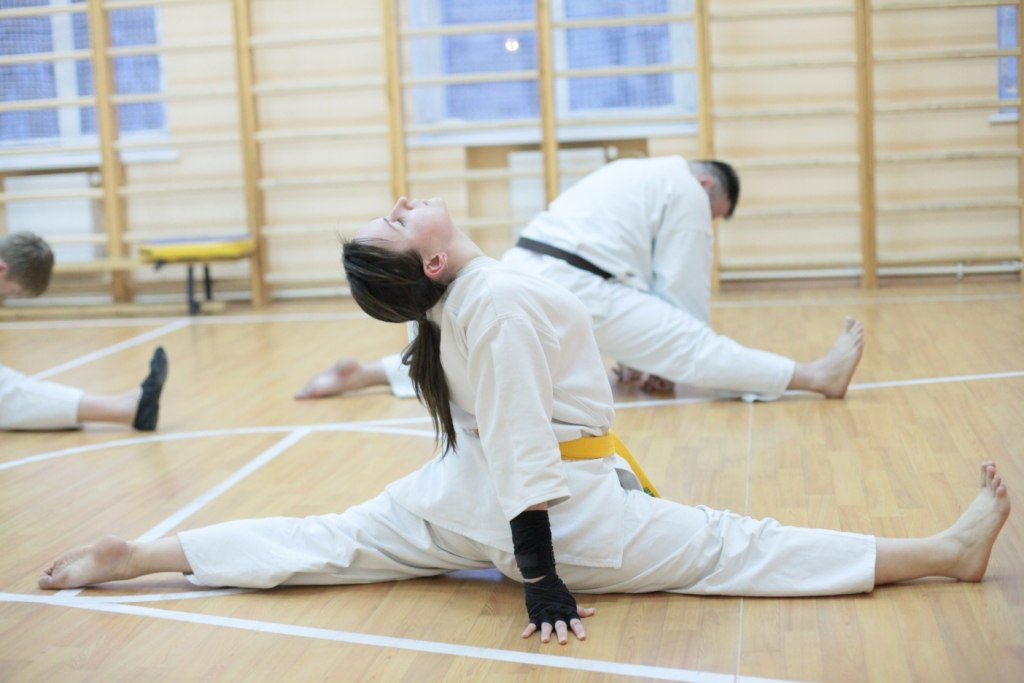
Flexibility in karate serves two purposes: high kicks and injury prevention. But most people stretch the wrong way — they hold static stretches before training and wonder why their kick has weakened and the splits aren’t coming after years of trying. It’s not about effort; it’s about the type of stretching and the timing. Here’s what physiology says and how coaches apply it.
Dynamic Stretching — Before Training
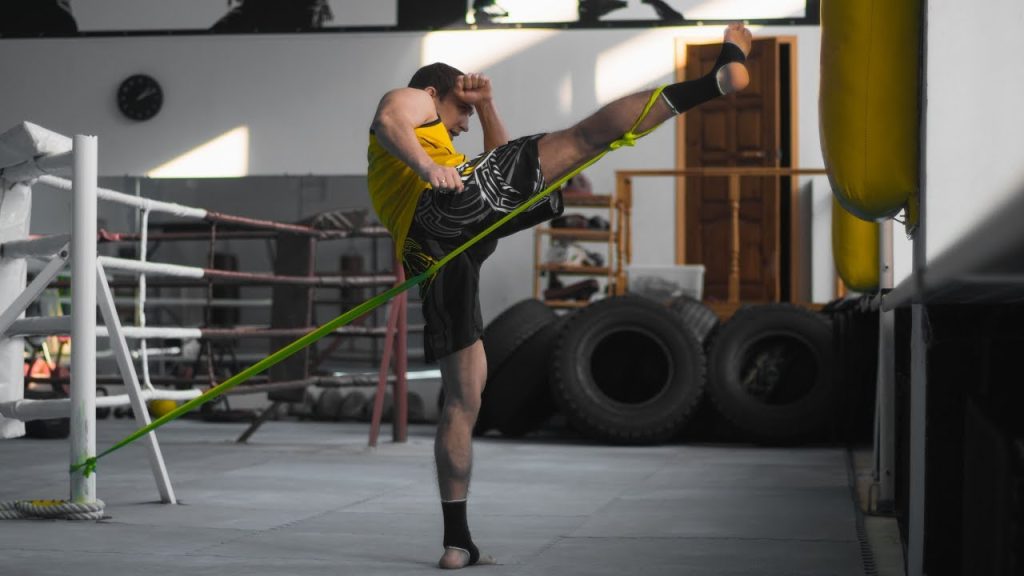
Before a workout you need dynamic stretching: leg swings, hip rotations, arm circles. It warms up the muscles, increases range of motion, and prepares the body for work. Long static holds before training are a mistake: they temporarily reduce strength and power, which directly hurts strikes and speed. Before kumite and kicking drills, stretch in motion, not statically.
Static Stretching — After Training
Static stretching (holding a position for 15-30 seconds) belongs after training, on warm muscles. Done consistently over weeks, it builds real flexibility for the splits and high kicks, while also releasing tension and speeding up recovery. Stretching cold muscles before training this way is pointless and risks injury.
PNF — The Fast Track to the Splits
The most effective method for increasing range of motion is PNF (proprioceptive neuromuscular facilitation). The approach: get into a stretched position, contract the muscle for 5-6 seconds, then relax and deepen the stretch. Once or twice a week is enough — this is a powerful load, and doing it every day is unnecessary.
What to Stretch First
For high and fast kicks, three zones matter most: the hip joints (determine how high you can kick), the hamstrings and adductors (needed for the splits and side kicks), and the ankles. Poor hip mobility is the main reason kicks don’t rise above the waist no matter how much else you stretch. Focus your main work on opening the hips, not just on the longitudinal splits.
Flexibility Is Built Through Consistency, Not Bursts
A few key rules:
- Always warm up first — stretching cold muscles is off limits.
- No jerking or bouncing at the pain point — that’s a path to a tear.
- A little every day beats once a week «through the pain.»
- Progress is measured in weeks and months — you can’t get the splits from zero in one session.
The takeaway: dynamic before training, static and PNF after, on warm muscles and consistently. That’s the whole science. Flexibility isn’t forced out in a single set — it’s built through patience and correct timing of the load.


Comments (0)
Leave a comment
Comments are moderated and published after review