Today, Kyokushin (also spelled Kyokushinkai) is one of the most popular and sought-after karate styles. And it is not just because of the bulls that the founder of the style, Masutatsu Oyama, reportedly dropped with a single punch and his iron fists.
Today, Kyokushin (also spelled Kyokushinkai) is one of the most popular and sought-after karate styles. And it is not just because of the bulls that the founder of the style, Masutatsu Oyama, reportedly dropped with a single punch and his iron fists. Oyama managed to build an organization that brought together all the karateka who wanted to fight but could not fully realize that in their own schools, because before Kyokushin, karate in Japan was more a way of life than a sport — competitive results were not given much importance.
Short answer
Kyokushin training can develop fitness, discipline, and confidence, but it requires regular physical effort and sensible recovery. Whether it suits you depends on your health, goals, and the conditions at a particular club.
Key points
- The benefits of training come from regular practice and a sensible workload.
- A contact discipline requires safety procedures and appropriate protective equipment.
- If you have a chronic condition, discuss training load with a doctor and coach before you begin.
No matter how you look at it, defending against a token light tap is a completely different proposition from dealing with powerful strikes whose aim is to put the opponent down for good. In Kyokushin karate, the main goal is «ikken hissatsu» — «kill with one blow.» This idea has been there from the very birth of the style and remains relevant to this day.
Of course, MMA-spoiled audiences will not see much freedom of movement, hard face punches, or ground grappling in this style, but Kyokushin still allows fighters to express themselves fully within the established rules. The style permits strikes at all three levels — upper (kicks only), middle, and lower — and allows attacks to any part of the body except the groin and the spine.
In fairness, it should be noted that in the heat of a bout these restrictions can sometimes be more theoretical than real.
Pros of Kyokushin karate
Despite a certain degree of toughness, this karate style has advantages that have kept it popular for so long.
Philosophy
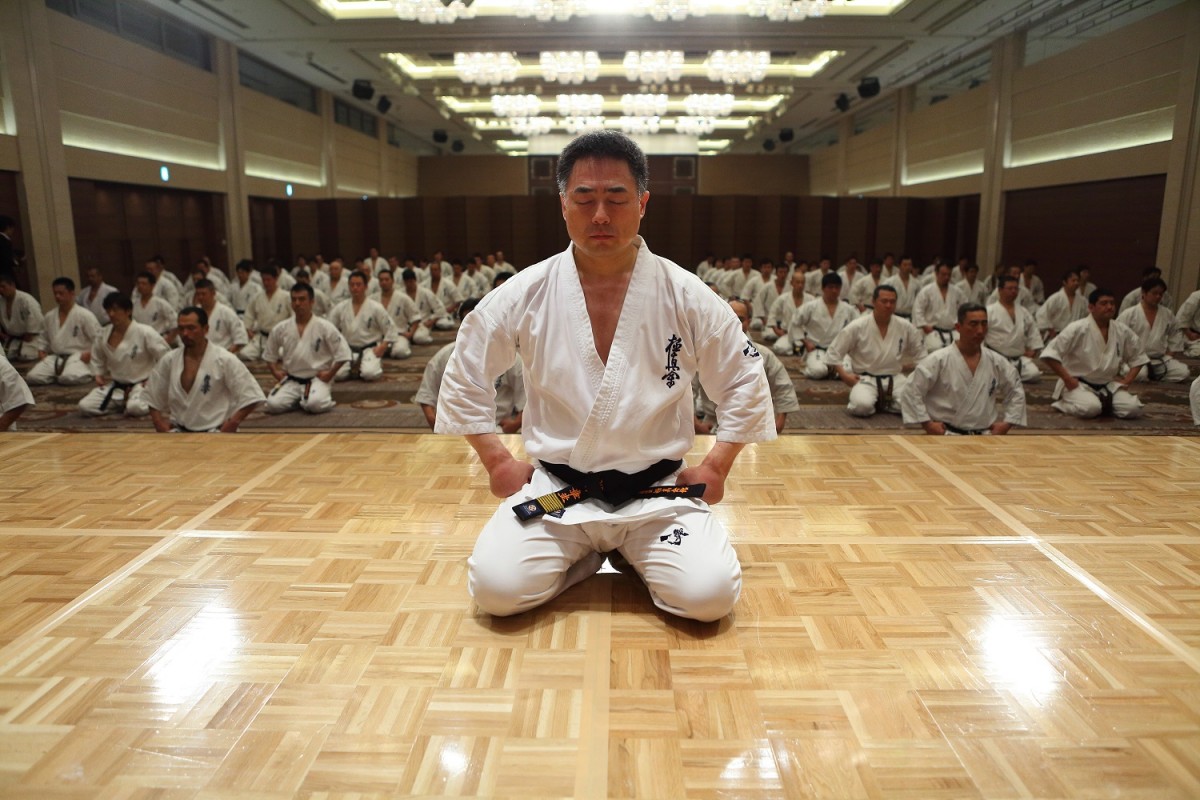
Karate is not only a sports discipline but also a philosophical current that pursues noble goals such as respect for one’s opponent and for elders, and promotes the principle of non-aggression and non-use of force unless your life or the lives of your loved ones are threatened. In Kyokushin karate, discipline holds a very important place — a discipline that will help the student not only inside the dojo but far beyond its walls.
Kicking technique
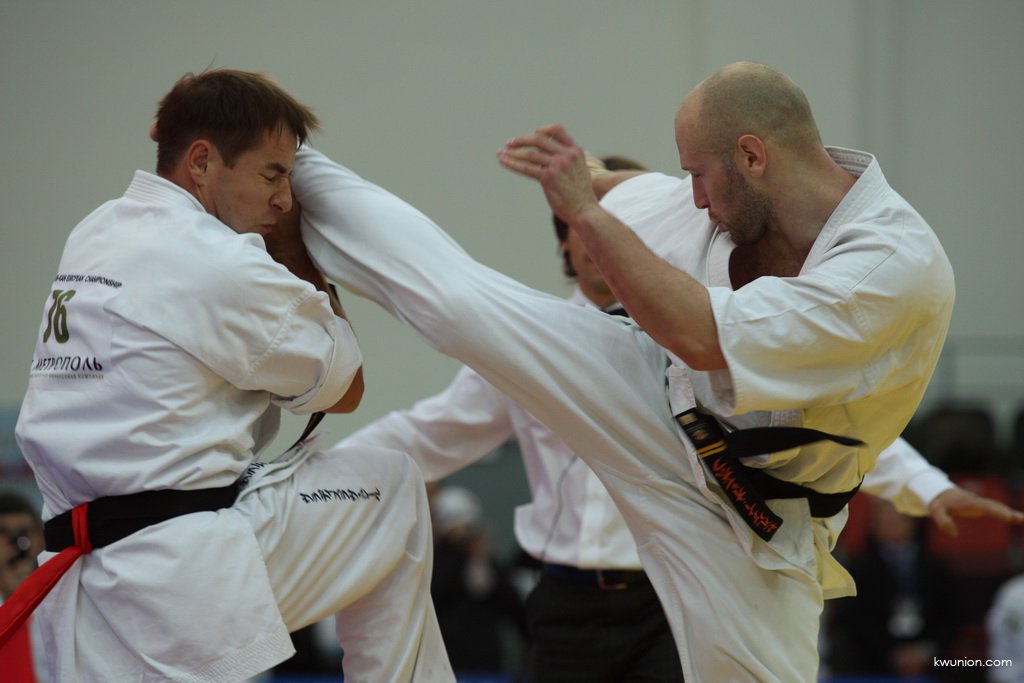
Karate produces excellent kicking technique. So excellent, in fact, that karateka successfully compete in any striking sport and often outperform opponents who have a base in kickboxing, Muay Thai, or taekwondo. A few years of intensive Kyokushin training is enough to acquire — and keep for the rest of your life — the ability to kick while moving.
Effective technical combinations
The biggest advantage of Kyokushin karate, however, is the remarkable hand-foot combination game — provided the training is solid, of course. It is crucial to understand the nuances and to have a coach who breaks down every combination and gives lead-up drills to practice them. Mastery of Kyokushin technique turns a karateka into a very dangerous opponent, especially once head punching has been added to the mix. A number of well-known fighters — Slowinski, Pichkunov, Filho, Andy Hug, Greco, Feitosa, Pettas, Schilt — always put on bright, spectacular, breathtaking bouts in K-1. Often these fighters finished opponents with their hands alone, without even setting things up with kicks first.
Physical conditioning
For all the spectacle of the sparring, Kyokushin karate also means impeccable physical conditioning, achieved by working all muscle groups. Training sessions include a large number of exercises that build strength, endurance, speed of movement, and reaction. The curriculum also includes the skill of breaking hard objects, most commonly boards.
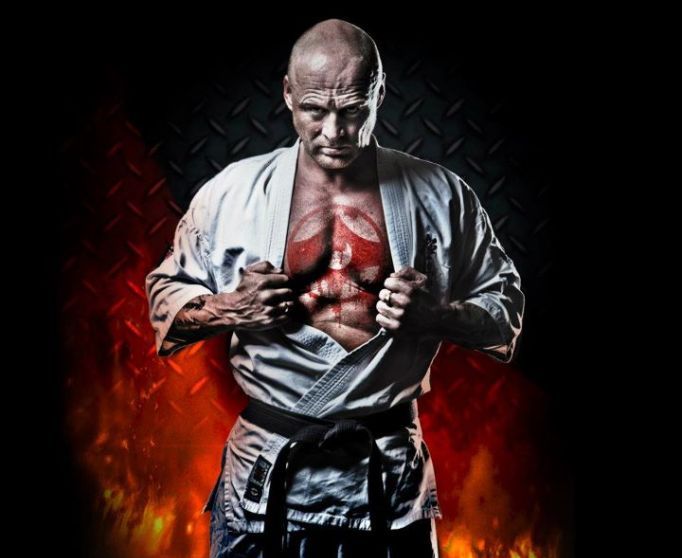
Body conditioning
During a bout, the majority of strikes land on various open parts of the body. This regular conditioning does not go unnoticed — karateka develop very resilient bodies capable of absorbing strikes of any force.
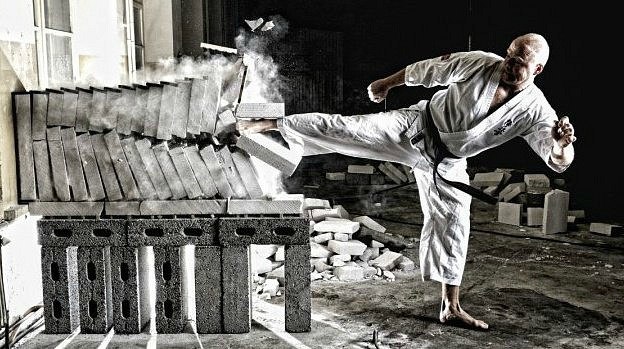
Cons
Like every coin, Kyokushin karate has not only advantages but also disadvantages compared with other martial arts.
Lack of experience with head punches
There is a common belief that Kyokushin fighters lack the skill of punching to the head. This claim is only partly true. In training, karateka do practice upper-level (jodan) hand strikes — in line drills, on pads, and on other equipment — the only thing they do not do is use them in sparring. What can fairly be said is that there is a real lack of practical experience applying head punches in sparring and defending against them.
Occasional injuries
As in any other contact sport, Kyokushin karate athletes occasionally suffer minor injuries — most often bruises and scratches on the body — but when athletes begin taking their fight preparation seriously and step up to major tournaments, there is a risk of more serious injuries.
Fees
Karate classes, like most other Eastern martial arts in our country, are fee-based, since they are not state-supported and are not included in state sports school programs. Parents will need to cover monthly training fees as well as the cost of all required equipment and fund the athlete’s travel to competitions and belt examinations. But as many parents point out, it is worth it!
Summary
A great many athletes have chosen Kyokushin. Its appeal lies in the philosophy that produces people of good character and in the training system that produces tough fighters. The advantages of this sport clearly outweigh its minor drawbacks.
Ос. Всё так.
Здравствуйте! У меня вопрос, с какого возраста можно начинать заниматься киокусинкай?
Людмила, здравствуйте. Ответ на ваш вопрос в статье https://sibkarate.ru/blog/vo-skolko-let-otdat-rebyonka-v-karate/
Дочь занимается Киокушинкай. А первую очередь это философия, потом спорт. Подавляет злобу, вырабатывается дисциплина. Делает тело сильным ,так сказать отбитым от ударов. Притупляется болевой порог. Плюс к учебе. Пока вижу только плюсы. Дочь в школе в полной безопасности. Любые физ конфликты решает сразу в свою пользу.
Здравствуйте. Я и мой сын с прошлого года начали заниматься Кёкусинкай. Мне 48 лет, сыну 6 лет. Не поздно ли мне и не рановато ли сыну? Но занимаемся с удовольствием, хотя мне конечно сложновато уже. А сын пока невнимательный, балуется иногда, в серьез ещё не воспринимает.
Здравствуйте. Что касается сына, то здесь нужно индивидуально смотреть, кто-то и в 6 лет со всей серьёзностью подходит к делу, а кому-то тяжело понять, что от него нужно тренеру. Если не может сосредоточиться на тренировке, то можно до школы попробовать какие-то развивающие группы по ОФП, а с 7 лет уже попробовать начать снова. А вот вам точно не поздно) Удачи вам и вашему сыну!)
Киокушинкай украли моё сердце. Осу!
Мне 56 занимаюсь более 20 лет, 3 дан, а сынишке 6 и тоже очень балуется на тренировках, даже когда папа тренируется.
Подскажите адреса и тренеров Краснодара,которые и со взрослыми занимаются а не только с детьми,возраст 50+ интересует меня?
Добрый день, к сожалению, по Краснодару не подскажем. Можете пообзванивать местные секции и уточнить все интересующие вас вопросы.
Главная победа- победить соперника! Кекушинкай жесткий контактный стиль, но я не понимаю почему нельзя бить руками в голову-лучше в челюсть (поражение 100%). Поэтому кекушинкай всегда проиграет даже боксу!!!
Добрый день) >>Главная победа- победить соперника! — Всё верно, но победить соперника нужно по правилам, по которым проводится соревнование, т.е. в боксе нужно набрать очки или нокаутировать, в грэпплинге нужно добиться сдачи соперника, в Киокушинкай нужно получить определённые оценки (вазари, иппон) или получить большее количество флажков своего цвета. >>но я не понимаю почему нельзя бить руками в голову-лучше в челюсть (поражение 100%) — Ровно потому же , почему в боксе не бьют ногами, а, например, в дзюдо нет ударной техники) Таков вид спорта и правила проведения соревнований по нему, которые продиктованы определённой философией, это не уличная драка. Если хотите жёсткости по полной, можете заняться ММА, никто не запрещает) >>Поэтому кекушинкай всегда проиграет даже боксу!!! — Вы говорите про уличную драку, которая не имеет ничего общего со спортом. В чём именно Киокушинкай проигрывает боксу не понятно)
Мужчины проигрывает и выигрывает не стиль а боец. Осу
Ну не соглашусь что удары в голову не поставлены у киокушинкай. Поставлены и более чем. И умеют бить тоже. Но зачем сближаться на опасную дистанцию, когда ударом ноги к примеру лоу кик, можно не подготовленного человека срубить за раз. Заниматься с какого возраста, сам занимался усилиннно с лет 13, до 19, ребёнок мой с 5,5 и по сей день занимается, имеет 4 кю(зелёный пояс). Плюс да дисциплина, физ подготовка супер. Да и у нас ещё тренер очень верующий, и вроде если правильно назову прислуживает в храме. Так что нам повезло.
И боксу, киокушинкай не проиграет, поверьте. Боксеры в замотанных бинтами руками даже по грушам лупят, а киокушиновец голыми открытыми руками, плюс разбивание предметов. У киокушинкай кулаки и кисти закаленей, и вырубить того же боксера не повредив руку за раз сможет, а вот боксер голой рукой, то это как повезёт. И скорость и реакция у киокушинкай не хуже.
Если бы в киокушикае били кулаками в голову это был бы стиль убийственный. Удар наносится не как плёткой, а как ломом в лёд, пробивает на сквозь за счёт точно сконсентрированной энергии. Правильно что запрет. На улице в целях самообороны да.
Ходим с сыном 10 занятие.. мне 42 , ему через месяц 5) очень повезло с мастером… Всем советую) дети от 6 и до 16.. когда спарринги — невозможно оторваться… Стремительные и точные… Все очень душевно… Меня взрослую тетю приняли в коллектив) чтоб не ждать ребенка , лучше заниматься вместе с ним)) спорт это красота и сила) все добра…
В киокушинкае можно много чему научиться но надо упорство желание терпение время я полюбила каратэ мне понравилось туда ходить я не брошу как бы не было тяжело я дойду хотя бы до жёлтого или зелёного пояса посмотрим как всё дальше сложится может и чёрный пояс получу я щас хожу пол года не так уж и тяжело но чем дальше тем сложнее я это понимаю но я постараюсь
Входит в перечень ДЮСШ уже много лет,более десяти, можно заниматься бесплатно. А про удары в голову руками — сын в пятом классе во время драки изрядно помял лицо боксёру, первому хулигану школы.
Здравствуйте. Однажды тренер по боксу мне сказал- бокс отличная школа, но очень важно уметь контролировать себя, а то всунешь кому по ГОРЯЧКЕ в челюсть, сломаешь и будешь потом 3 года на зоне есть баланду. Это относится ко всем боевым умениям. Был случай и у меня. Пронесло. Служил в СА в РДР (разв.десантной роте.)
У меня дочь занимается. Дисциплина за полгода пришла в идеальное состояние, внутренняя энергия на уровне, физическая подготовка с каждым занятием повышается. Я вижу только одни плюсы, ещё и с тренером повезло, просто замечательный. Я очень рада, что мы ушли в этот спорт, она ни разу не пожалела
Мне 59, начал месяц назад, в жизни не было ничего из боевого, пока рад всему, что случилось. Ос.