
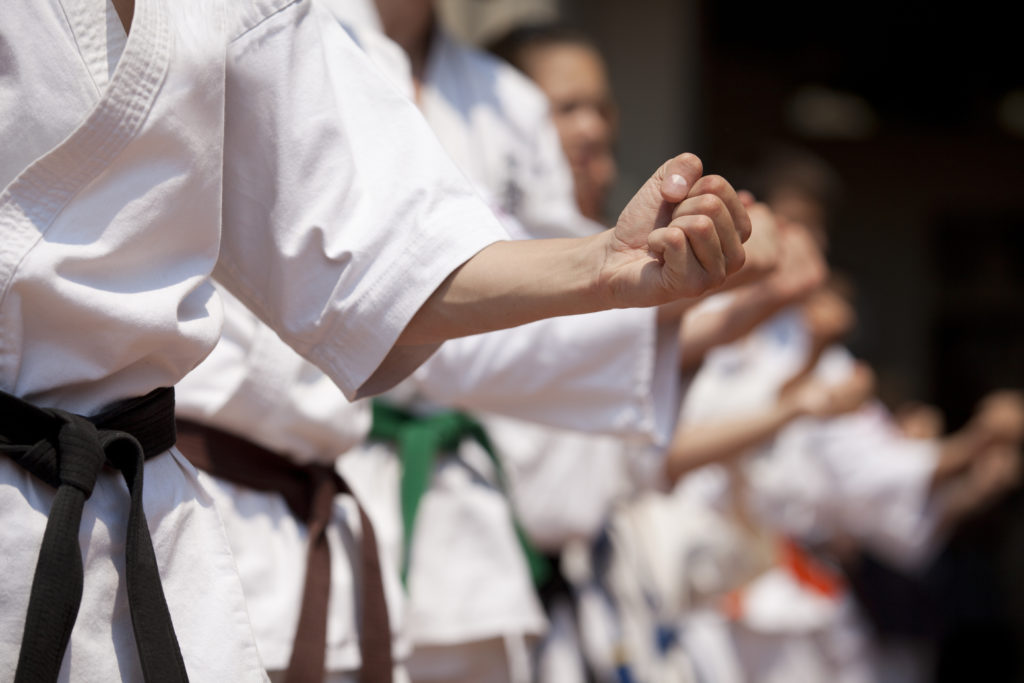
Sports clubs are an important part of a child’s balanced development, especially today when computers and gadgets are often the main form of entertainment. Karate frequently catches the eye of parents looking for something worthwhile.
Sports clubs are an important part of a child’s balanced development, especially today when computers and gadgets are often the main form of entertainment. Karate frequently catches the eye of parents looking for something worthwhile. This martial art is genuinely a good choice, as it provides not only physical training but also contributes to overall balanced development.
The main task for parents is choosing the right karate club. Let’s look at the following key points:
- Choosing an organization
- Group classes or individual training
- Coach qualifications
- The training facility
- Switching clubs and coaches
Despite how simple these questions may seem at first glance, making the right choice in practice is not so straightforward. It is worth studying all the nuances in advance to ensure that training brings both enjoyment and real benefit.
Choosing an Organization
The first thing to look at when choosing a Kyokushin karate club is the organization the club belongs to. It is no secret that there are many karate styles, and within each style there are numerous organizations. Kyokushin alone, as of 2018, has 38 different organizations worldwide. So how do they differ from one another?
After the death of the karate founder Oyama Masutatsu, his style split into several independent organizations, each led by his most ambitious students. The number of such organizations grows year by year, driven by the same ambitions and personal conflicts within existing groups.
Major world organizations differ greatly from those created yesterday, a month ago, or a couple of years back. Large organizations hold their own world championships, world cups, continental and national championships; they receive government recognition in their home countries, are recognized by one another, uphold the original Kyokushin traditions, and issue belts that are recognized throughout the world Kyokushin community. Smaller and newer organizations, by contrast, attend minor tournaments to which equally small organizations invite them, are viewed skeptically by the major world bodies, and their belts are not always recognized in the Kyokushin community — where virtually any athlete who expresses a desire to teach can become an instructor.
For that reason, as mentioned in one of our earlier articles, if you cannot decide which organization to choose, we recommend one of the following established world organizations:
- IKO Matsui
- WKO Shinkyokushin
- IFK
- IFKK Royama
- International All-Styles Karate Federation (Kyokushin is represented here under the «full contact» section)
- IKO Matsushima
- So-kyokushin
- Kyokushin Union (Rengokai)
Find the official website of the organization online, look up the regional representative in your city, and you are ready to start training.
Group Classes or Individual Training?
Some parents bring their child to training and expect spectacular results from the very first days. To achieve this, they are willing to pay for individual sessions, which can be quite expensive. And for their money, they expect results — without stopping to think about what price those results might come at, if they come at all.
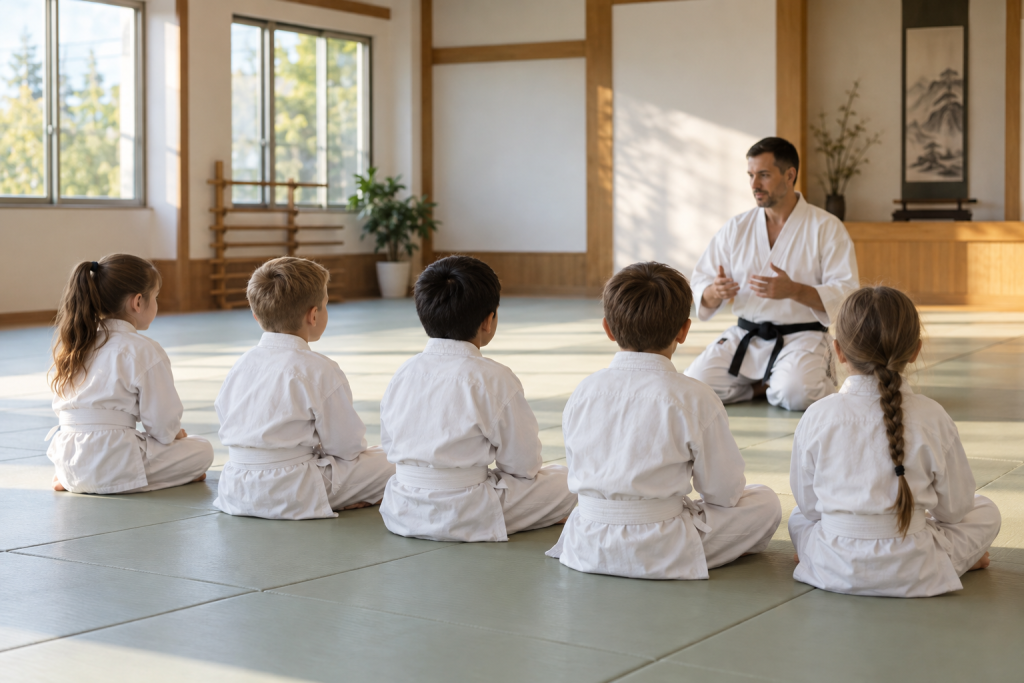
Practice shows that group classes produce the best results. It is in these sessions that an atmosphere is created that is conducive to learning, allows a child’s abilities to unfold, and gives them a drive for further development. Being part of a group also has a positive effect on a child’s overall development, helps them find their place in society, expand their social circle, and learn to work as part of a team. This is exactly why an experienced and competent coach will rarely endorse individual training — at least not from the very beginning — unless it serves simply as a supplement to the child’s group sessions.
Coach Competence
The question of coach qualifications is critically important and worth discussing separately. A coach’s level is sometimes revealed by seemingly minor details:
- Attire.
Unfortunately, it is not uncommon to see a coach running sessions in everyday clothes, jeans included. A qualified coach would never allow themselves such informality during training. During sessions, a coach must wear a clean white dogi (karate uniform).
- Communication style.
Watch the coach during training — ideally without being noticed. Their manner of communicating with the children will tell you a great deal. A coach must not raise their voice at children, show irritation, or display any form of harshness. Beyond that, the instructor to whom you entrust your child should have a good level of personal culture, be educated and well-rounded. If the coach speaks in a manner that leaves much to be desired, uses inappropriate language, that instructor is unlikely to teach your child anything worthwhile.
- Qualifications.
And of course, find out whether the coach holds a higher physical education degree, inquire about their martial arts rank, clarify their individual coaching experience, and ask about their competitive achievements — though it is worth keeping in mind that not every good fighter makes a good coach. It is better if the instructor has a solid competitive record to pass on to their students.
Training Facility
A word again on the training facility. The space must meet a number of specific requirements:
- A ventilation system.
- Good lighting.
- Changing rooms, a restroom, and ideally a shower.
Of course, pay attention to the overall appearance and cleanliness of all areas.
Keep in mind that karate, like any sport, carries a risk of injury, so check whether the facility has proper training equipment. Ask the coach whether protective hand and foot pads, protective vests, and similar gear are used during training.
The absence of such equipment should raise a concern — using it minimizes discomfort for the child during training and virtually eliminates the risk of injury. Do not hesitate to check whether the equipment meets quality and safety standards.
Switching Karate Clubs
There is a common belief that once a child starts with one coach, switching clubs is out of the question. That is simply not true. Unfortunately, situations where even the best coach and a child cannot find common ground are not that rare. Will training sessions that a child attends with obvious reluctance be productive? Unlikely — they are more likely to put the child off karate altogether.
That said, keep in mind that children are not always the most objective observers, so first look into the conflict. Training is not only about learning karate — it is also about developing communication skills, the ability to work in a team, and a sense of responsibility not just for oneself but for teammates as well. Changing clubs too frequently will not lead to anything good.

Очень хочу заняться этим видом единоборств….