
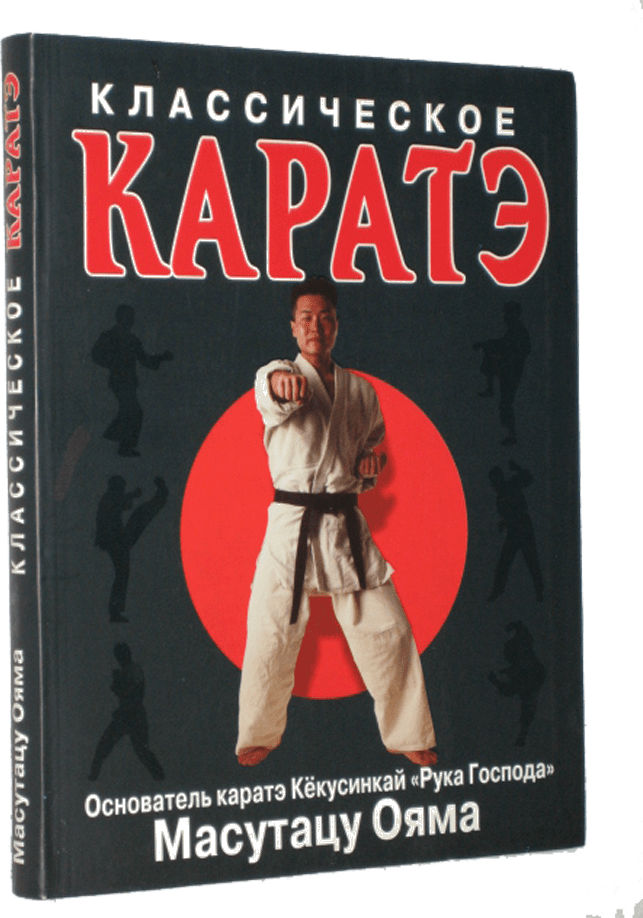
After the death of Masutatsu Oyama in April 1994, unified Kyokushin split into dozens of independent organizations. Today the world has more than 120 federations and organizations developing Kyokushin — each with its own rules, leadership, and competition system. Together they unite somewhere between 12 and 15 million practitioners across more than 130 countries.
Short answer
Kyokushin is developed by several independent international organisations rather than by one unified structure. Competition rules, grading procedures, membership, and event calendars should therefore be checked with the organisation and federation to which a specific dojo belongs.
Key points
- The name Kyokushin brings together schools with shared historical roots, but it does not remove organisational differences.
- IKO, IFK, WKO, and other organisations publish their own regulations, news, and documents.
- For a grading or tournament, rely on the organiser’s regulations rather than a general list found online.
Why Kyokushin Split
Masutatsu Oyama left no official will naming a successor. This triggered a sharp conflict: several powerful masters competed for control of the international organization IKO, which Oyama himself had founded in 1964. The first major split actually occurred during the founder’s lifetime in the late 1980s and early 1990s, when a number of prominent masters left IKO and created their own structures. After Oyama’s death the process accelerated: different groups lost the restraining authority of the founder and each went its own way.
Fragmentation is not only a weakness. Each organization brings something of its own: WKO emphasizes competition across 101 countries, IFK preserves the spirit of original Kyokushin as envisioned by Oyama, Kyokushin-kan develops traditional kata, and KWU unites several leading organizations under a single competitive umbrella.
The Largest International Organizations
IKO Kyokushinkaikan (Matsui Group) — IKO-1
| Parameter | Data |
|---|---|
| Founded | 1964 (Masutatsu Oyama), reorganized 1994 |
| Headquarters | Tokyo, Japan |
| Kancho | Shokei (Akiyoshi) Matsui, 8th dan |
| Countries | ~80 (38 countries at the 2019 championship) |
| Members | ~3-5 million (historical figure cited: 12 million) |
| Website | kyokushinkaikan.org |
Considered the «original» IKO, founded by Oyama himself. After his death, Shokei Matsui was chosen as kancho in accordance with the founder’s expressed wishes. The organization adheres strictly to the canons of original Kyokushin and does not officially recognize other organizations. It holds its own World Championship.
WKO Shinkyokushinkai — «New Kyokushin»
| Parameter | Data |
|---|---|
| Founded | 2001 |
| Formerly known as | IKO-2 |
| Headquarters | Japan |
| President | Shihan Kenji Midori, 8th dan |
| Countries | 101 (officially confirmed, a record among organizations) |
| Members | ~3-4 million |
| Website | shinkyokushinkai.co.jp |
Currently the largest organization by geographic reach. The 2019 WKO World Championship drew representatives from 71 countries, and in 2023 WKO officially announced representation in 101 countries. Its position is particularly strong in Eastern Europe (Lithuania, Poland, Romania), Russia, Brazil, and Japan.
Kyokushin-Kan International (KI)
| Parameter | Data |
|---|---|
| Founded | December 2002 |
| Headquarters | Tokyo, Japan |
| Kaicho | Hatsuo Royama, 9th dan |
| Kancho | Hiroko Okazaki, 8th dan (from 2022) |
| Countries | ~60 |
| Members | ~1-2 million |
| Website | kyokushinkan.com |
Created by Hatsuo Royama after his disillusionment with Matsui’s leadership in IKO. In December 2002, with the help of Hiroko Okazaki and other masters, Royama founded Kyokushin-kan International Honbu. The organization places special emphasis on traditional kata and martial philosophy. Its position is strong in Russia, Belarus, and Japan.
IFK — International Federation of Karate
| Parameter | Data |
|---|---|
| Founded | 1991 |
| Headquarters | London, United Kingdom |
| Founder | Hanshi Steve Arneil (10th dan) |
| President | Shihan David Pickthall (from 2021) |
| Countries | ~50 |
| Members | ~500,000 — 1 million |
| Website | ifk-kyokushin.com |
Founded in 1991 by Steve Arneil — a Scottish master and champion of the first open Kyokushin World Championship (1975). Steve Arneil left Oyama’s IKO along with the British Kyokushin karate union. The IFK positions itself as a faithful guardian of Oyama’s original principles. It is particularly strong in the United Kingdom, Russia, Australia, and South Africa.
KWU — Kyokushin World Union
| Parameter | Data |
|---|---|
| Founded | October 12, 2011 |
| Headquarters | Moscow, Russia |
| Founders | Yuri Trutnev, Hatsuo Royama, Steve Arneil, David Pickthall, Loek Hollander |
| Countries | ~70 (7 continental federations) |
| Members | ~1-2 million |
| Website | kwunion.com |
Created as a supra-organizational umbrella uniting several leading organizations for joint competition. KWU brought together IFK, Kyokushin-kan, KWF, and other organizations for major international tournaments. The Moscow headquarters reflects the strong influence of the Russian sporting community. Continental federations: Europe, CIS, Asia, Africa, Australia and Oceania, North America, South America.
KWF — Kyokushin World Federation
| Parameter | Data |
|---|---|
| Founded | ~2000s |
| Headquarters | Spain / Netherlands |
| Founder | Loek Hollander, 10th dan (Netherlands, died February 16, 2020) |
| President | Antonio Pinero, 9th dan (Spain) |
| Countries | ~40 |
| Members | ~400,000 |
Founded by Loek Hollander — a legendary Dutch master and vice-president of the rules committee. After Hollander’s death in 2020, the organization was taken over by Spaniard Antonio Pinero. Vice-president is Hristo Traiков (7th dan, Bulgaria). KWF is part of KWU and actively participates in joint championships.
KWO — Kyokushin World Organization (Sosai Kyokushinkaikan)
| Parameter | Data |
|---|---|
| Renamed | 2020 (formerly IKO Sosai Kyokushinkaikan) |
| Headquarters | Japan / Denmark |
| Kaicho | Flemming Jinzen Schroter, 8th dan (Denmark) |
| Trustee | Kikuko Oyama (founder’s family) |
| Vice-president | Alexander Anferov, 6th dan (Russia) |
| Countries | ~40 |
| Members | ~300,000 |
The only organization managed directly by Masutatsu Oyama’s family through trustee Kikuko Oyama. It claims special legitimacy as the direct heir of the original IKO. Renamed KWO in 2020 to emphasize its independent status.
IBK — International Budo Kai Kan
| Parameter | Data |
|---|---|
| Founded | 1980 (as BKK), renamed IBK in 1996 |
| Headquarters | Netherlands |
| Founder | Jon Bluming, 10th dan |
| Countries | ~20 |
| Members | ~100,000 |
Jon Bluming was one of Oyama’s first European students. His organization is distinguished by its emphasis on practical self-defense, including judo-style throws. Unlike most Kyokushin organizations, IBK permits grappling techniques. IBK rules were adopted as the basis for World Kyokushin Budokai (WKB).
WIBK — World Independent Budokai Kan
| Parameter | Data |
|---|---|
| Founded | 2012 |
| Headquarters | Switzerland |
| Founder | Bernard Creton, 10th dan (France) |
| Countries | ~30 |
Bernard Creton is a medalist from the 2nd Kyokushin World Championship (1979). Registered as a non-profit organization in Switzerland. Develops traditional Kyokushin primarily in French-speaking countries.
WKB — World Kyokushin Budokai
| Parameter | Data |
|---|---|
| Founded | April 2008 |
| Head | Pedro Roiz |
| Countries | 52 |
| Rules | Based on IBK rules |
Strong European presence, especially in Spain and Portugal. Uses rules based on Jon Bluming’s IBK system.
IBU KyodoKyokushin (Poland)
| Parameter | Data |
|---|---|
| Headquarters | Poland |
| Kancho | Maciej Misiak (former Branch Chief of the Oyama family) |
| Countries | 75 (including Japan) |
One of the geographically largest lesser-known organizations. Led by Maciej Misiak, who has a direct connection with the Oyama family. Present in Japan, Poland, Russia, and other countries.
Japanese Organizations: The «IKO Family»
After Oyama’s death, several additional branches formed within Japan, each claiming a direct link to the original IKO:
| Organization | Founded | Leader | Key Feature |
|---|---|---|---|
| IKO-3 (Matsushima Group) | 1998 | Yoshikazu Matsushima, 8th dan | Split from IKO in 1998. Strong in Iran and Pakistan. |
| IKO-4 (Tezuka Group) | ~1995 | Yoshimichi Mori | Founded by Toru Tezuka, later transferred to Mori. ~15 countries. |
| IKO-5 (All Japan Kyokushin Union) | ~2000 | Yasuhiro Shichinohe, 8th dan | Union of independent organizations and dojos in Japan. |
| IKO Sakamoto Group | ~2000 | Shigenori Sakamoto | Active in Iran, Pakistan, India, and Chile. |
| World So-Kyokushin | ~2000 | Daigo Oishi | Affiliated with IKO as «IKO World So-Kyokushin.» ~20 countries. |
| IKO World Kyokushin Kaikan | 2018 | Ryuko Take | Kyushu region, Japan. |
| IKO World Zen-Kyokushin | 2018 | Takuma Koketsu | Founded by Kazuyuki Hasegawa. Active in Japan and Asia. |
| IKO Nakamura | ~1995 | Masanaga Nakamura | Founded by Makoto Nakamura, now led by his son. |
| IBMA Kyokushin (Masuda Dojo) | ~2000 | Akira Masuda | Japanese school with its own grading system. |
| Kenbukai | ~2005 | Masahiro Kaneko | Kyokushin Budo Karate Organization. Japan. |
European and Regional Organizations
| Organization | Founded | Country / HQ | Leader | Countries / Notes |
|---|---|---|---|---|
| AKKO (American Kyokushin Karate Org.) | 1997 | USA | Don Buck | ~15 countries. Preserves Oyama’s traditions in America. |
| WAKKU (World All Kyokushin Karate Union) | 2014 | International | Seiji Kanamura, Hussein Suleyman | ~20 countries. Middle East, Asia. |
| Internationale Budo Kai | ~1990 | Netherlands | Gerard Gordeau, 9th dan | Europe. Gerard Gordeau is a legend of 1990s MMA. |
| IKAK (Int. Karate Alliance Kyokushinryu) | ~2000 | Malaysia | Peter Chong | Southeast Asia. ~15 countries. |
| AIKKA (All India Kyokushin Karate Ass.) | 2009 | India | Shihan Mahadeb Bramha | India. Affiliated with IKO World Zenkyokushin. |
| KKFI (Kyokushin Karate Foundation of India) | 2013 | India | Vasant Kumar Singh | India. Independent structure. |
Other Well-Known World-Level Organizations
In addition to those listed above, many national and regional Kyokushin organizations operate worldwide. Below is a summary table grouped by region:
| Region | Organizations |
|---|---|
| Europe | BKK (United Kingdom), FKKE (France), DKV (Germany), FKP (Poland), FRK (Romania), FBKK (Belgium), SKA (Switzerland), KA (Austria), Kyokushin Italia, Kyokushin Iberia (Spain) |
| Eastern Europe / CIS | FLKK (Lithuania), FKU (Ukraine), BFK (Belarus), FKK (Kazakhstan), FKA (Azerbaijan), FKG (Georgia), FKM (Moldova), FKU (Uzbekistan) |
| Asia | JFKO (Japan, national federation), KIF (Korea), CKKF (China), PKF (Pakistan), IKFI (Iran), KKUNF (Nepal), MKKF (Mongolia) |
| Middle East / Africa | JKFA (Jordan), EKFA (Egypt), SLKF (Sri Lanka), NKFF (Nigeria), SAKF (South Africa), BKFF (Burkina Faso) |
| Americas | BKKA (Brazil), AAK (Argentina), CKF (Canada), USKK (USA), MKF (Mexico), PEKF (Peru), VKF (Venezuela) |
| Australia / Oceania | AKKO (Australia), NKK (New Zealand) |
Russian Kyokushin Organizations
Russia is one of the leading forces in world Kyokushin alongside Japan and Brazil. Several major federations operate in the country, each affiliated with a different international organization:
| Organization | Founded | International Affiliation | President | Regions / Members |
|---|---|---|---|---|
| RNFKK (Russian National Federation of Oyama Kyokushinkai Karate-Do) | 1995 (reg. 1999) | IKO Kyokushinkaikan (Matsui) | Alexander Ipatov, 7th dan, Master Shihan | ~60 regions, 50,000+ members. Hosts the «Open Russian Cup» — one of the world’s most prestigious championships. |
| FKKR-WKO (Kyokushin Karate Federation of Russia) | ~2001 | WKO Shinkyokushinkai (Midori) | Leonid Ovchinnikov | ~40 regions. One of the AKR members. |
| Federation of Kyokushin-Kan Karate-Do of Russia | 2002 | Kyokushin-Kan International (Royama) | Valery Toritsyn, 7th dan | ~30 regions. Part of AKR since 2005. |
| FKR-IKO (Federation of Kyokushinkaikan Russia) | ~2000 | IKO (one of the branches) | Various heads over different periods | ~20 regions. Part of AKR. |
| FKR-IFK (Kyokushin Federation of Russia IFK) | ~2000 | IFK (Arneil) | Regional leaders | ~15 regions. Part of AKR. |
Kyokushin Association of Russia (AKR)
The Kyokushin Association of Russia (AKR) is a special body in Russian Kyokushin created to coordinate and unite all national federations.
History
AKR received state accreditation on March 19, 2004 as the sole Russian Ministry of Sport-recognized all-Russian organization developing Kyokushin. The organization was created out of the need for a single official representative of Kyokushin before government bodies and at international sports forums.
In December 2005, the Federation of Kyokushin-Kan Karate-Do of Russia and the Federation of Kyokushin Russia (WKO) were officially admitted to the Association. This was the first step toward uniting disparate organizations under a single umbrella.
In 2011, the AKR Presidium was established. It develops the strategy for Kyokushin in Russia, makes decisions on regional activity, and coordinates international relations.
Membership: Who Is in AKR
Today the Kyokushin Association of Russia includes five federations:
- FKKR (WKO) — Kyokushin Karate Federation of Russia, affiliated with WKO Shinkyokushinkai of Kenji Midori
- FKKR (KI) — Federation of Kyokushin-Kan Karate-Do of Russia, affiliated with Kyokushin-Kan International of Hatsuo Royama
- RNFKK (IKO) — Russian National Federation of Oyama Kyokushinkai Karate-Do, affiliated with IKO Matsui
- FKR (IKO) — Federation of Kyokushinkaikan Russia (second organization in the IKO system)
- FKR (IFK) — Kyokushin Federation of Russia, affiliated with Steve Arneil’s IFK
President and Leadership
The President of the Kyokushin Association of Russia is Yuri Petrovich Trutnev — a statesman and holder of a 5th dan in Kyokushin. Trutnev has served at various times as Mayor of Perm, Governor of the Perm Krai, and Minister of Natural Resources of the Russian Federation. His authority played a major role in securing AKR’s official recognition at the state level.
The Executive Director of AKR is Sergei Gennadyevich Suvorov.
Purpose of AKR
The Association’s primary goal is to overcome the fragmentation of Kyokushin in Russia and present a unified face of Kyokushin to the state and the international community. Thanks to AKR:
- Kyokushin gained the status of an officially recognized sport in Russia
- It became possible to award official sports titles (Candidate Master of Sport, Master of Sport)
- Russian athletes can compete at all-Russian competitions under a unified banner regardless of their individual federation
- Kyokushin gained the ability to participate in international multi-sport events with state support
Conclusion: Why There Are So Many Organizations
The fragmentation of Kyokushin is the inevitable consequence of the death of a charismatic founder without a clear succession mechanism. Over the 30 years since Oyama’s passing, the situation has stabilized: the major organizations have built their own championships, belt systems, and communities. The creation of KWU in 2011 was an attempt to establish a supra-organization for joint competition without merging.
For the practicing karateka, the variety of organizations is not a problem: technique, philosophy, and the spirit of OSU are the same across all branches. Differences mainly concern competition rules and belt systems. When choosing a club, what matters most is the quality of the coach and the training process — not the flag above the door.
Comments (0)
Leave a comment
Comments are moderated and published after review