In 1964, Japanese athletes demonstrated karate-do at the Tokyo Olympics. The spectacle captivated the audience, and a wave of interest in the martial art rolled across the world.
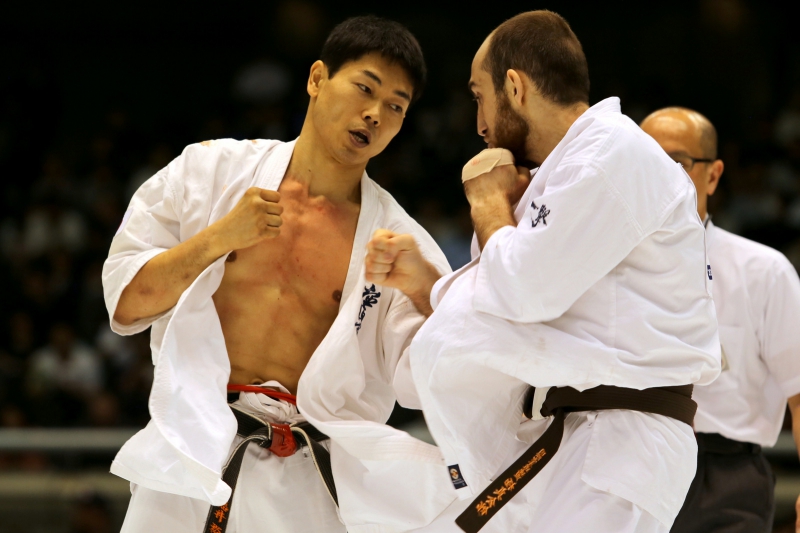
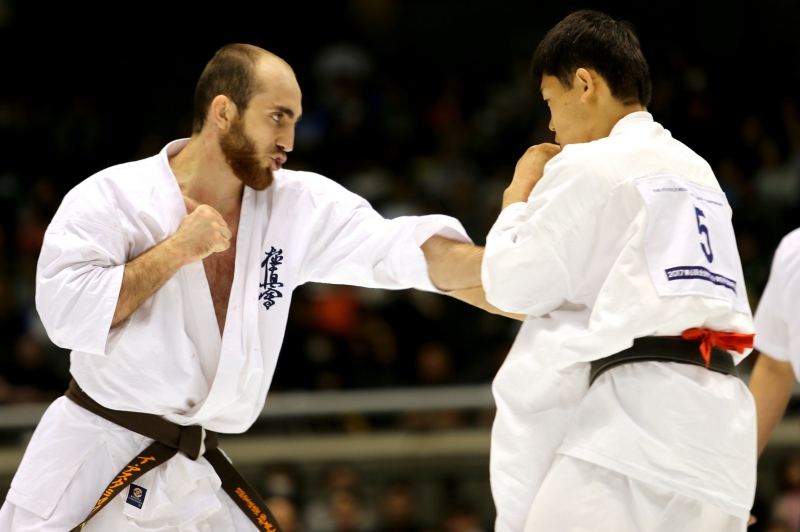
Karate entered the Soviet Union through various channels: athletes brought knowledge back from abroad, Asian students showed techniques to their classmates, and enthusiasts picked up moves from films. By the 1970s, a genuine karate craze had swept the country.
The Boom
The first legal instructors were Tetsuo Sato, Hashimoto, Ako Tauluev, Alexander Podshchekoldin, and Vladimir Kovalev. In 1977 the Central Karate School opened — the entrance competition was 200 applicants per spot. The following year the USSR Karate Federation was established, a decree on the development of the sport was issued, and specialist certification took place. In 1980 the country’s first championship was held in Tashkent.
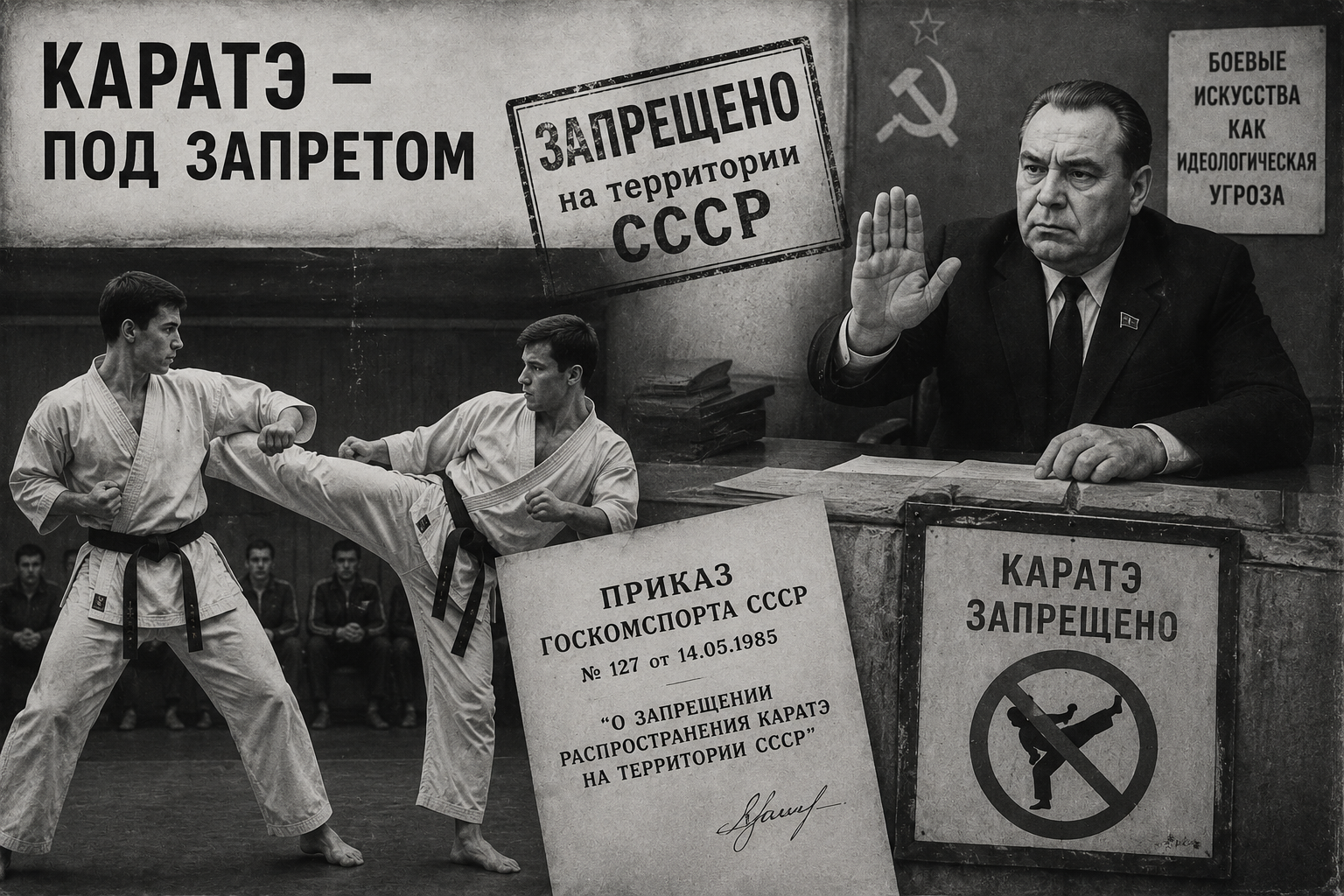
By that time, six million Soviet citizens were doing karate. And then it was banned.
Article 219.1: Jail Time for Training
In autumn 1981 the Supreme Soviet of the RSFSR passed a package of decrees on karate. Article 219.1 was added to the Criminal Code — «Illegal Teaching of Karate.» A coach could now receive two years in prison and a fine of up to 300 rubles. If they charged students — the fine rose to 500 rubles. If the court ruled that the coach had systematically extracted «substantial material gain» and had prior violations, the sentence was five years with confiscation of property.
To demonstrate serious intent, the authorities staged a show trial. The target was wushu coach Valery Gusev. The fact that wushu is nothing like karate was of no interest to anyone. On top of «illegal coaching» he was charged with attempting to create an organization aimed at overthrowing Soviet power. Investigators calculated that over all his years of classes, Gusev had received just over nine hundred rubles from students — about 7 rubles 53 kopecks per month. The sentence was five years. He was released in 1988.
Coach Alexei Shturmin was sentenced to eight years for currency transactions. Tadeusz Kasiyanov served nearly a year and a half.
Why It Was Banned: Five Theories
Drain of athletes. Everyone was doing karate — hockey players, boxers, footballers, judokas. An article by Frolov, «Certain Questions of Boxing Development in the USSR» (Boxing yearbook, 1985), explicitly stated that the Soviet national team had not placed in the top standings since 1968. Boxing and judo were Olympic sports, and the departure of top athletes undermined the country’s international prestige.
Street crime. In the early 1980s, youth gang fights became a common occurrence. Whereas brawls used to end with bruises, they now resulted in broken bones and deaths. Where coaches had their own connections to the criminal world, their students quickly became enforcers for black-market businessmen.
The cult of the teacher and the threat of the underground. The hierarchical structure of karate clubs — with a clear chain of command, devotion to the instructor, and strict discipline — was perceived by the security services as a potential base for organized resistance. Bringing thousands of clubs under control, many of which had already gone underground, was harder than banning everything at once.
Shadow money. Karate’s popularity generated a solid underground economy: uniforms were sewn, equipment made, posters and badges printed. By Soviet planned-economy standards the figures were noticeable, and they had to be stopped.
Other theories. Also cited were the sport’s particular injury risk, a severe shortage of qualified coaches, and internal intrigues in the USSR Sports Committee. There is also a political version: trained karatekas were reportedly spotted in the unrest in Poland.
The Ban Ended
While ordinary coaches were serving sentences, Tetsuo Sato was running classes for specialists at the KGB Higher School — karate was never banned there for a single day.
The ban was lifted in 1986. In 1989 Soviet karatekas competed at the European Championships, and in Moscow the association of eastern martial arts reopened.
Comments (0)
Leave a comment
Comments are moderated and published after review