
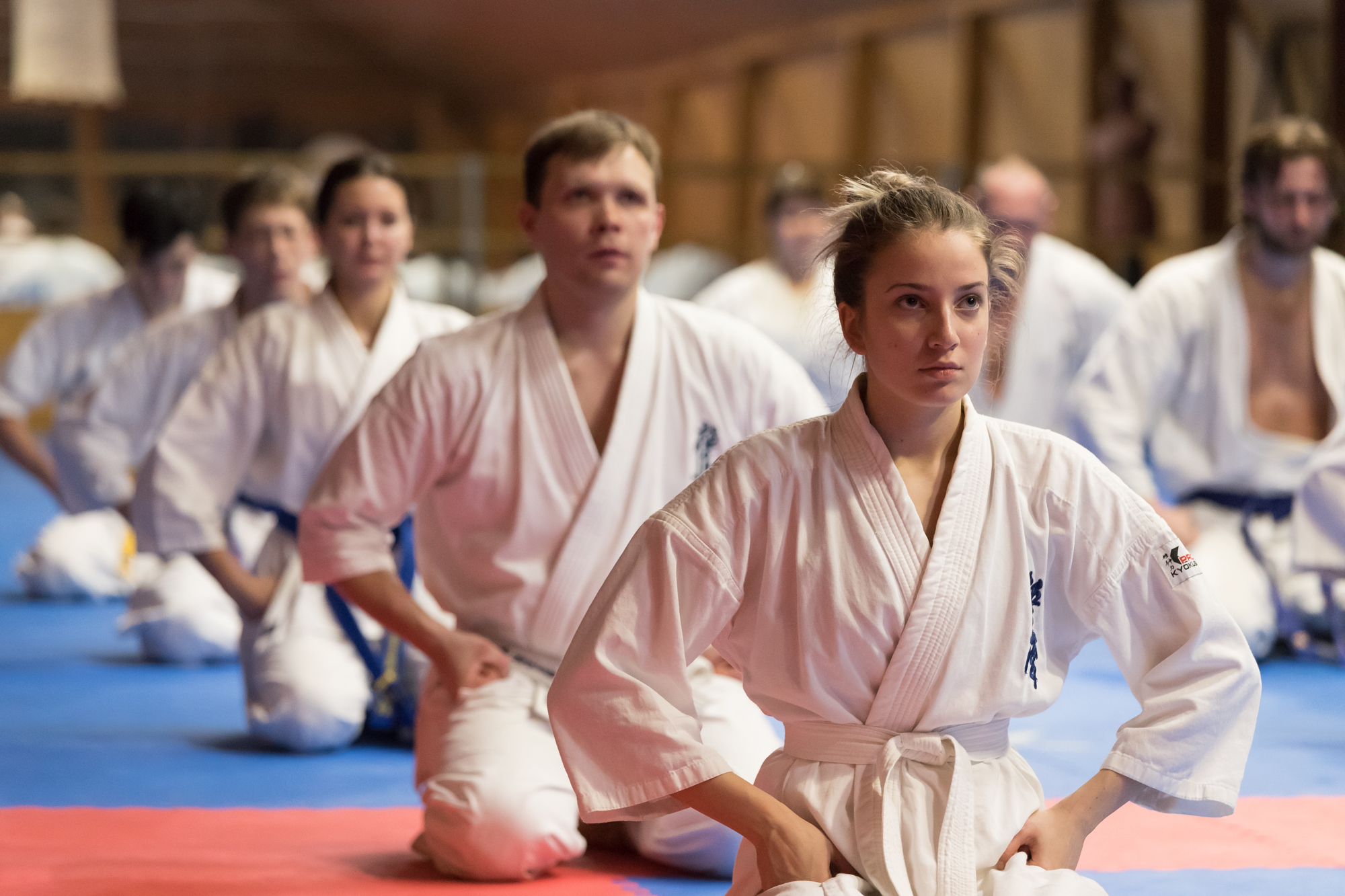
«You’re already too old at 35» is one of the most stubborn myths in sport. In reality, the physiology of an adult works differently than commonly assumed, and starting martial arts at 30-40 is not only possible — with the right approach it produces results that simply aren’t achievable in adolescence. Let’s look at the topic honestly: with numbers, with the mechanics, and with a clear eye on where caution is genuinely needed.
What Changes in the Body by 30-40: the Physiology
By age 30, peak muscle strength has been reached and a slow decline begins — roughly 1% of muscle mass per year without training. This is not a catastrophe: with regular exercise, the process slows substantially and is partially reversed. Research shows that beginning strength training even at 50+ produces meaningful gains in muscle mass and strength.
A few specific physiological features that matter for combat sports:
Recovery takes longer. For a 20-year-old, 24-36 hours between hard sessions is enough; for a 35-year-old, it’s 48-72 hours. This is not a weakness — it is a feature of the hormonal environment: testosterone and growth hormone levels decline, and the rate of muscle protein synthesis slows. The practical takeaway: two to three sessions per week with full rest days is the optimal starting schedule.
Joints and ligaments are less elastic. Collagen in ligaments and cartilage becomes less hydrated, and cartilage tissue recovers more slowly from microloads. That said, there is good news: regular moderate exercise improves cartilage nutrition through synovial fluid diffusion — movement is better for joints than rest.
Neuromuscular coordination takes more time to develop. New movement patterns (strikes, stances, footwork) are established more slowly than at age 10. But they are established more solidly: the adult brain understands movement more consciously, analyzes errors, and corrects them deliberately.
The cardiovascular system needs a warm-up. Vascular elasticity decreases and the heart needs more time to reach working capacity. Jumping into intensity without warming up is a direct path to injury and cardiac overload. A warm-up for an adult beginner should be longer than for a teenager: 15-20 minutes rather than 5-7.
How to Start Training Without Getting Hurt
The first three months are an investment in foundation, not results. Experienced conditioning coaches call this period «laying the groundwork»: joints, ligaments, and tendons adapt to load more slowly than muscles, and their insufficient readiness is the main cause of injury among adult beginners.
A few practical principles for getting started:
- Medical check-up before the first session. Resting and stress ECG, complete blood count, orthopedic consultation if there are any joint or spine issues. This is not a formality — it is understanding your starting point.
- 2-3 sessions per week, not 5. Going too hard too soon is the most common reason adults quit sport after a month. Motivation is high, the body doesn’t adapt in time, then injury or chronic fatigue sets in.
- No kumite for the first few months. Technique, conditioning, stretching, basic stances, kata. Full-contact sparring demands not only physical readiness but reflexive command of basic movements. Without that foundation, contact is a risk.
- Pain is a stop signal, not «normal for the first sessions.» Next-day muscle soreness is acceptable; pain in joints, the spine, or sharp pain during movement is a reason to pause and consult a professional.
- Sleep and nutrition matter more than most people think. Recovery happens after the session, not during it. 7-8 hours of sleep and adequate protein intake (1.6-2 g per kg of body weight) are conditions without which progress slows by half.
Psychology: Why Adult Beginners Are a Category of Their Own
People in their 30s and 40s come to the dojo carrying baggage that children don’t have: professional demands, family responsibilities, an established sense of self-worth, and fear of looking clumsy next to younger people. These factors affect the training process more than physical limitations.
Sports psychology identifies several characteristic patterns in adult beginners:
The «quick results» syndrome. An adult is used to effort producing results on a visible timeline. In martial arts, technique develops slowly, and this creates frustration. The solution is to focus on progress relative to your own starting point, not on comparison with more experienced practitioners.
Fear of making mistakes in front of others. Children don’t notice when they’re doing something wrong. Adults notice — and tighten up. It’s important for a coach to create an atmosphere where mistakes are a working tool, not a source of shame.
Greater awareness and motivation. An adult came to the dojo by their own decision, without parental pressure. They know why they are training and are ready to work methodically. This generally makes them a more disciplined student than a teenager.
What Coaches Should Pay Attention To
An adult beginner in the group is not a problem — it is a distinct pedagogical task with clear parameters:
- The warm-up should be longer and gentler. Don’t let adult beginners jump straight into the pace with the younger group.
- Watch pad and makiwara striking technique especially carefully: incorrect strike mechanics in an adult with limited wrist and elbow flexibility leads to injury faster than in a child.
- Don’t rush kumite. Only put them into sparring once the mechanics of basic blocks and distancing are at least minimally established.
- Ask about how they are feeling. Adults often hide pain to avoid «looking weak.» A direct question at the end of class removes this barrier.
- Give feedback through progress, not mistakes. «Last week you couldn’t do this yet» works better than «you’re still doing this wrong.»
Veteran Competitions: Categories and Features
Kyokushin has dedicated veteran categories that allow older athletes to compete on equal terms. The main age groups are 35-39, 40-44, 45-49, and above.
Veteran bout rules differ from the adult (18-35) divisions in several key ways:
Protective equipment. In veteran categories, the following are mandatory: a helmet with face guard, hand (fist) pads, shin and instep guards. Most of these are not used in the main adult categories. This significantly reduces the risk of injury and allows fighters to compete longer and with more technical focus.
Shorter bout time. Standard time for a veteran bout is 2 minutes (compared to 3 minutes for adults); overtime in the event of a draw is 1 minute per extension. This accounts for veterans’ lower cardio reserves and longer recovery.
Contact restrictions. In some organizations, veteran categories prohibit or restrict high kicks to the head and full-power body punches. Exact rules depend on the specific competition’s regulations.
All of this makes veteran competition genuinely accessible to someone who started training at 30-35: with regular sessions, reaching a competitive level by 38-40 is realistic.
What You Can Realistically Achieve Starting at 30-40
A good example is Konstantin Goryushkin from Novokuznetsk, Kyokushin veteran world karate champion. He won the title in the 35-39 age group, defeating a fighter from Kuwait in the final. Goryushkin’s story is not an exception — it is an illustration of a pattern: in veteran sport, starting training as a mature adult is not a disadvantage; it is often the norm. Veteran world championships attract athletes, many of whom came to the dojo as adults and reached world level within a few years of systematic work.
A realistic horizon for an adult beginner looks like this:
- 6-12 months — basic technique, first belt, genuine confidence at training.
- 1-2 years — ability to enter first competitions, a developed muscle foundation, noticeable improvement in physical fitness.
- 3-5 years — the point at which veteran competitions become a real goal, not just a dream.
An adult athlete won’t outrun a twenty-year-old on reaction speed. But they will outperform them on technical awareness, patience, the ability to push through fatigue, and psychological composure in a bout. That is not consolation — that is a real competitive advantage in a category where all opponents are the same age.
Summary
30-40 is not too late for karate. It is a different starting point with different conditions for adaptation, a different pace of progress, and different competitive goals. With a sensible approach to training load, quality recovery, and patient technical work, an adult beginner can stand on the tatami of a world championship within a few years. The examples exist — and they are not isolated cases.

Comments (0)
Leave a comment
Comments are moderated and published after review