
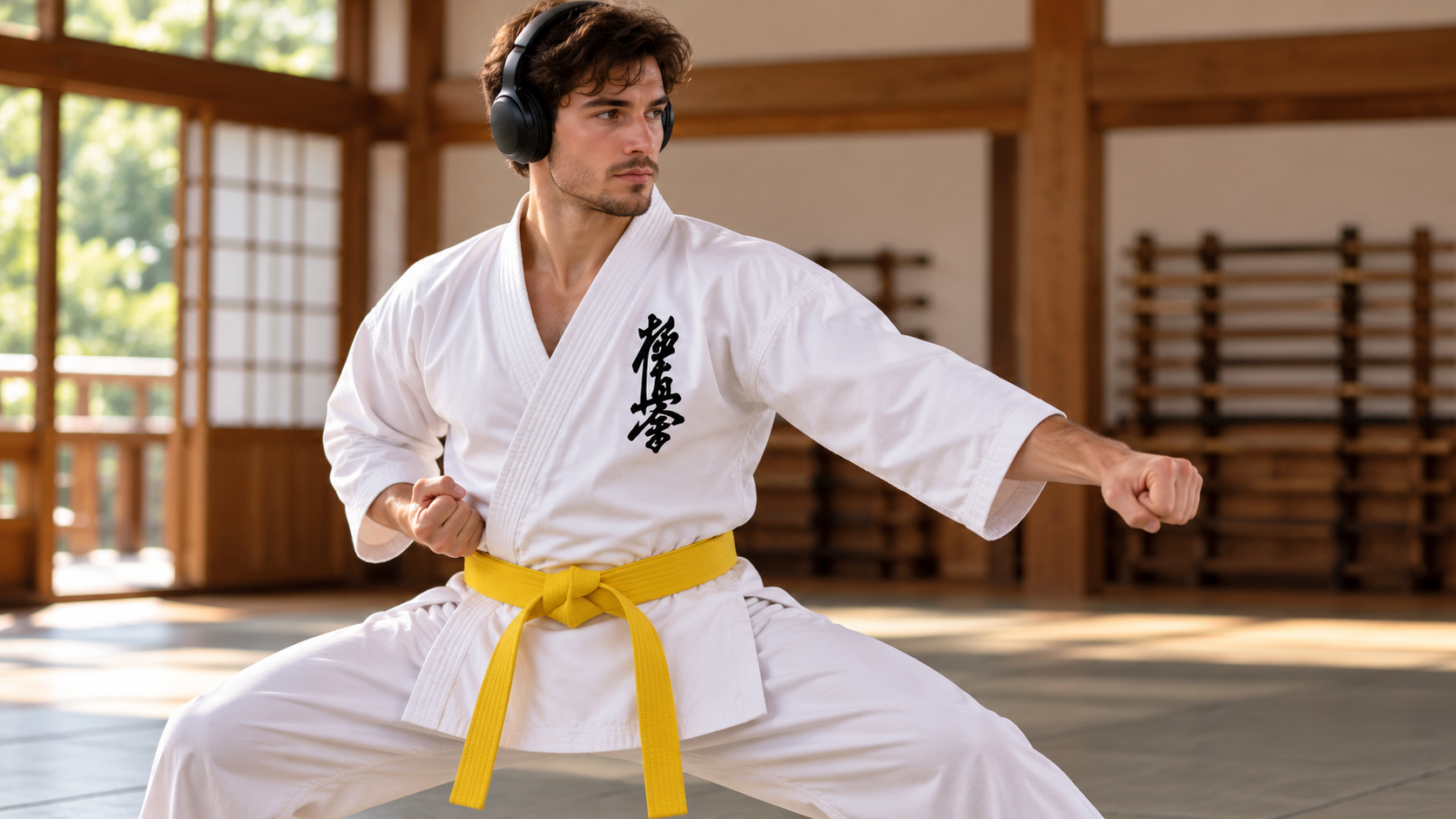
Favourite music can help you get ready for training or make a warm-up more enjoyable. But is it useful during every exercise, and how much difference can it make?
Short answer
Music may improve mood and reduce perceived exertion, and it can help performance in some tasks. The effect varies between people and does not replace preparation, recovery or attention to your coach and partner.
Key points
- Choose music you enjoy and that fits the activity.
- Avoid headphones where you need to hear instructions or people around you.
- Do not increase the workload just because music makes it feel easier.
What research says
A meta-analysis of 139 studies associated music in exercise and sport with a more positive experience, lower perceived effort and a small average performance benefit. Studies varied substantially in participants and tasks, so their average cannot be directly applied to an individual kumite bout.
A review of athletes’ preferred music found higher motivation and lower perceived exertion on average. Benefits varied by outcome and condition, and the authors found no consistent advantage for speed or aerobic endurance.
When music may help
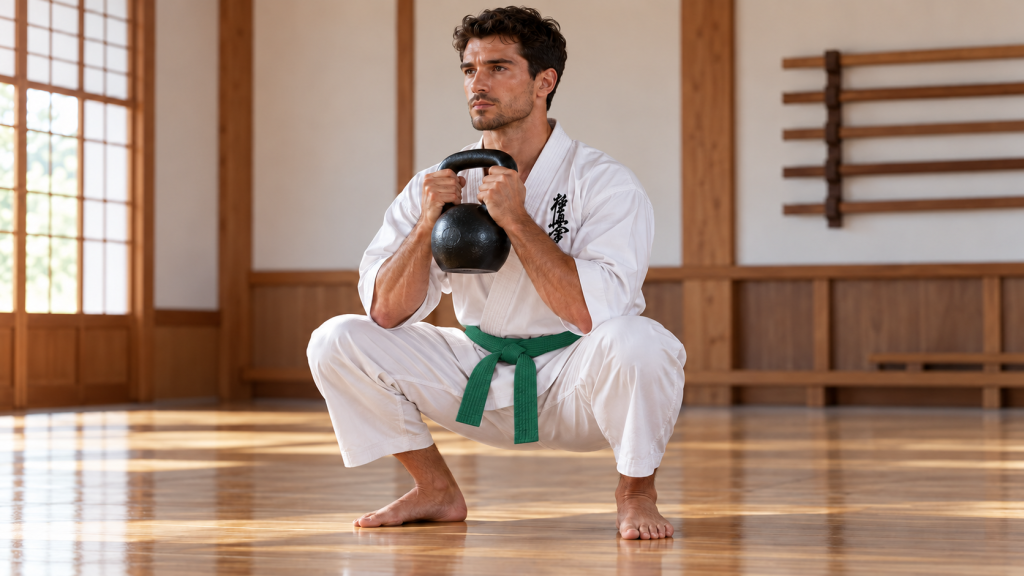
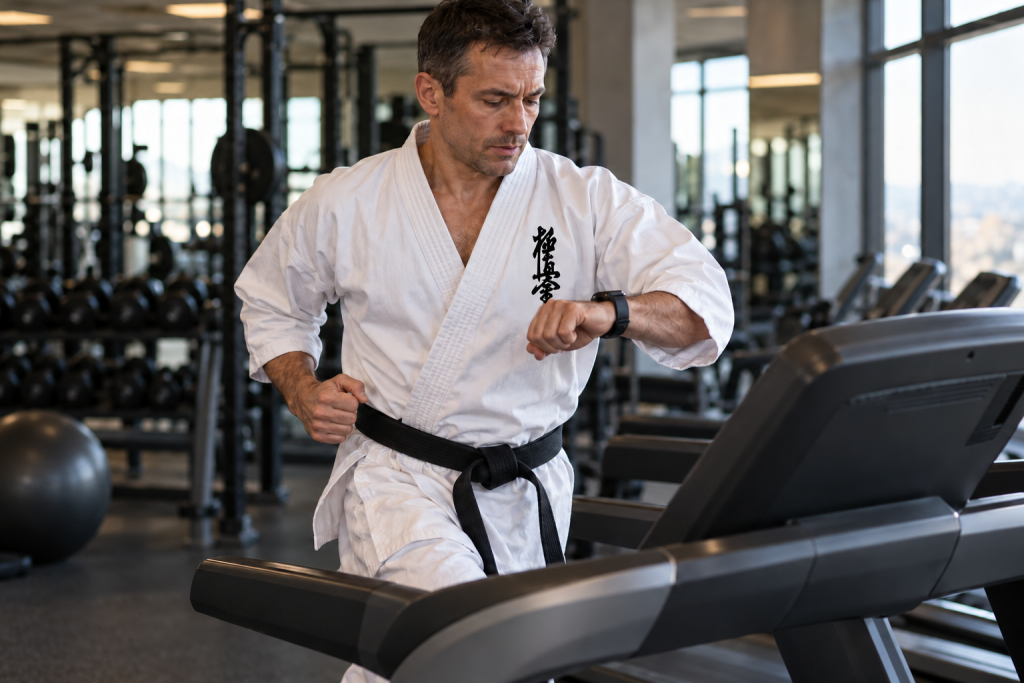
During an individual warm-up, treadmill run or general conditioning, music can provide a comfortable rhythm. Before stepping onto the mat, some athletes prefer energetic tracks and others prefer calmer ones. Choose what works for you.
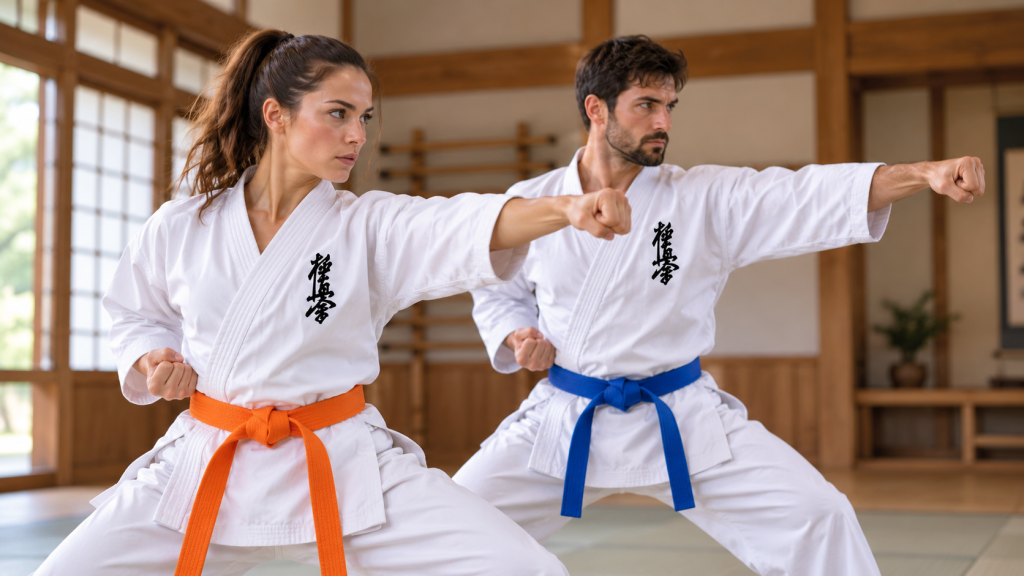
When learning technique, working with a partner or sparring, hearing commands, warnings and your partner is more important. In a group, agree on music with the coach: what helps one person may distract another.
Safety and workload
Keep the volume low enough to hear your surroundings. Feeling less effort does not remove the need to monitor form, breathing and wellbeing. Stop if you experience pain, dizziness or unusual breathlessness.
Frequently asked questions
Do I need fast music for strength?
Not necessarily. Choose a tempo that suits the task and your preference; an improvement is not guaranteed.
Can I practise kata with headphones?
Music may suit individual practice, but in a group or when responding to commands it is important to hear your coach and others.
Comments (0)
Leave a comment
Comments are moderated and published after review