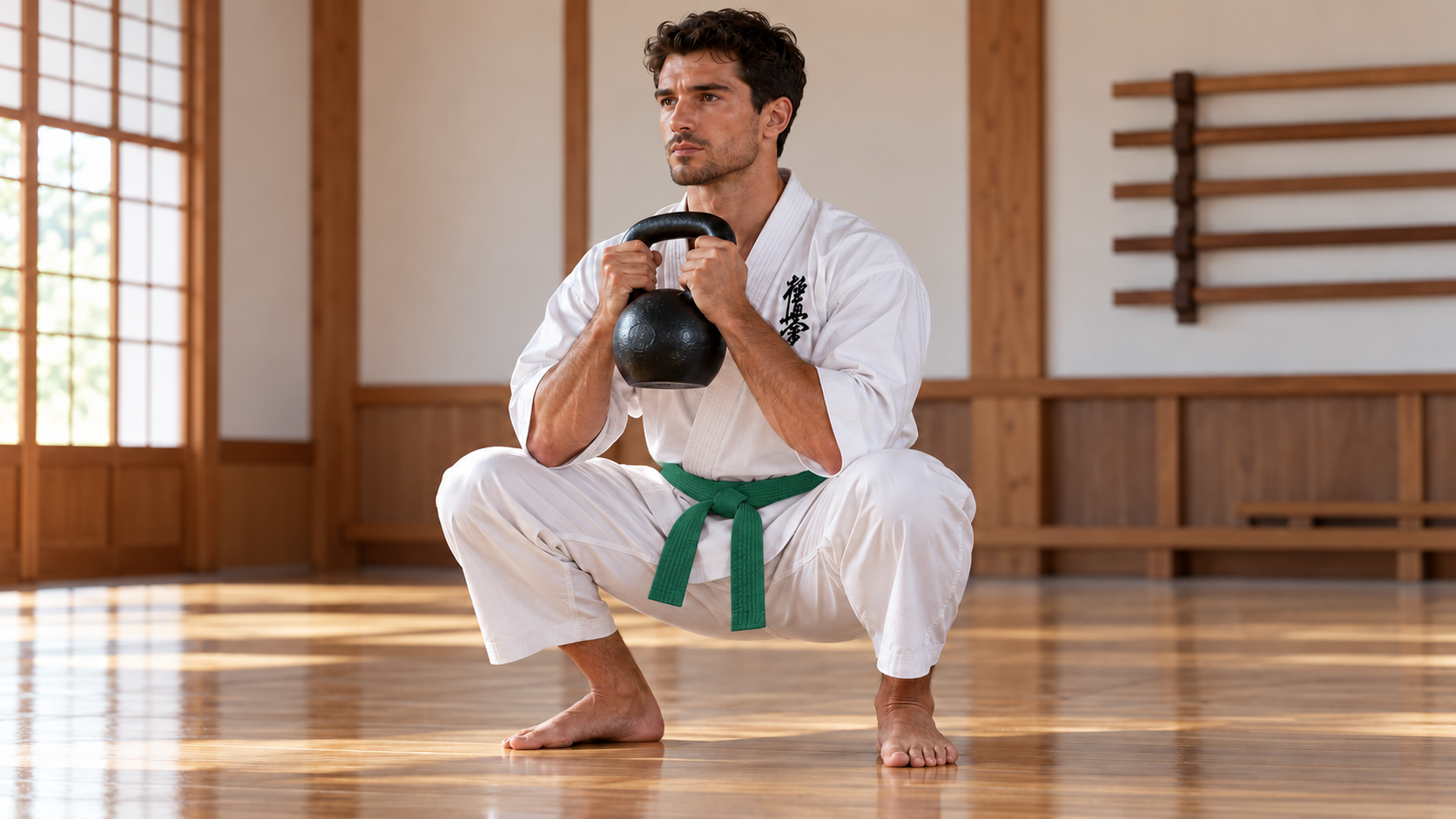
A kettlebell can be a useful addition to karate training: it offers a convenient way to work on leg, back and trunk strength. It cannot replace practice of strikes, footwork or kumite.
Short answer
Kettlebell training can develop general strength and power when the load and technique are appropriate. These qualities do not automatically become fighting skill: karate techniques still need specific practice.
Key points
- Start with a light kettlebell and learn the movements with a coach.
- Learn the squat and hip hinge before attempting swings.
- Allow time for recovery; do not take every set to failure.
- Stop if you feel pain, dizziness or unwell.
Why use kettlebells?
Strength training supports physical preparation. A single kettlebell can be used for squats, deadlifts, carries and swings, but it is not essential: barbells, dumbbells and bodyweight exercises are useful options too.
In a small six-week study, both kettlebell and weightlifting training improved measures of strength and power; strength gains were greater in the weightlifting group. The study does not establish that kettlebells alone improve kumite performance.
Getting started
Goblet squat
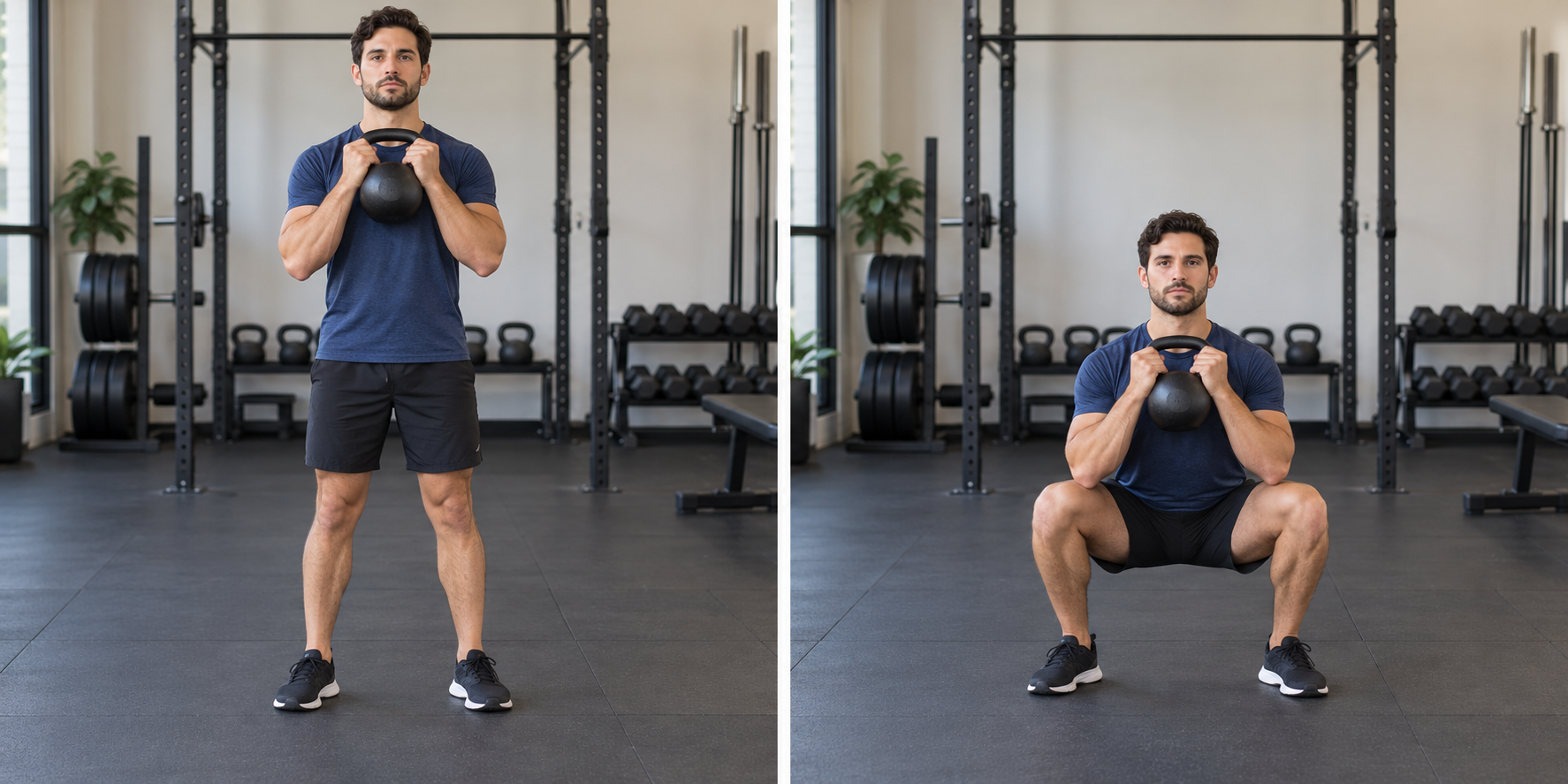
Hold the kettlebell close to your chest with both hands. Keep your feet stable, squat to a comfortable depth and stand up under control. Do not force extra depth at the expense of balance or through pain.
Kettlebell deadlift
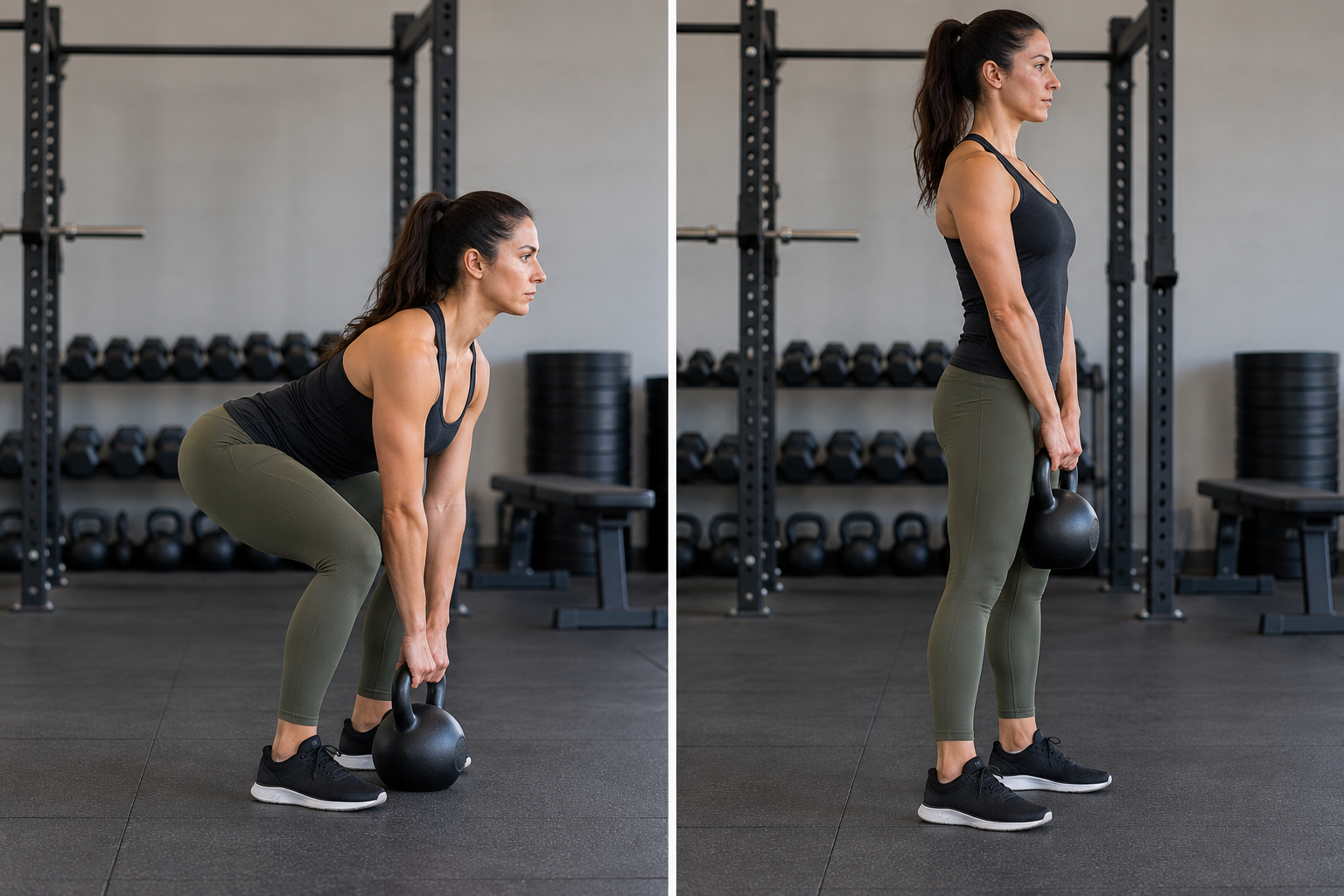
Place the bell in front of you, move your hips back, bend your knees slightly and grip the handle. Stand by extending your hips and knees, then lower the weight under control. This helps teach the hip hinge needed for swings.
Kettlebell swing
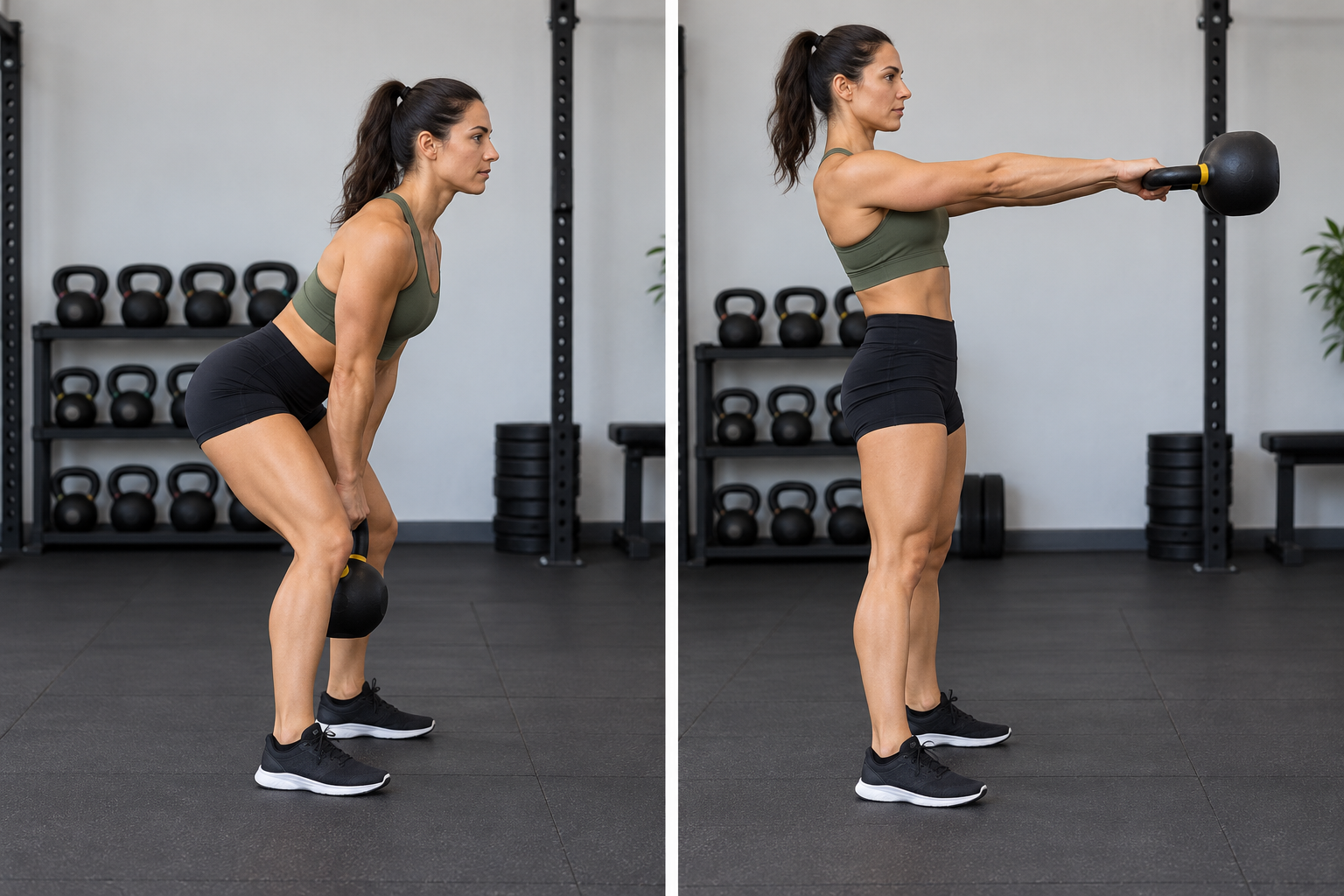
The swing is driven by the hips, not by lifting the bell with your arms. Learn it with a coach after mastering the deadlift. Avoid exaggerated lower-back extension and stop the set when technique deteriorates.
Combining kettlebells with karate
Start with one or two short strength sessions per week and avoid scheduling hard work immediately before an important sparring session or event. To learn the movements, 1–2 sets of 5–8 controlled squats and deadlifts can be a starting point. This is an example, not a universal programme: choose the load and volume individually.
Rest long enough to keep good form and increase the workload gradually. If strength work noticeably affects your dojo technique or recovery, reduce the volume.
Safety
Use a clear area and stable footwear or a non-slip surface. Avoid prolonged breath-holding and unnecessary straining. If you have heart disease, high blood pressure, an injury or have had a long break, discuss an appropriate workload with a clinician and coach.
Frequently asked questions
Can kettlebells replace karate practice?
No. They complement physical training but cannot replace technique, partner work and sparring.
What weight should a beginner use?
There is no universal starting weight. Choose one that allows confident, pain-free movement and ask a coach to check your technique.
Comments (0)
Leave a comment
Comments are moderated and published after review