
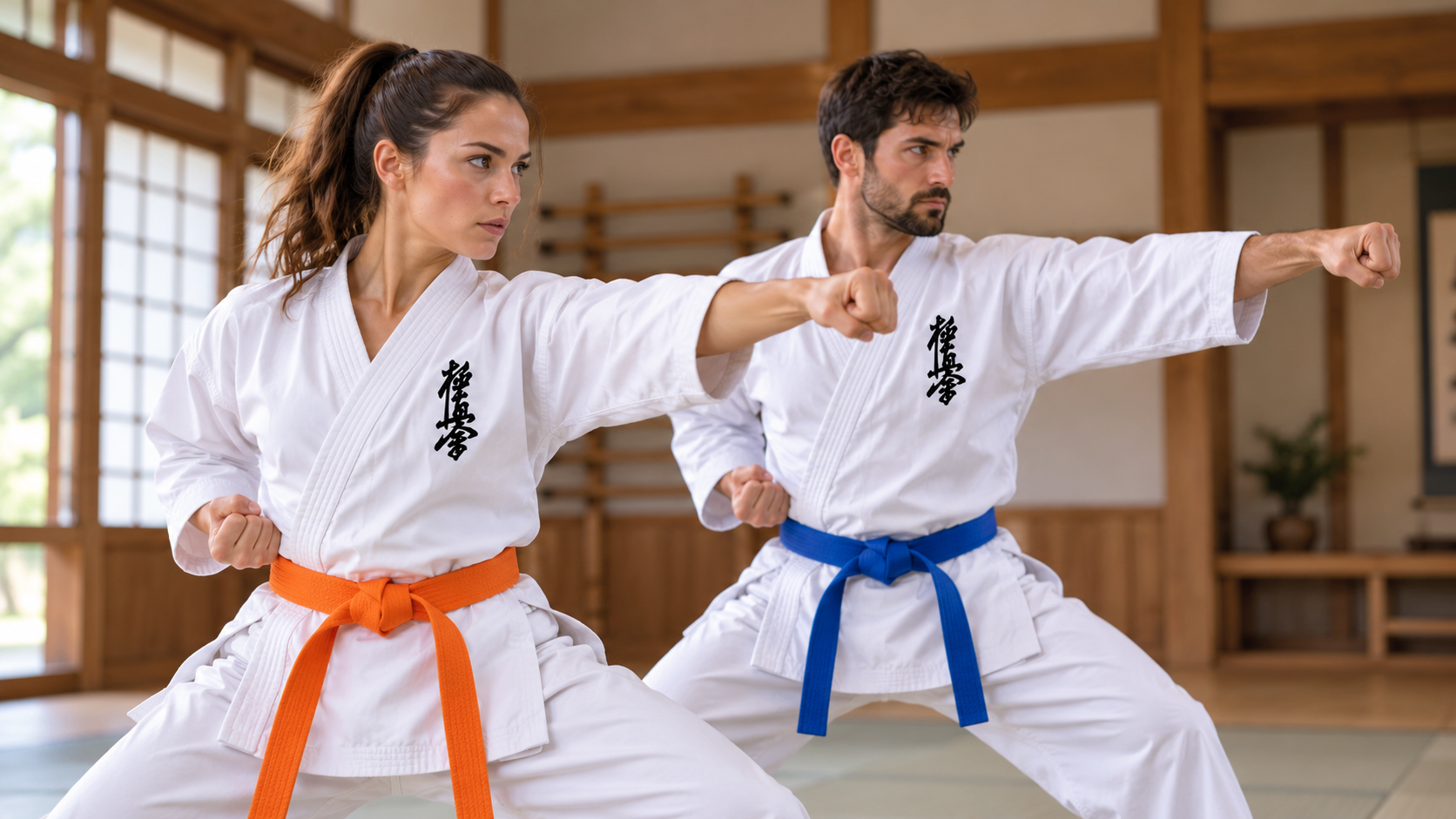
Karate discussions often put technique against strength. In practice they work together: a strong athlete still needs to hit at the right moment, while good technique benefits from appropriate physical preparation.
Short answer
Neither technique nor strength alone guarantees victory. Distance, accuracy and timing matter, as do strength, speed and the ability to move well when tired.
Key points
- Technique helps apply physical ability to a specific situation.
- Strength work complements, but does not replace, dojo practice.
- Sparring intensity should match experience and safety rules.
What technique contributes
A strike involves stance, support, trunk movement and returning to guard, not just the hand or foot. Good form on the spot does not automatically transfer to a moving opponent.
Practise distance and timing with a partner, starting with predictable drills before introducing choices. Increase speed and contact gradually under a coach’s supervision.
Why strength matters
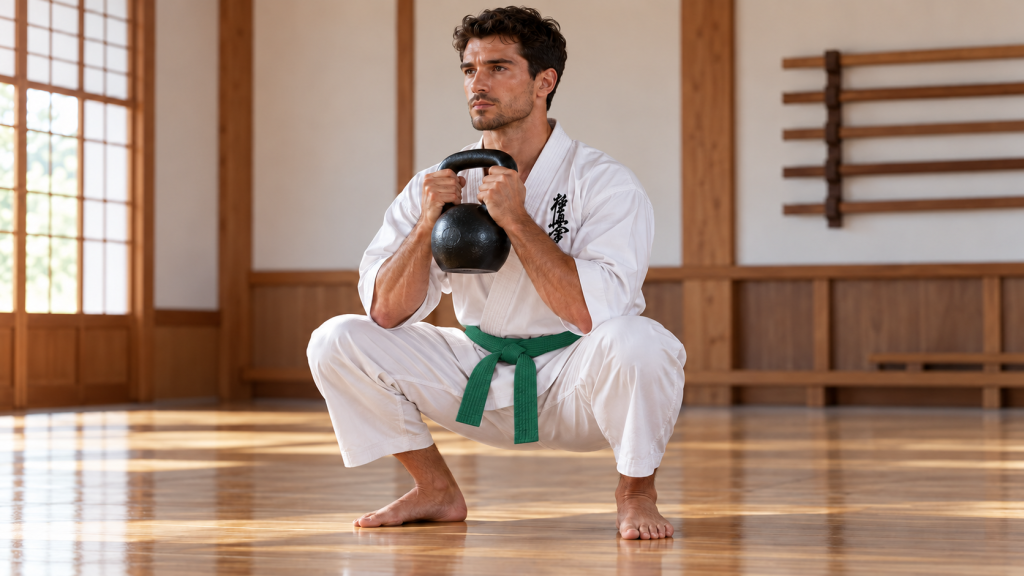
Squats, hinges, push-ups and trunk exercises can support general preparation. Select them for the athlete’s ability: good form and consistency matter more than testing a maximum weight every session.
Power depends on both force and the speed at which it is applied. A better gym result alone does not prove that a strike will be more effective in a fight; specific skill still needs practice.
Combining both
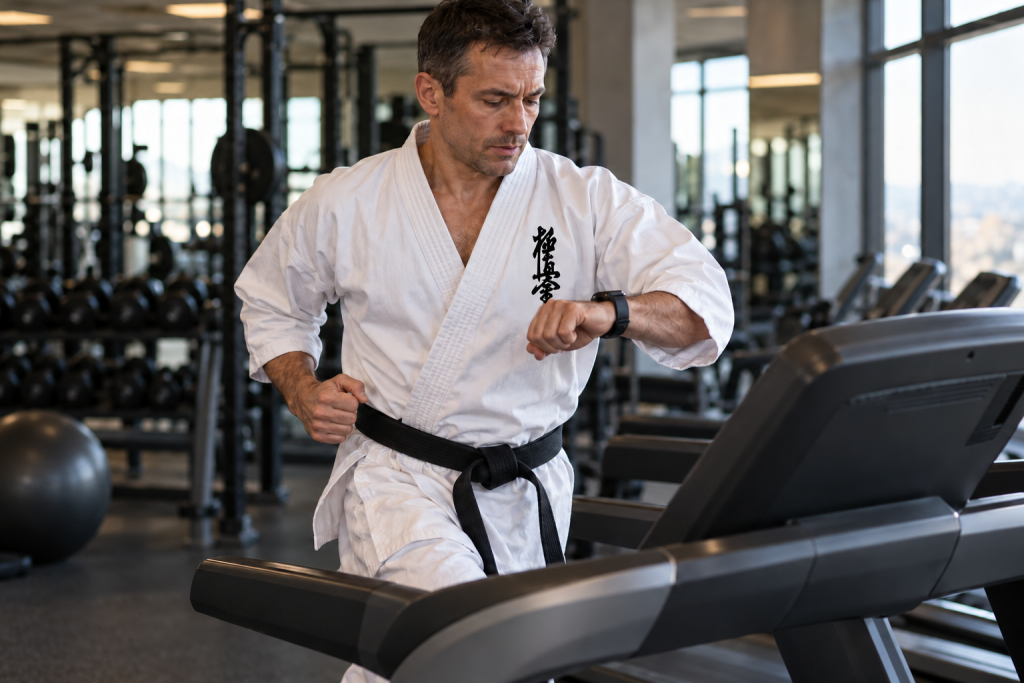
Beginners should prioritise basic stances, movement and strikes alongside manageable conditioning. Experienced practitioners can work with a coach to identify weaknesses and schedule strength training without sacrificing skill practice or recovery.
Frequently asked questions
Can technique overcome a strength disadvantage?
Timing, distance and accuracy can help, but they cannot guarantee a win. Size, preparation and competition rules also matter.
Must karateka lift weights?
Weights are useful but not essential. Choose exercises and loads according to age, experience and health.
Comments (0)
Leave a comment
Comments are moderated and published after review