
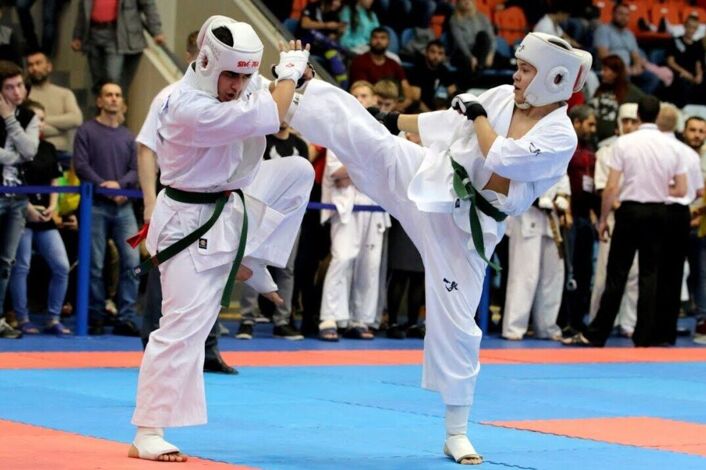
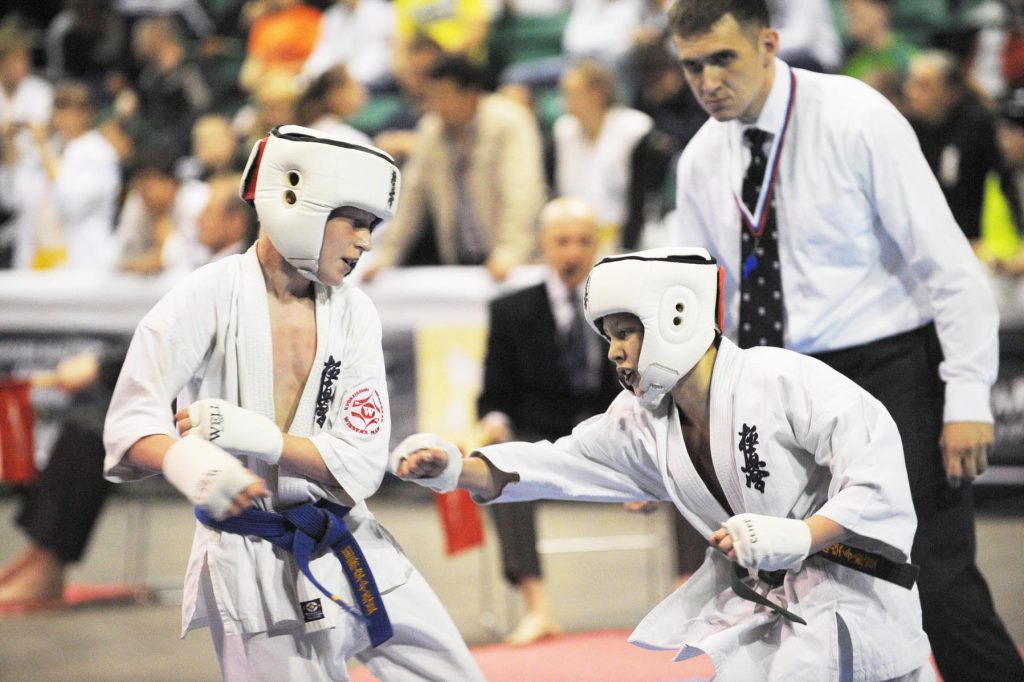
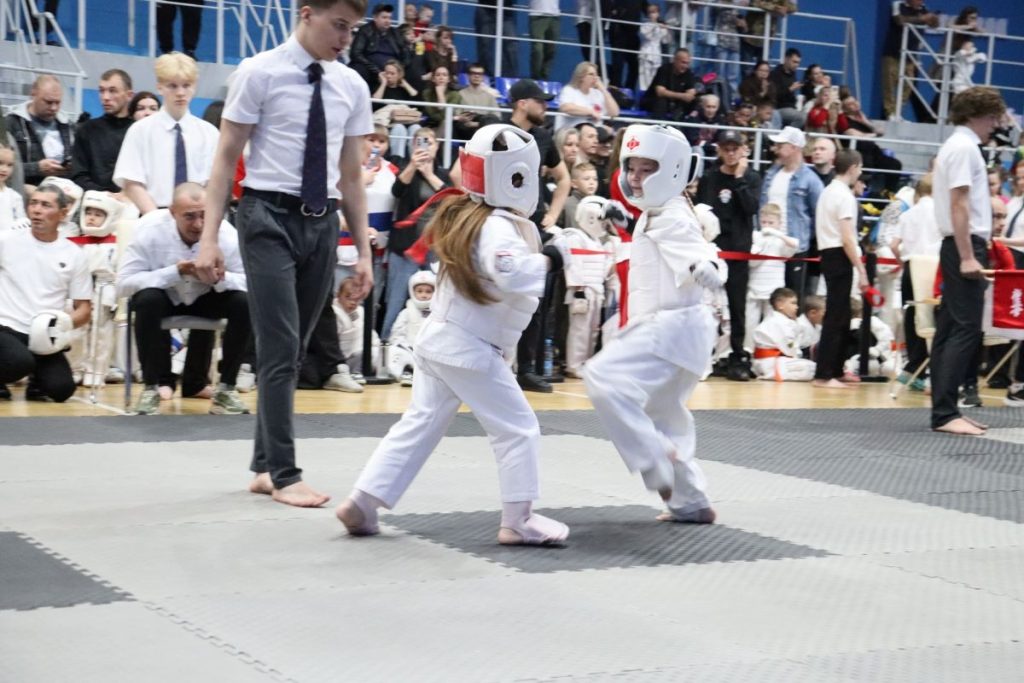
Kyokushin competitions follow full-contact rules and are considered among the most spectacular tournaments in the world of karate. The main objective for a competitor is to demonstrate technical superiority, activity, and the ability to control the fight.
Allowed and prohibited techniques
During a bout, hand strikes to the body, kicks to the head and body, and knee strikes are all permitted. Strict restrictions apply, however. Punches to the face, groin strikes, and dangerous actions that could cause serious injury are prohibited. This makes Kyokushin safer than a number of other martial arts while still maintaining high intensity. A full list of allowed and prohibited strikes in Kyokushin is covered in a separate article.
Ways to win
Victory can be awarded in several ways. The most decisive outcome is a knockout, when the opponent cannot continue the bout. An ippon (full point) or waza-ari (half point) is awarded for technically precise strikes that produce a knockdown. Judges may also award victory on technical superiority or by decision at the end of regulation time.
Judging
Judges assess the accuracy of strikes, the competitor’s activity, distance control, and the overall impression of the bout. The ability to maintain pressure on the opponent and demonstrate confidence plays an important role. Four corner judges and a chief referee make a collective decision on each moment.
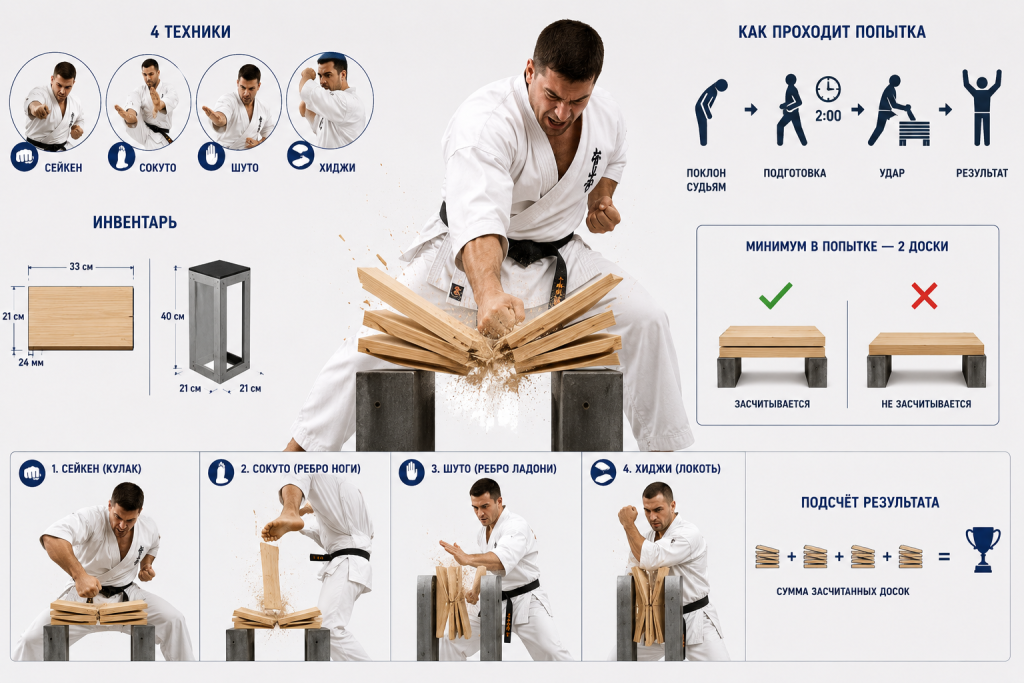
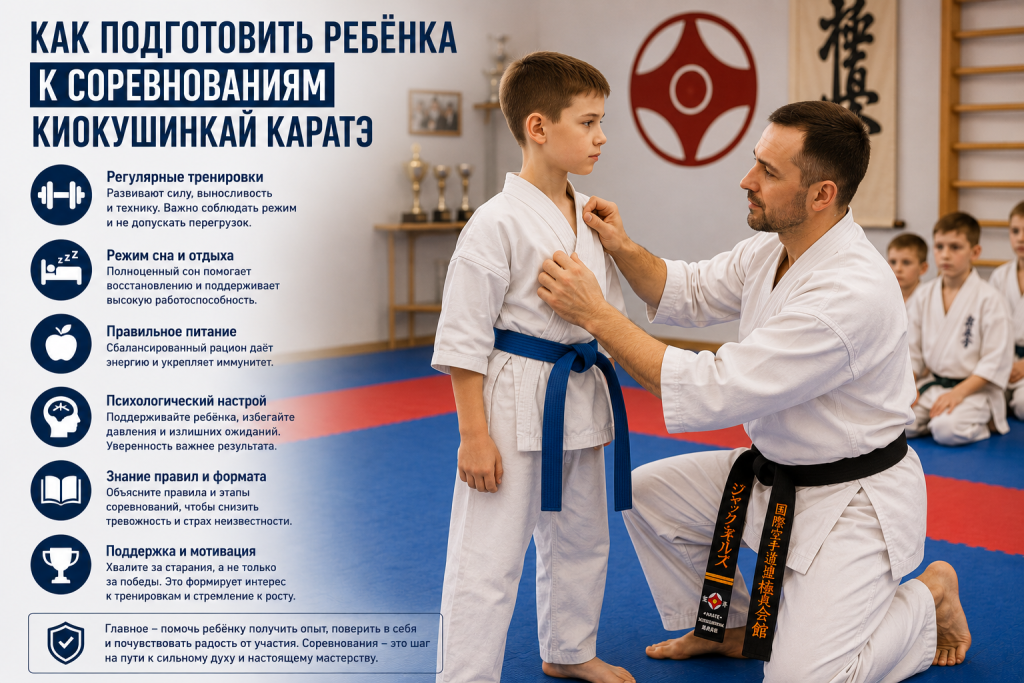
To perform well in competition, an athlete needs serious preparation. Beyond technique and physical conditioning, mental resilience and the ability to perform under pressure are equally important.
Comments (0)
Leave a comment
Comments are moderated and published after review