
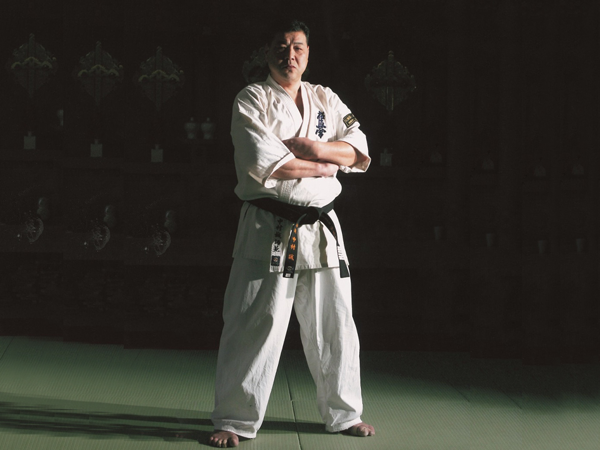
Makoto Nakamura — world champion and representative of the classic Japanese Kyokushin school
Biography
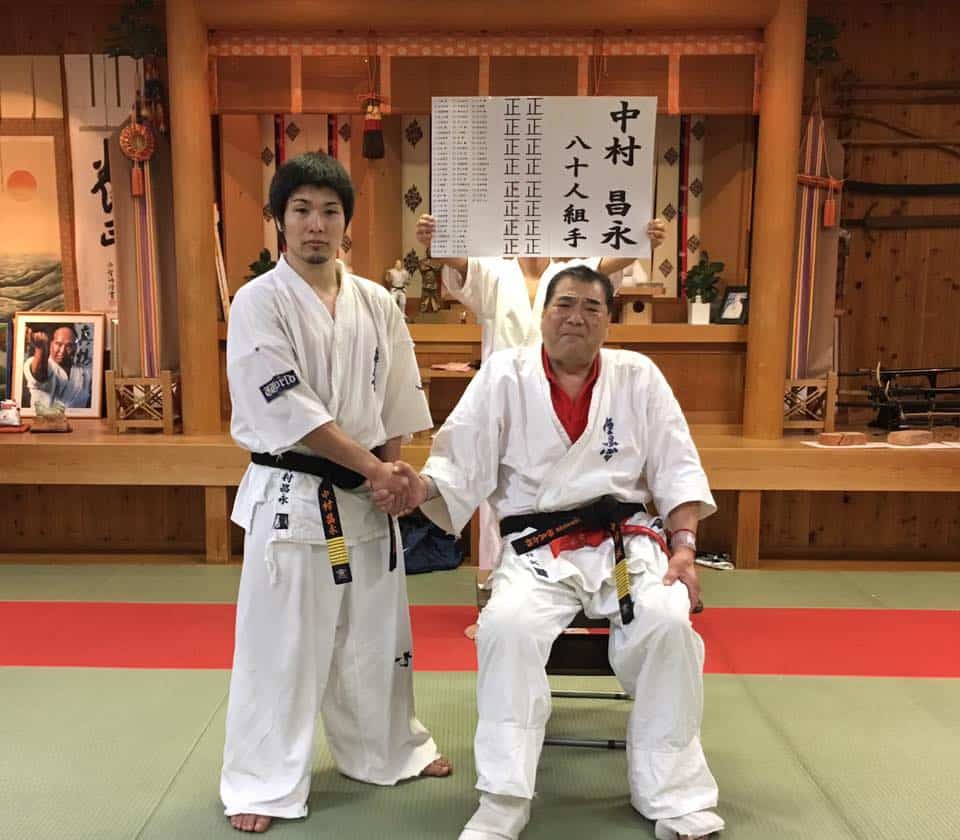
Makoto Nakamura is one of the most celebrated Japanese fighters in the history of Kyokushin. In the 1980s he was considered one of the strongest representatives of IKO Kyokushinkaikan and a member of the elite of world full-contact karate.
Nakamura was born on January 31, 1959, in Japan. He came to Kyokushin at a young age and quickly established himself as an exceptionally disciplined and physically resilient athlete.
He trained in an era when Kyokushin was only beginning to build its global system of absolute championships. In Japan, internal competition within the organization was fierce: athletes trained under very tough conditions, and the level of national tournaments was considered the highest in the world.
Makoto Nakamura stood out for his combination of strength, patience, and tactical intelligence. Unlike some more aggressive fighters, he preferred to control the pace of the bout and gradually impose his own rhythm on the opponent.
Nakamura later became not only a celebrated athlete but also one of the respected masters of Japanese Kyokushin.
Achievements
Makoto Nakamura’s greatest achievement was his victory at the 3rd IKO Kyokushinkaikan Absolute World Championship in 1983. In this tournament he became the world’s strongest fighter in the absolute category.
Nakamura’s victory was significant for the history of Kyokushin. In the early 1980s, the Absolute World Championships were only beginning to establish themselves as the premier event of world full-contact karate.
Nakamura also competed successfully at Japanese championships and was considered one of the most consistent fighters of his generation.
In addition to the World Open, he participated in IKO international tournaments and regularly faced the world’s strongest Japanese and foreign karateka.
It is also important that Nakamura represented the classic era of Kyokushin, when Masutatsu Oyama’s style was still preserved in nearly its original form.
Best bouts
The most celebrated bout of Makoto Nakamura’s career is the final of the 3rd Absolute World Championship in 1983. His victory in this tournament made him one of the central figures of world Kyokushin.
His performances at the All Japan Open also drew considerable attention. The level of internal competition in Japan at that time was so high that national tournaments were sometimes perceived as a world championship among the planet’s finest fighters.
Nakamura regularly faced the strongest Japanese karateka of his era and was known for his ability to endure grueling multi-round bouts.
His fights were rarely chaotic. Nakamura preferred to systematically break down his opponent, work at distance, and exploit his opponent’s mistakes.
Fighting style
Makoto Nakamura’s style can be described as classic Japanese Kyokushin of the 1980s. It was built on discipline, endurance, constant distance control, and intelligent pacing.
Nakamura was not the type to charge forward immediately into an aggressive exchange. His approach was more rational and tactically calculated.
He had a strong feel for the pace of a bout and could impose an uncomfortable rhythm on his opponent. A particular strength was his ability to maintain concentration even in tough, drawn-out fights.
He was also known for his outstanding physical conditioning. In the era of old Kyokushin, training was extremely demanding, and Nakamura was considered one of the most resilient athletes of his generation.
Another hallmark of his style was consistency. He rarely made serious mistakes and almost always maintained a structured fight.
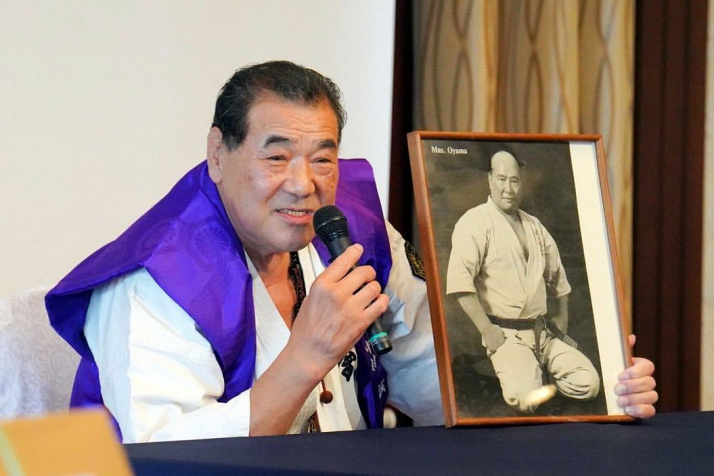
Favorite techniques
Techniques that Makoto Nakamura used most often:
mawashi geri;
gedan mawashi geri;
tight body combinations with the hands;
mid-range work;
combination attacks.
Nakamura made good use of low-level kicks, gradually breaking down the opponent’s stance and limiting their mobility.
He also worked actively with hand strikes to the body. In Kyokushin this component is especially important, and Nakamura was considered one of the strong specialists in close and mid-range contact.
He used mawashi geri not only as an attacking weapon but also as a distance control tool.
International tournament performances
Makoto Nakamura competed during a period when international Kyokushin was only beginning to develop actively. It was fighters of his generation who laid the foundation for future World Opens.
He represented the Japanese school in an era when Japan completely dominated the absolute category.
Beyond world championships, Nakamura participated in national tournaments and IKO international competitions, where he regularly confirmed his status as one of the world’s strongest fighters.
His experience and style later influenced many young karateka.
Influence on Kyokushin
Makoto Nakamura is considered one of the symbols of the classic Japanese Kyokushin school. His career coincided with a pivotal period in the formation of world full-contact karate.
For many athletes, Nakamura became an example of discipline, consistency, and a correct understanding of Kyokushin philosophy.
His style demonstrates that success in the absolute category is built not only on strength, but on patience, endurance, and the ability to control a fight.
Even decades later, his name continues to be mentioned among the most important champions of the early World Open era.
Notable facts
Makoto Nakamura became the IKO Absolute World Champion in 1983.
He represented the era of classic Japanese Kyokushin before the mass arrival of foreign fighters into the World Open elite.
Nakamura was considered one of the most disciplined and consistent fighters of his time.
Many experts describe his style as the benchmark of traditional tournament Kyokushin of the 1980s.
Summary
Makoto Nakamura is one of the most important champions of the early IKO Kyokushinkaikan era. His World Open victory in 1983 cemented his status as one of the world’s strongest fighters.
He entered history as a representative of the classic Japanese full-contact school — a fighter of outstanding discipline, a master who influenced the development of world Kyokushin.
Грязный боец. Жизнь наказала его. Он испил свою грязную чашу до дна.