
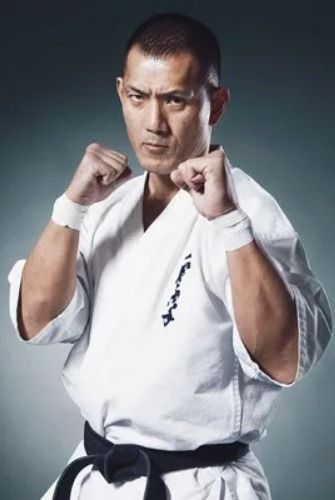
Kenji Yamaki — world champion and one of the most formidable fighters in Kyokushin
Biography
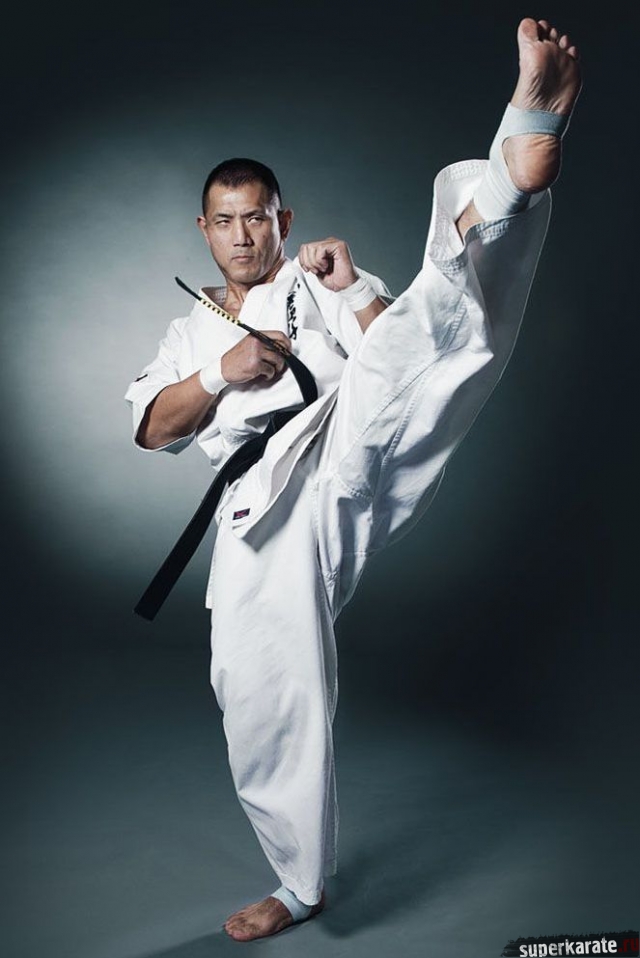
Kenji Yamaki is one of the most well-known Japanese fighters in the history of IKO Kyokushinkaikan. In the world of Kyokushin, his name is synonymous with toughness, extraordinary physical conditioning, and an extremely aggressive fighting style. In the 1990s, Yamaki was considered one of the symbols of Japanese competitive Kyokushin.
He was born on July 5, 1972 in Japan. He began training in karate as a child and quickly distinguished himself as a highly physically gifted athlete. Even as a young fighter, Yamaki stood out for his powerful strikes, endurance, and willingness to fight under constant pressure.
He gained serious recognition after competing at the All Japan Open and the IKO World Open Championships. Unlike many technical fighters who built their bouts on cautious tactics, Yamaki preferred constant pressure and heavy contact.
In an era when world Kyokushin was becoming increasingly international, Yamaki remained one of the main representatives of the Japanese full-contact school. His bouts were often seen as a model of classic power Kyokushin.
Achievements
Kenji Yamaki’s greatest achievement was winning the 6th IKO Kyokushinkaikan World Open in 1995. In the final he defeated Hajime Kazumi to become absolute world champion. That tournament is considered one of the strongest in Kyokushin history in terms of the field of competitors. (en.wikipedia.org)
On the road to the championship, Yamaki faced tough opponents and demonstrated an extremely hard fighting style. After winning the World Open, he firmly established himself among the top stars of world Kyokushin.
Beyond the World Championship, Yamaki also competed successfully at the All Japan Open — one of the most prestigious Japanese karate tournaments. He was among the strongest Japanese heavyweights of his generation and regularly advanced deep into major competitions.
Yamaki also participated in international IKO tournaments and was considered one of the most dangerous fighters of his time, combining strength, pressure, and physical endurance.
Although his competitive career was relatively shorter compared to some other Kyokushin legends, Yamaki’s peak was so brilliant that he remains one of the most recognizable figures of 1990s tournament Kyokushin to this day.
Best Fights
The defining bout of Kenji Yamaki’s career is the final of the 6th World Open in 1995 against Hajime Kazumi. That fight became a classic example of heavy Japanese Kyokushin: constant pressure, body work, and high intensity throughout.
The victory over Kazumi earned Yamaki the world title and placed him among the leading stars of IKO.
One of his most famous bouts was also against Francisco Filho. The Brazilian was already regarded as one of the most dangerous foreign Kyokushin fighters at that time. The clash between Yamaki and Filho symbolized the rivalry between the Japanese and Brazilian schools of full contact.
Yamaki also fought a series of tough bouts against the strongest Japanese karateka of his era: Hiroki Kurosawa, Hitoshi Kiyama, and other All Japan Open competitors.
Many of his fights are remembered not so much for technical brilliance as for incredible intensity. Yamaki was a fighter who almost never retreated and always tried to impose the heaviest possible pace on his opponent.
Fighting Style
Kenji Yamaki is considered one of the toughest fighters in the history of IKO Kyokushinkaikan. His style was built on constant pressure, physical strength, and the ability to absorb very heavy contact.
Yamaki’s defining quality was his ability to break opponents through the pace of the fight. He gave almost no rest and kept moving forward. Even against highly technical karateka, Yamaki forced power exchanges.
His bouts featured a great deal of close-range body work with punches. He actively used combination strikes, wearing down opponents and gradually breaking through their defenses.
Yamaki also excelled in close-range fighting. Many fighters tried to keep their distance from him, as he was especially dangerous in exchanges.
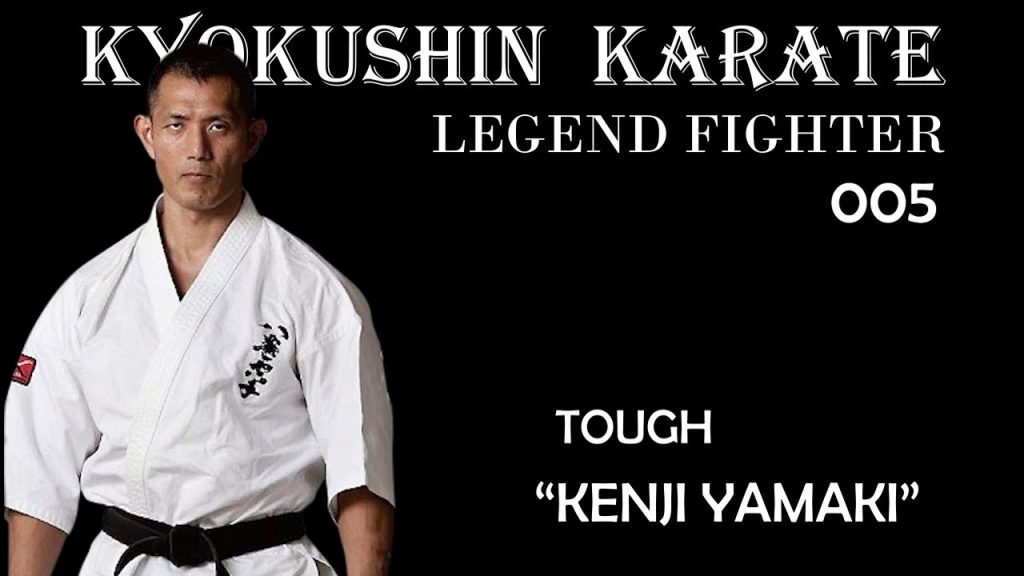
Another key strength was psychological toughness. He could continue applying pressure even after absorbing heavy hits and rarely showed fatigue during a bout.
Favorite Techniques
Among Yamaki’s most frequently used techniques:
close-range punch combinations to the body;
gedan mawashi geri;
mid-level mawashi geri;
close-range power pressure.
His low kicks were extremely heavy and were used not only as attacking tools but as instruments for breaking the opponent’s stance.
Hand strikes were also an important part of his arsenal. In Kyokushin, punches to the head are prohibited, so Yamaki placed great emphasis on body attacks, forcing opponents to lose their breath and rhythm.
Yamaki used mawashi geri more as an element of sustained pressure rather than a single finishing strike. He preferred constant load on his opponent rather than waiting for one decisive moment.
International Tournament Performances
Beyond the World Open, Yamaki competed actively at the All Japan Open and international IKO tournaments. In the 1990s, the Japanese tournaments were still considered the main arena for determining the world’s strongest fighters.
Competing at the Japan Championships was extremely demanding even for elite athletes, given the enormous density of top-level fighters. Yamaki regularly fought through several tough bouts on the same tournament day.
His World Open victory was significant for the Japanese school, as foreign fighters were already beginning to seriously challenge Japan’s dominance in the open-weight category.
Impact on Kyokushin
Kenji Yamaki had a major influence on the idea of power tournament Kyokushin. His bouts are often cited as an example of classic Japanese full contact: toughness, pressure, endurance, and constant forward movement.
For many young fighters, Yamaki became a symbol of an uncompromising style. His bouts showed how important physical conditioning and psychological toughness are in the open-weight category.
Although the world Kyokushin scene later became even more international, Yamaki remains one of the key figures of the Japanese school of the 1990s.
Interesting Facts
Kenji Yamaki became IKO world champion in 1995.
His victory at the 6th World Open is considered one of the most important in the history of Japanese Kyokushin in the 1990s.
Yamaki was often called one of the physically toughest fighters of his era.
Many Kyokushin fans consider his style the benchmark of classic power contact karate.
Conclusion
Kenji Yamaki is one of the key figures of IKO Kyokushinkaikan in the 1990s. His career shows how vital character, relentless pressure, and the willingness to endure brutal bouts are in Kyokushin.
He has entered history as a world champion, a representative of the hard Japanese full-contact school, and one of the most dangerous fighters of his generation. Even years later, his bouts continue to be studied by Kyokushin fans around the world.
Comments (0)
Leave a comment
Comments are moderated and published after review