
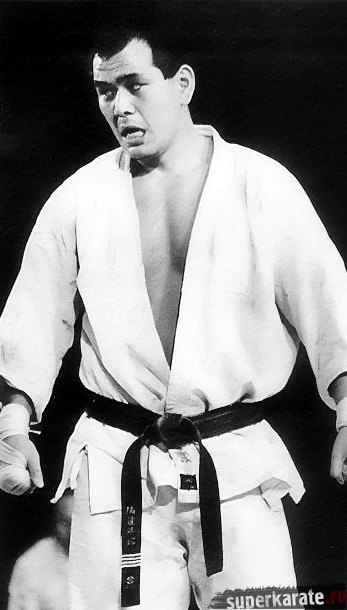
Katsuaki Sato — the first absolute world champion in Kyokushinkai
Biography
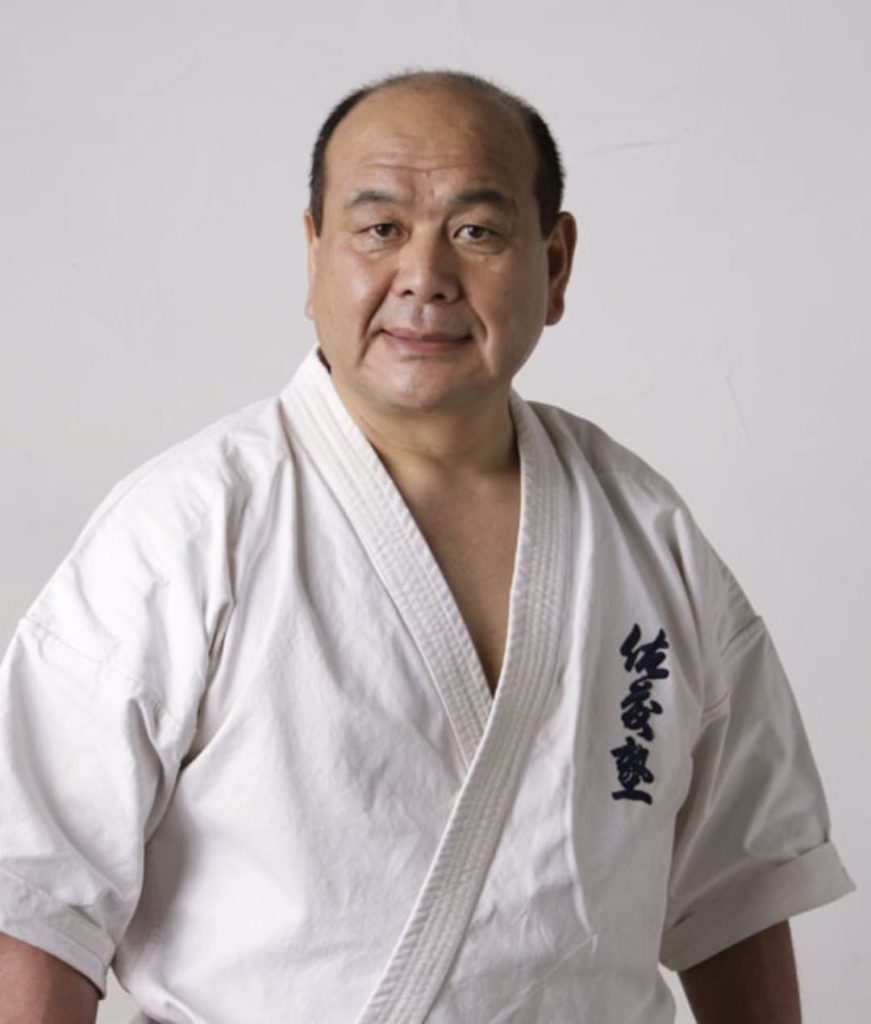
Katsuaki Sato is one of the most important figures in world Kyokushinkai history. He was the first absolute world champion of IKO Kyokushinkaikan and entered history as one of the fighters who laid the foundation of modern competitive full-contact karate.
Sato was born on September 25, 1948, in Japan. He came to Kyokushinkai during the period of active growth of Mas Oyama’s organization — an era when the style was just beginning to gain worldwide popularity and the international tournament system was still taking shape.
In his youth Katsuaki Sato quickly stood out among other students thanks to his tough character, physical endurance, and serious attitude toward training. In those years, training in a Kyokushinkai dojo was extremely demanding. Students regularly went through intense physical conditioning, sparring sessions, and strict discipline.
Sato proved to be one of the athletes who adapted best to the full-contact system. He possessed solid physical power, the ability to endure a hard fight, and the capacity to maintain focus under pressure.
His name later became associated with the early era of absolute world championships and the formation of Kyokushinkai’s world standing.
Achievements
Katsuaki Sato’s main achievement was his victory at the first IKO Kyokushinkaikan Absolute World Championship in 1975. He became the very first world champion in Kyokushinkai in the open weight category. (en.wikipedia.org)
This victory carries immense historical significance. The first World Open was the tournament that definitively established Kyokushinkai’s reputation as the strongest form of full-contact karate in the world.
In the tournament final, Sato defeated Japanese fighter Hatsuo Royama — another legend of Kyokushinkai. The very fact of winning such a tournament amid fierce internal competition in Japan was already an outstanding achievement.
Beyond the World Open, Sato competed successfully in national competitions. Within Japan he was considered one of the strongest representatives of early competitive Kyokushinkai.
Katsuaki Sato also actively participated in demonstration events and the international development of Mas Oyama’s organization.
Notable Fights
Katsuaki Sato’s most celebrated bout is the final of the first Absolute World Championship in 1975 against Hatsuo Royama. This fight entered world karate history as the first-ever IKO World Open final.
The bout was fought in the extremely tough style characteristic of early Kyokushinkai. In those years athletes fought with minimal tactical pauses, and the emphasis was on strength, endurance, and the ability to absorb heavy contact.
Sato’s victory was a landmark event for the entire Mas Oyama organization. It showed what an absolute world champion in the Kyokushinkai system should look like.
Sato also fought many hard bouts within the Japanese Kyokushinkai school. In those years even ordinary domestic tournaments gathered huge numbers of the country’s top fighters.
Many experts consider the early Kyokushinkai era one of the toughest in the history of full-contact karate, and Katsuaki Sato was one of its foremost representatives.
Fighting Style
Katsuaki Sato’s style can be described as classic early Kyokushinkai. It was built on physical toughness, constant pressure, and the ability to take heavy contact.
Sato was not a fighter who relied on spectacle or complex combinations. His style was as practical and direct as possible.
Sato’s defining trait was incredible resilience. He could continue fighting even after absorbing hard hits and rarely lost control of the situation.
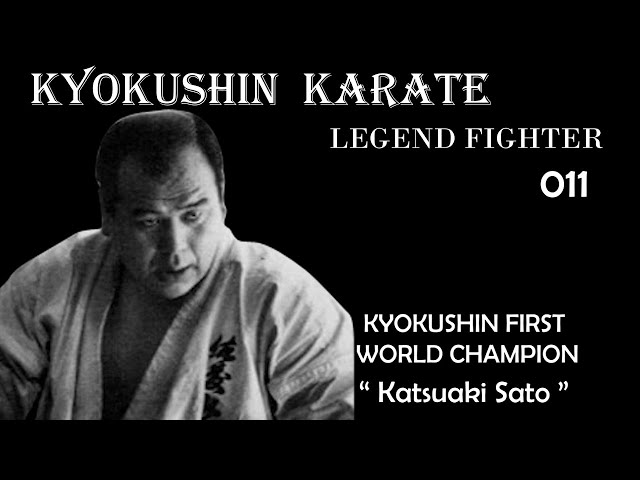
He also worked well in close contact. Many of his bouts turned into pure power exchanges where endurance and character were paramount.
Unlike later generations of fighters, Sato represented an era when Kyokushinkai was less tactical and more brutal in style.
Favorite Techniques
The techniques most often associated with Katsuaki Sato:
tight body punches;
gedan mawashi geri;
power pressure;
close-range contact;
hand combination work.
Sato actively used body work, aiming to wear his opponent down and break through their defense.
Low kicks also played an important role. In early Kyokushinkai low kicks were already actively used to control distance and limit the opponent’s mobility.
His technique did not look unnecessarily complex, but it was highly effective in full-contact conditions.
International Tournament Record
Katsuaki Sato competed in the era when international Kyokushinkai was being established. It was fighters of his generation who first began building the world reputation of Mas Oyama’s organization.
The first Absolute World Championship in 1975 was a huge step forward for full-contact karate. The tournament showed that Kyokushinkai was capable of bringing together the strongest fighters from different countries.
As the first world champion, Sato automatically became one of the central figures of the new world tournament system.
Influence on Kyokushinkai
The historical significance of Katsuaki Sato for Kyokushinkai is hard to overstate. He became the first absolute world champion and one of the symbols of the early World Open era.
For many fighters of the older generation, Sato embodies the classic tough Kyokushinkai of Mas Oyama’s time.
His career shows what early full contact was like before the arrival of the modern tactical school and international competition.
Sato also played an important role in popularizing Kyokushinkai as a martial art based on real full contact.
Interesting Facts
Katsuaki Sato became the first IKO Absolute World Champion in history.
He won the first World Open in 1975.
Sato is considered one of the symbols of early Japanese Kyokushinkai.
Many karate historians call him a representative of the «tough era» of full-contact karate.
Conclusion
Katsuaki Sato is one of the most important figures in world Kyokushinkai history. His victory at the first Absolute World Championship permanently inscribed his name in the annals of full-contact karate.
He became a symbol of the early Japanese school of Kyokushinkai, a fighter from Mas Oyama’s era, and the man who helped establish the World Open’s reputation as the premier tournament of world Kyokushinkai.
Comments (0)
Leave a comment
Comments are moderated and published after review