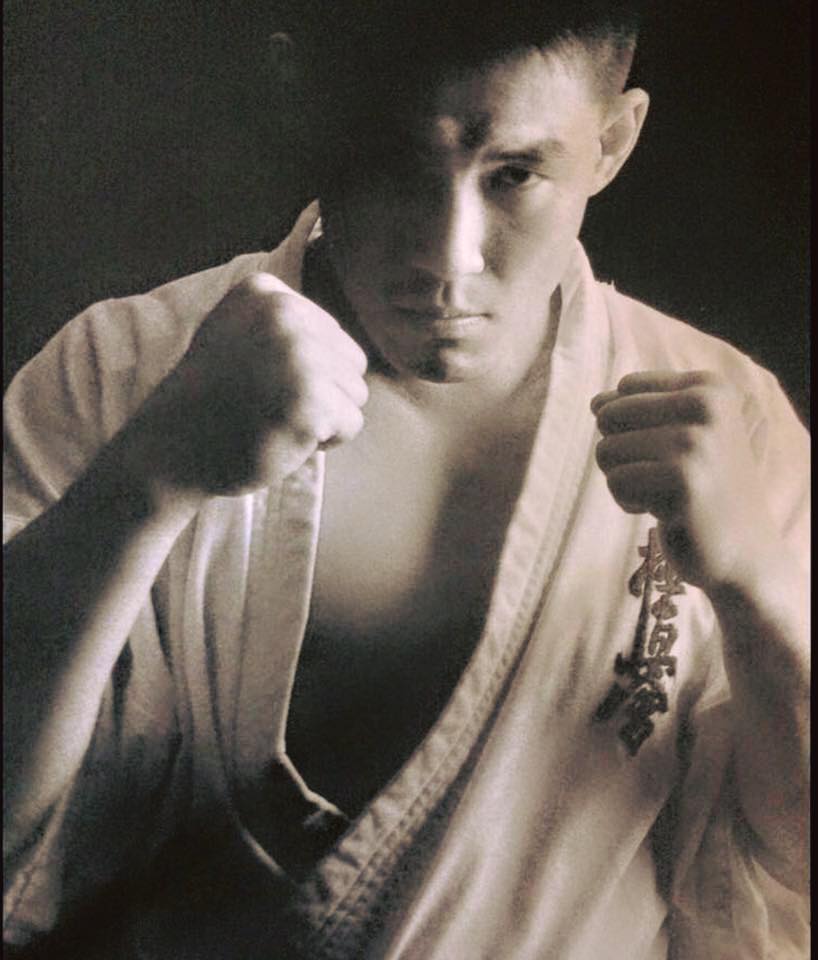
Hiroki Kurosawa — one of the toughest heavyweights in the history of Japanese Kyokushin
Biography
Hiroki Kurosawa is one of the most renowned Japanese heavyweights in the history of IKO Kyokushinkaikan. In the 1980s and 1990s he was considered one of the strongest practitioners of full-contact karate, known for his powerful fighting style, aggressive manner, and outstanding physical conditioning.
Kurosawa was born on January 6, 1964 in Japan. He came to Kyokushin in his youth and quickly stood out from other athletes thanks to his physical attributes and ability to endure grueling training loads.
He trained during an era when Japanese Kyokushin was at its peak. Internal competition in Japan was extraordinarily high: future world champions, All Japan Open winners, and the strongest heavyweights on the planet trained in the same dojo.
From early in his career, Kurosawa became known as an extremely uncomfortable opponent. He combined great physical strength with solid technique and an ability to apply relentless pressure.
Later his name became widely known not only in Japan but among full-contact karate fans throughout the world.
Achievements
Hiroki Kurosawa was one of the strongest IKO fighters of the late 1980s and early 1990s.
At the 4th IKO Kyokushinkaikan Absolute World Championship in 1987, he placed among the top fighters in the tournament and finished in a high position among the world’s best heavyweights. (en.wikipedia.org)
Kurosawa also competed successfully at the Japanese Championships and regularly advanced to the later stages of the All Japan Open.
He was considered one of the most consistent Japanese heavyweights of his era and remained part of the world Kyokushin elite for an extended period.
Beyond his World Open appearances, Kurosawa competed in international IKO tournaments and faced the strongest fighters from Japan and other countries.
Although he never became absolute world champion, many specialists regard him as one of the most dangerous heavyweights of his era.
Notable Bouts
Among Hiroki Kurosawa’s best-known fights are his appearances at the Absolute World Championships and the All Japan Open.
He regularly faced the strongest Japanese karateka of his time:
Akiyoshi Matsui;
Kenji Midori;
Makoto Nakamura;
Kenji Yamaki;
other members of the IKO elite.
Many of his bouts were fought in an intensely physical style. Kurosawa preferred to dictate the pace and impose constant pressure on his opponents.
One of the most notable aspects of his career was his ability to handle more mobile, technical fighters. Despite stylistic differences, Kurosawa often successfully disrupted an opponent’s rhythm through sheer physical force and unrelenting forward pressure.
He also competed in international bouts against foreign karateka as global competition in Kyokushin began to intensify.
Fighting Style
Hiroki Kurosawa’s style is considered a classic example of heavy, power-based Kyokushin.
The defining feature of his fights was constant forward pressure and a high level of physical aggression. Kurosawa rarely fought cautiously and almost always sought to force a heavy exchange.
He was especially dangerous at mid and close range. That is where his powerful hand combinations and ability to absorb heavy contact showed best.
Kurosawa also possessed exceptional physical endurance. Even in drawn-out bouts, he maintained a high tempo and continued to press his opponent.
Unlike more technical karateka, Kurosawa relied on strength of character, physical conditioning, and the ability to break opponents psychologically.
Many Kyokushin fans consider his style to be the embodiment of hard Japanese full contact from the 1980s.
Signature Techniques
Among the techniques Hiroki Kurosawa used most often:
heavy body-punch combinations;
gedan mawashi geri;
mid-level mawashi geri;
power pressure;
close-range work.
His body work with punches was particularly dangerous. Kurosawa attacked the opponent’s body aggressively and sought to keep the fight at a heavy pace.
He also used low kicks effectively to disrupt the opponent’s stance and limit their mobility.
There was nothing flashy about his technique — he preferred a maximally practical and hard-hitting approach.
International Tournament Appearances
Kurosawa competed during the period when Japanese fighters still dominated the open category of the World Open.
However, it was precisely during his era that international athletes began to pose a genuine challenge to the Japanese school. Brazilian and European karateka were gradually raising the level of global competition.
Kurosawa was one of the fighters who had to contend with this new generation of strong international competitors.
His performances helped maintain the high standing of Japanese Kyokushin in the late 1980s and early 1990s.
Influence on Kyokushin
Hiroki Kurosawa is regarded as one of the symbols of heavy, power-based Kyokushin.
For many karateka, he became an example of a fighter who bets on strength of character, physical conditioning, and constant forward pressure.
His style influenced many IKO heavyweights of subsequent generations.
Even years later, Kurosawa is frequently recalled as one of the most dangerous Japanese fighters of his time.
Interesting Facts
Hiroki Kurosawa is considered one of the toughest Japanese heavyweights of the 1980s and 1990s.
He was part of the world Kyokushin elite for an extended period.
Kurosawa became famous for his power-based style and relentless pressure.
Many Kyokushin fans regard his style as a model of classical power full contact.
Conclusion
Hiroki Kurosawa is one of the most recognizable figures in late 20th-century Japanese Kyokushin. His career demonstrates just how important character, physical endurance, and the ability to withstand grueling bouts are in full-contact karate.
He entered the history of the sport as one of the most dangerous heavyweights of his generation and a representative of the hard Japanese school of IKO Kyokushinkaikan.
Comments (0)
Leave a comment
Comments are moderated and published after review