
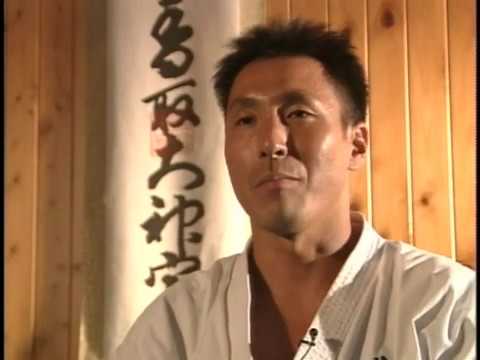
Hajime Kazumi — a legend of Japanese Kyokushin karate
Biography
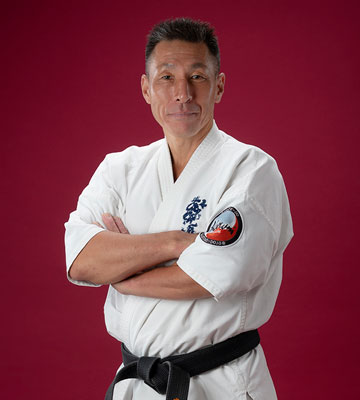
Hajime Kazumi is one of the most celebrated Japanese Kyokushin fighters of the late 1990s and early 2000s. He was born on December 14, 1971, in Kawasaki, Kanagawa Prefecture, Japan. Kazumi came to Kyokushin as a teenager and fairly quickly made a name for himself as an athlete with unusually mature technique, strong physical conditioning, and an exceptionally high level of discipline.
Kazumi competed during a period when tournament Kyokushin was at its most competitive. Japanese heavyweights, top fighters from Brazil, Europe, and Russia all stood on the same tatami. It was in this era that Kazumi established himself as one of IKO’s most consistent and technically accomplished athletes.
He is often described not simply as a fighter, but as a representative of «intellectual» Kyokushin. He didn’t build his bouts on brute force alone. His fighting style showed clear calculation, pressure, precision, an ability to vary the tempo, and a talent for making opponents make mistakes.
After retiring from active competition, Kazumi continued to develop his own approach and teaching activities. His name is still regularly cited among the finest representatives of full-contact karate.
Achievements
Hajime Kazumi’s defining achievements are tied to IKO Kyokushinkaikan’s most prestigious tournaments.
At the 6th IKO World Absolute Championship in 1995, Kazumi finished 2nd, losing the final to Kenji Yamaki. This result already established him as one of the leaders of the Japanese team. In the final standings of the 6th World Open he is listed second after Yamaki, with Francisco Filho in third place.
At the 7th IKO World Absolute Championship in 1999, Kazumi again reached the final and again took the silver medal. This time he lost to Francisco Filho, who made history as the first non-Japanese champion of the IKO World Open.
Kazumi was also one of the most successful competitors at the All Japan Open. He won the tournament in 1993, 1996, 1997, 1998, and 2002, and finished second in 1992 and 1994. That level of consistency is rare even among exceptional Kyokushin fighters.
Special mention deserves his completion of the 100-man kumite. In 1999, Kazumi passed the ordeal of 100 bouts: 58 wins, 42 draws, and not a single defeat. This is one of Kyokushin’s most demanding tests, requiring not only peak physical conditioning but extraordinary strength of spirit.
Notable Bouts
One of the pivotal fights in Hajime Kazumi’s career is the final of the 6th World Open in 1995 against Kenji Yamaki. The bout mattered not only as a World Absolute Championship final, but as a collision between two of the strongest Japanese heavyweights of their era. Yamaki took first place, but Kazumi cemented his status as a world-class fighter.
The second defining fight is the final of the 7th World Open in 1999 against Francisco Filho. This bout was historic: Filho won and became the first foreign fighter to take the IKO World Absolute title. For Kazumi it was a second World Open silver, but the sheer fact of reaching two consecutive championship finals speaks to his exceptional consistency.
Also worth highlighting is his semi-final at the 7th World Open against Glaube Feitosa. Feitosa was one of Brazil’s most dangerous fighters, possessing powerful kicks, and would later become a star in K-1. Kazumi’s victory over such an opponent underscores his high tactical level.
His All Japan Open finals against the strongest Japanese and foreign fighters also deserve recognition. Over the years, Kazumi defeated Garry O’Neill, Yoshihiro Tamura, Hitoshi Kiyama, and other top athletes. These bouts are important for understanding his career: he was not a one-time finalist but a fighter who remained at the very top for many years.
Fighting Style
Hajime Kazumi’s style was defined by technical precision, strong pressure, and smart work at mid-range. He was not the most spectacular knockout artist in Kyokushin history, but he was one of the most rational and consistent fighters.
Kazumi’s defining trait was his ability to fight without unnecessary chaos. He didn’t charge forward recklessly — he gradually took control of the bout. His attacks were often built through body pressure, tight hand strikes to the body, and well-timed kicks.
Kazumi used combinations effectively. Unlike fighters who bet everything on a single powerful strike, he was capable of wearing opponents down with sequences. This is especially valuable in Kyokushin, where endurance, pace, and the ability to work under constant contact are paramount.
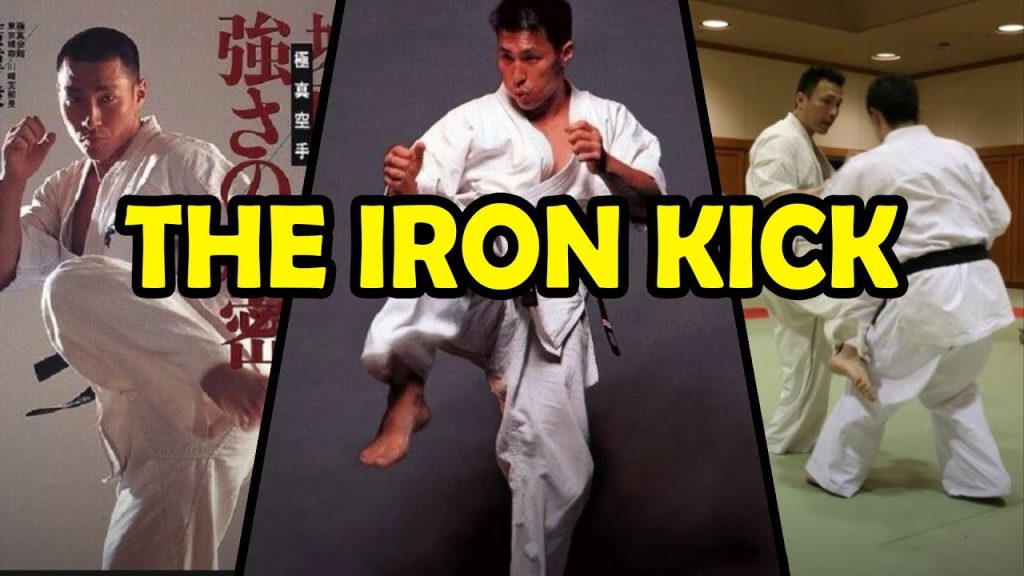
Another strong suit was his physical resilience. Kazumi could withstand a hard fight without losing his technique. Even in drawn-out bouts he stayed composed, kept pressing, and rarely gave opponents the chance to fully impose their own game plan.
Favored Techniques
Among the techniques most associated with Hajime Kazumi are tight hand combinations to the body, low kicks, mawashi geri, and combination pressure.
His body and hand work was especially important. In Kyokushin, hand strikes to the head are prohibited, making the ability to attack the body effectively critically important. Kazumi excelled at this: he wore opponents down, broke their breathing rhythm, and set up follow-up kicking attacks.
Kazumi’s mawashi geri was not simply a standalone strike — it was part of his combination work. He could use the roundhouse kick after hand pressure or as a way to shift the tempo.
Low kicks also played a significant role. Strikes to the lower level helped restrict opponent movement and gradually break down their stance. Combined with relentless pressure, this made Kazumi an extremely uncomfortable opponent.
Legacy in Kyokushin
Hajime Kazumi had a significant influence on the understanding of what a modern Kyokushin fighter can be. He demonstrated that success in full contact is built not only on power and toughness, but on tactics, consistency, distance management, and technical discipline.
For many athletes, Kazumi became an example of a fighter who can stay at the top for a long time. His results at the All Japan Open and World Open show rare consistency. He was never World Absolute Champion, but two World Open finals and numerous victories in Japan make him one of the central figures of IKO during his era.
His career is especially valuable for both beginners and experienced karateka to study. Kazumi’s example illustrates proper pressure, body work, the ability to maintain pace, and the importance of a solid technical foundation.
Interesting Facts
Hajime Kazumi completed the 100-man kumite in 1999, finishing without a single defeat. This achievement is considered one of the most demanding tests in Kyokushin.
He finished as silver medalist at the IKO World Absolute Championship twice: in 1995 and 1999.
Kazumi won the All Japan Open multiple times, one of the most prestigious tournaments in the Kyokushin world.
After his active competitive career he continued to develop his own approach to karate and teaching.
Summary
Hajime Kazumi is one of the key figures in Japanese Kyokushin. He is not simply a strong athlete — he is an example of a technically skilled, disciplined, and consistent fighter. His career shows that in Kyokushin, strength and endurance are not enough on their own — tactics, character, distance control, and the ability to maintain a high level year after year are equally essential.
For a Kyokushin website, an article about Kazumi is important as a piece about a fighter who brings together the classical Japanese school, tournament effectiveness, and the philosophy of constant self-improvement.
Comments (0)
Leave a comment
Comments are moderated and published after review