
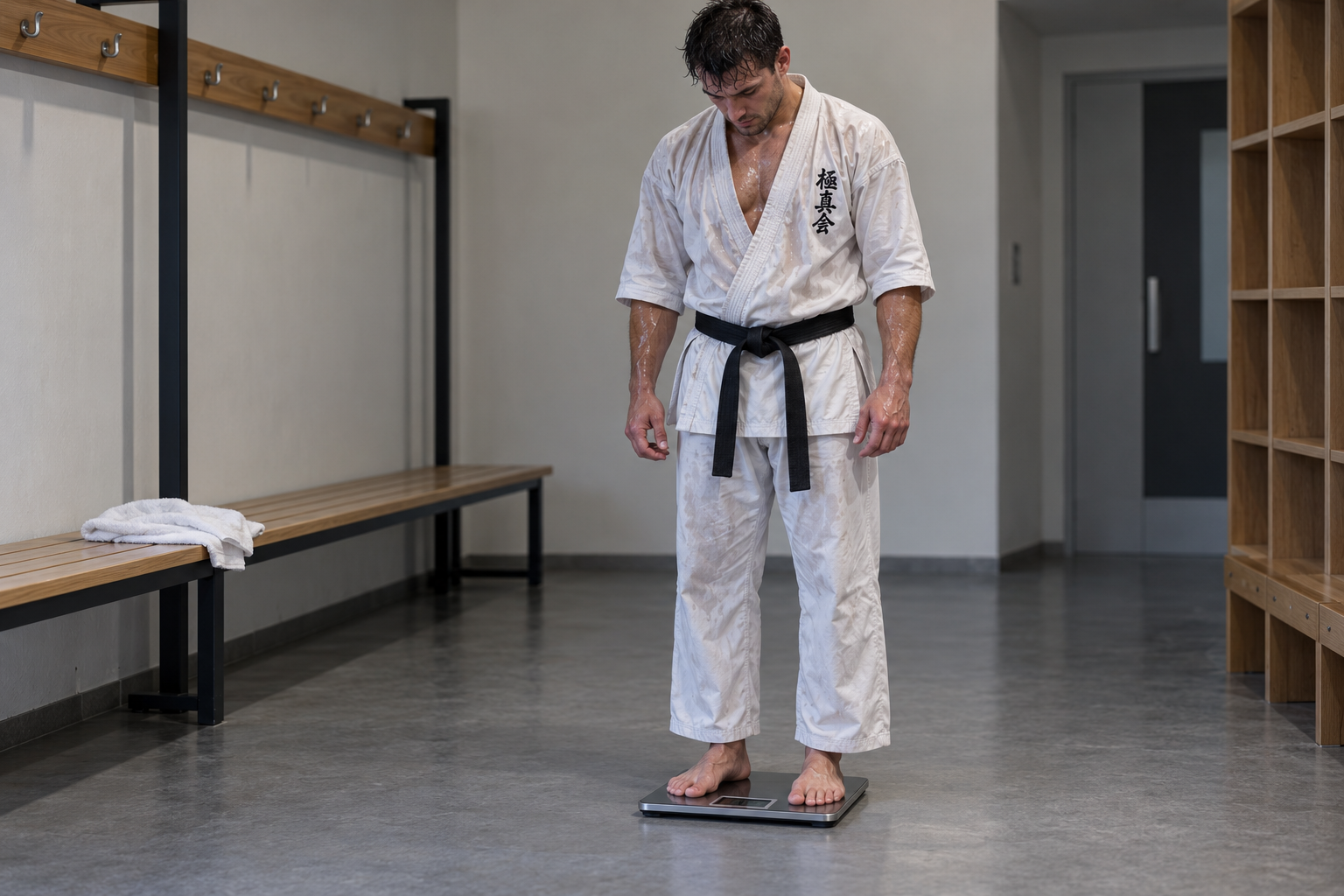
Cutting weight before a tournament is not an essential part of preparation or a test of character. Rapid weight loss through dehydration can be dangerous.
What is weight cutting?
The aim is to qualify for a lighter weight category shortly before the weigh-in. The term covers very different practices: gradual changes in body composition over weeks or months, temporary dietary changes, and rapid fluid loss through restricting fluids, overheating or intense sweating. Their risks are very different.
When not to cut weight
Do not start a cut if there is not enough time to prepare and recover gradually, if the weigh-in is on competition day, or if little time remains before the first fight. Minors and athletes with health conditions should not attempt it.
If restriction causes dizziness, pronounced weakness, confusion, fainting, cramps, nausea, palpitations or unusual shortness of breath, stop training and trying to make weight. Seek medical help when necessary; at a tournament, contact the medical team and your coach.
When can you discuss a weight category?
Only an adult athlete whose usual healthy weight is close to the category limit, with enough time for recovery, should consider discussing it. A lighter category does not make up for lost strength or guarantee success. Sometimes it is better to compete at a lower weight within a heavier category, where there may be less competition and, depending on the rules, a weigh-in advantage in a tie.
Common approaches
Gradual changes to diet and body composition are the comparatively safer approach: plan them well before the event and do not base them on dehydration.
Short-term dietary changes are used in weight-category sports, but they are not universal and are not a reason to abruptly exclude foods on your own. Mistakes can make exercise harder to tolerate, so it is better to work with a dietitian.
Fluid restriction, saunas, hot baths, sweat-inducing workouts and plastic suits are common but risky ways to dehydrate. They do not reduce body fat and can impair the ability to tolerate contact.
How to prepare more safely
- Check the specific tournament rules first: category, weigh-in time and procedure.
- Discuss with your coach and dietitian whether the category suits the athlete’s usual healthy weight and age, and whether a cut is necessary and what its risks are.
- Do not change diet, training volume, supplements and fluid intake all at once: it makes any deterioration harder to understand.
- Plan post-weigh-in recovery with a specialist rather than leaving it to the last minute.

Comments (0)
Leave a comment
Comments are moderated and published after review