
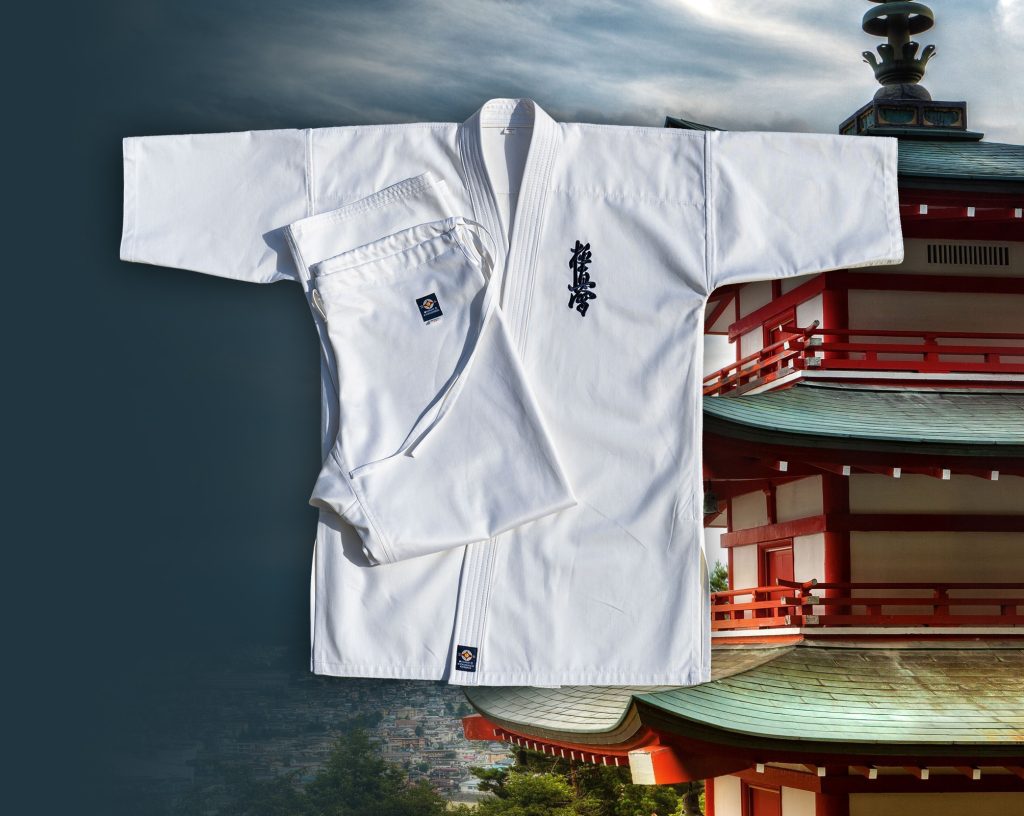
Dogi is not just a uniform. The word itself combines two characters: «do» (the way, a way of life) and «gi» (clothing). Together they mean «clothing for the way» — and it deserves to be treated accordingly.
Caring for your dogi is simpler than it sounds. You just need to know a few rules and follow them after every training session.
What dogi is made of — and why it matters
Traditional dogi is made from heavy cotton weighing 8-14 ounces. Cotton absorbs sweat well, does not chafe the skin during strikes, and holds up against hard grabs. But this same absorbency is exactly why dogi needs regular care: every training session leaves sweat salts, body oils, and bacteria in the fabric.
Without timely and proper washing, dense cotton quickly yellows under the arms, starts to smell, and loses its shape.
Right after training
The first and most important rule: do not leave a damp dogi in a closed bag. As soon as you get home — take it out and hang it to air immediately. Sweat trapped in an enclosed space creates conditions for bacteria, and within a few hours the smell and stains set into the fabric so deeply that a normal wash will not remove them.
Airing out is enough after a light session. After intense training — washing is a must.
How to wash dogi properly
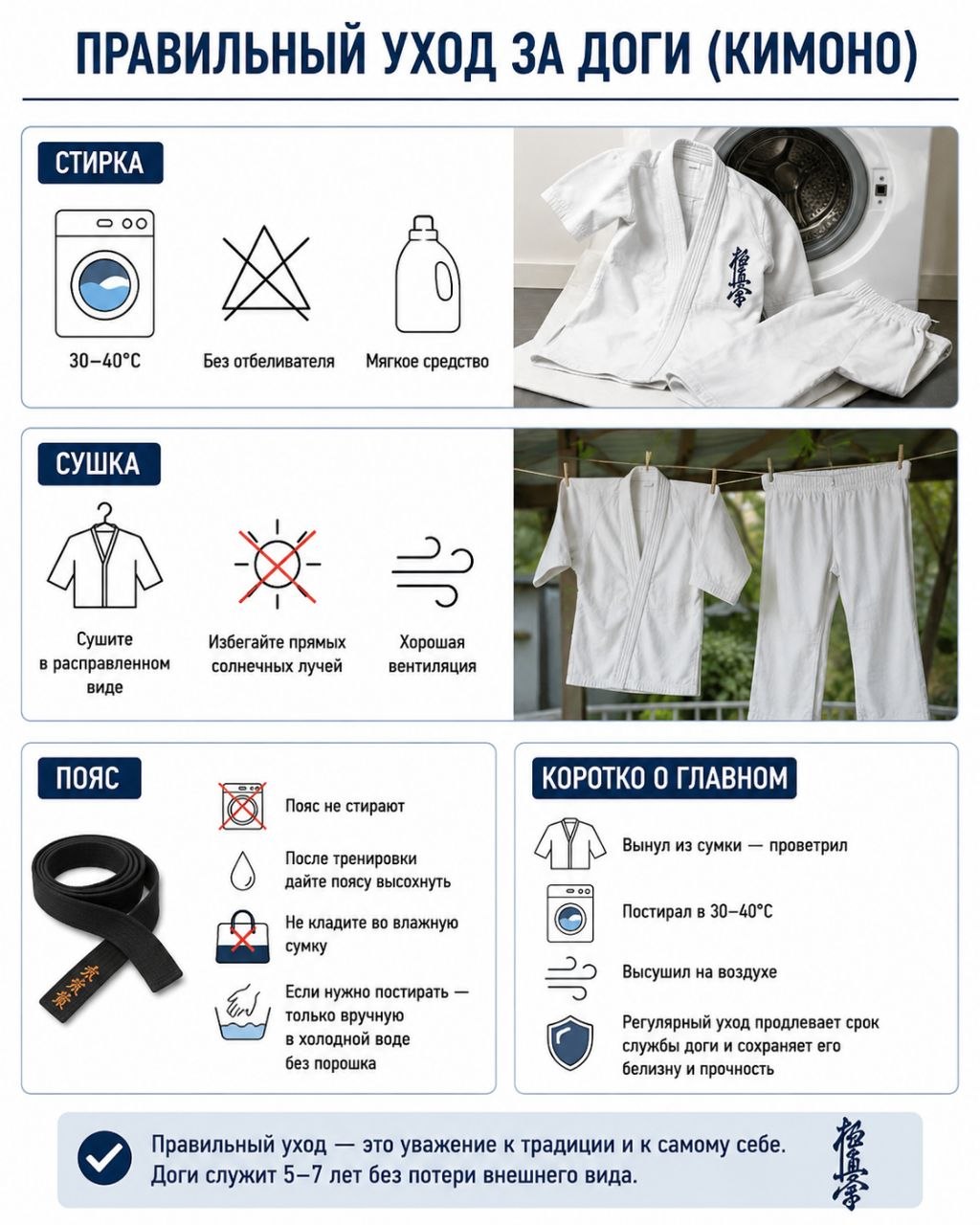
Before loading the dogi into the washing machine, soak it in warm (not hot) water with a mild detergent for 15-20 minutes. This softens the salt deposits from sweat and makes the main wash more effective.
A few practical tips:
- Use a mild detergent with no bleach or harsh additives. Bleach breaks down cotton fibers faster than any training.
- Add a few non-bleeding towels or soft clothes to the drum. They cushion the friction of the heavy fabric against the drum walls.
- Run a full wash cycle at 30-40 degrees Celsius. Hot water (above 60) causes significant shrinkage.
- If your dogi has yellowed, add a tablespoon of baking soda during soaking — it works better than most advertised stain removers.
Drying: the most common mistake
A tumble dryer is the enemy of dogi. Dense cotton shrinks significantly at high temperatures — sometimes by several sizes. Take the dogi out immediately after washing and hang it to dry while it is still spread flat.
The ideal spot is outdoors or on a balcony in the shade. Direct sunlight gradually turns white fabric yellowish. A well-ventilated room works too.
Do not hang dogi twisted or folded: it will develop permanent creases that will not come out without ironing.
The belt: a different story
The belt is not washed — this is a long-standing tradition in martial arts. It is believed that the belt accumulates the experience and energy of training. In practice this simply means: let the belt dry after training and do not put it in a damp bag.
Washing the belt is acceptable if it is truly in poor condition. But do it by hand, in cold water, without detergent.
The short version
Proper dogi care is a habit that takes a couple of weeks to form. A well-maintained dogi lasts 5-7 years without losing its appearance. A dogi that gets forgotten in a bag and thrown into a hot dryer wears out within a single season.
Take it out of the bag, air it out, wash at 30-40 degrees, dry on a line. That is all it takes.
Great content! Keep up the good work!